Prelims: (Economy + CA)
Mains: (GS 2 - Trade Relations, Government Policies; GS 3 - Agriculture & Fisheries, Exports, Economy) |
Why in News ?
India’s seafood exports recorded strong growth in FY 2025–26 despite higher tariffs imposed by the United States, signalling a successful shift towards market diversification and enhanced export resilience.
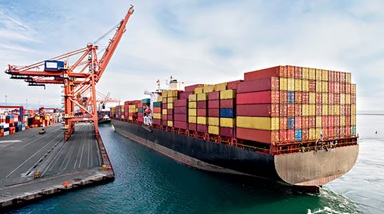
India’s Seafood Sector: Scale and Significance
India possesses one of the world’s most diverse seafood sectors, supported by:
- A 7,500 km-long coastline
- Extensive inland water resources including rivers, reservoirs, ponds, and wetlands
- A rapidly expanding aquaculture ecosystem
The sector plays a vital role in:
- Employment generation, especially in coastal and rural areas
- Foreign exchange earnings
- Nutritional security and livelihoods
Production and Resource Base
- India is the 3rd largest fish producer globally and the 2nd largest aquaculture producer.
- Marine fisheries dominate coastal regions along both eastern and western seaboards.
- Inland fisheries and aquaculture, particularly shrimp farming, have emerged as the primary drivers of export growth.
Aquaculture-led production has helped India stabilise supply, improve quality control, and meet global demand consistently.
Export Composition
- Shrimp constitutes the single largest share of India’s seafood exports, with frozen Vannamei shrimp dominating value and volume.
- Other export products include:
- Frozen fish
- Squid and cuttlefish
- Crabs and other crustaceans
- Value-added marine products
Improved cold-chain infrastructure and adherence to international food safety standards have strengthened India’s export competitiveness.
Major Export Markets
Traditionally, India’s top seafood export destinations have been:
- United States
- China
- Japan
- European Union
- Southeast Asian countries
However, policy and industry efforts in recent years have focused on reducing over-dependence on a single market, especially the U.S.
Institutional and Policy Support
- Marine Products Export Development Authority (MPEDA) plays a central role in:
- Export promotion
- Quality certification and traceability
- Market access facilitation
- Government initiatives such as Pradhan Mantri Matsya Sampada Yojana (PMMSY) have strengthened:
- Fisheries infrastructure
- Processing and cold storage capacity
- Sustainability and disease control
News Summary: Export Performance in FY 2025–26
- During April–October FY 2025–26:
- Export value rose by 16%, from $4.19 billion to $4.87 billion
- Export volume increased by 12%, from 9.62 lakh MT to 10.73 lakh MT
- This growth occurred despite higher U.S. tariffs, which led to a marginal decline in exports to the American market.
- Exporters offset this contraction by expanding shipments to:
- China
- Vietnam
- Belgium
- Malaysia
- Germany
- Exports to China reached $845.67 million, reinforcing its growing importance.
- Vietnam emerged as a standout destination:
- Over 100% growth in export value
- Over 90% growth in export volume
- Belgium recorded nearly 90% growth, highlighting Europe’s rising role.
This trend reflects a clear eastward and European pivot in India’s seafood export strategy.
Sign of Sectoral Resilience
- Regular consultations between exporters, MPEDA, and ministries of Fisheries and Commerce have:
- Identified new markets
- Addressed non-tariff barriers
- Strengthened compliance with importing-country standards
- Officials have described the sector’s performance as a reflection of:
- Improved competitiveness
- Adaptive capacity
- Reduced vulnerability to single-market shocks
Despite diversification, the U.S. remains India’s largest individual seafood market, underscoring the need to balance diversification with retention.
Analysis: Why This Matters
- Demonstrates the success of export diversification as a risk-mitigation strategy
- Strengthens India’s position in global seafood value chains
- Aligns with the broader Blue Economy vision
- Enhances resilience against tariff shocks and geopolitical trade disruptions
Way Forward
- Expand access to emerging markets in Africa, Latin America, and West Asia
- Promote value-added and ready-to-eat seafood products
- Strengthen sustainability, traceability, and disease management
- Enhance branding of Indian seafood globally
- Support small-scale fishers and exporters in meeting compliance costs
FAQs
Q1. Why are shrimp central to India’s seafood exports ?
Because shrimp farming offers high yields, strong global demand, and better export value.
Q2. What caused the decline in exports to the U.S. ?
Higher tariffs and trade-related barriers imposed by the U.S.
Q3. Which markets have compensated for the U.S. decline ?
China, Vietnam, Belgium, Malaysia, and Germany.
Q4. What role does MPEDA play ?
Export promotion, quality assurance, traceability, and market access facilitation.
Q5. Why is diversification important for seafood exports ?
It reduces dependence on single markets and improves resilience to global trade shocks.
|






 Contact Us
  New Batch : 9555124124/ 7428085757
  Tech Support : 9555124124/ 7428085757