Why in News?
- India has begun a national Red List Assessment of 1,211 bird species under the framework of the International Union for Conservation of Nature (IUCN). As of 19 October 2026, preliminary assessments of 107 bird species had been completed.
- The preliminary assessment is expected to be completed by the end of 2026, while the final assessment is expected by late 2027.
- The initiative aims to identify the extinction risk faced by India’s birds and strengthen scientific efforts for their conservation.
What Is the IUCN Red List?
- The IUCN Red List of Threatened Species is a global database that assesses the extinction risk of plants, animals and fungi. Established in 1964, it is widely used to identify species requiring conservation attention.
- The assessment considers factors such as geographical distribution, population size and population trends to determine the conservation status of species.
Key Highlights of India’s Bird Assessment
- Species covered: 1,211 regularly occurring bird species, including resident and migratory birds.
- Preliminary assessment: 107 species assessed as of 19 October 2026.
- Expected timeline: Preliminary assessment by the end of 2026 and final assessment by late 2027.
- Lead institutions: Zoological Survey of India (ZSI), IUCN SSC Center for Species Survival India–Wildlife Trust of India (CSS India–WTI), and the State of India’s Birds (SoIB) initiative.
- Coordinating ministry: Union Ministry of Environment, Forest and Climate Change.
Proposed Conservation Categories of Selected Bird Species in India
- Great Indian Bustard: Proposed as Critically Endangered.
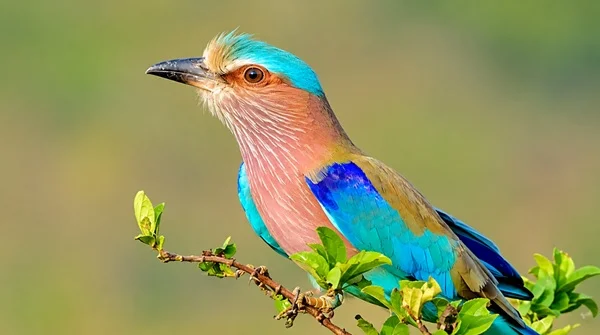
- Indian Roller: Proposed as Vulnerable.
- Marbled Duck: Proposed as Endangered.
- White-throated Bushchat: Proposed as Endangered.
- Sarus Crane: Proposed as Vulnerable.
- Pallas’s Fish-Eagle: Proposed as Endangered.
- Grey Plover: Proposed as Least Concern.
Institutions Involved
India’s National Red List initiative is a collaborative effort led by the Union Environment Ministry, with the involvement of:
- Botanical Survey of India (BSI)
- Zoological Survey of India (ZSI)
- IUCN India
- IUCN SSC Center for Species Survival India–Wildlife Trust of India
- State of India’s Birds (SoIB) initiative
For the bird assessment, ZSI, CSS India–WTI and SoIB are working together to compile and analyse scientific evidence.
How Are Bird Species Assessed?
- The assessment relies on scientific information about three major parameters:
- Geographical Range: The area in which a species is found and the extent of its distribution.
- Population Size: The estimated number of individuals belonging to a species.
- Population Trends: Whether the population is increasing, stable or declining over time.
- Gaps in population data remain a major challenge, as reliable population-size estimates are unavailable for many Indian bird species.
- To address this issue, the National Red List Assessment of Birds Forum has been established. It brings together ornithologists, researchers and conservationists to share information, analyse evidence and improve species assessments.
- Citizen-science data collected through the State of India’s Birds initiative also help researchers understand population trends, particularly for widespread bird species.
India’s National Red List Roadmap 2025–2030
- India launched its National Red List Roadmap and Vision 2025–2030 at the IUCN World Conservation Congress 2025 in Abu Dhabi.
- Under this initiative, India aims to complete assessments of more than 11,000 species of plants, animals and fungi by 2030. The national bird assessment forms part of this broader biodiversity conservation effort.
Significance of the Assessment
- Improved Conservation Planning: Identifying species at risk will help authorities prioritise conservation measures and allocate resources effectively.
- Stronger Scientific Evidence: The assessment will bring together research, field observations and citizen-science data to improve knowledge of bird populations.
- Protection of Threatened Species: The findings can support habitat protection, species recovery programmes and measures to reduce threats to vulnerable bird populations.
- Biodiversity Monitoring: Regular assessments can help track changes in bird populations and provide evidence of wider environmental changes.
Challenges
- Lack of Population Data: Reliable estimates of population size are unavailable for many species.
- Monitoring Gaps: Some species lack long-term, systematic monitoring across their geographical ranges.
- Coordination Needs: Assessments require cooperation among government institutions, researchers, conservation organisations and citizen scientists.
Way Forward
- India should strengthen long-term bird monitoring, expand field surveys and improve the collection of reliable population data.
- Greater use of citizen science, remote sensing and digital databases can help fill information gaps.
- Regular updates to species assessments and stronger protection of critical habitats will also be important for effective conservation.
Conclusion
India’s Red List Assessment of 1,211 bird species is an important step towards evidence-based biodiversity conservation. By identifying extinction risks and improving scientific knowledge, the initiative can help India develop more targeted conservation policies and advance its goal of assessing over 11,000 species by 2030.
Prelims Practice Question
Consider the following statements regarding the IUCN Red List of Threatened Species:
- It assesses the extinction risk of plants, animals, and fungi.
- It was established in 1964.
- It assesses only threatened bird species.
Which of the statements given above is/are correct?
A. 1 and 2 only
B. 2 and 3 only
C. 1 and 3 only
D. 1, 2 and 3
Mains Practice Question
Q. What is the significance of India’s National Red List Assessment for biodiversity conservation? Discuss the major challenges involved and suggest measures to strengthen species conservation in India.
|
FAQs
1. What is the IUCN Red List?
The IUCN Red List is a global database that assesses the extinction risk and conservation status of plants, animals, and fungi.
2. How many bird species are being assessed in India?
India is conducting a national Red List Assessment of 1,211 regularly occurring bird species, including resident and migratory birds.
3. What is the objective of India’s National Red List Roadmap 2025–2030?
The objective is to complete assessments of more than 11,000 species of flora, fauna, and fungi by 2030.
4. Which factors determine the conservation status of a species?
The major factors include geographical range, population size, and population trends.
5. How does citizen science help in bird conservation?
Citizen science provides observations and data that help researchers understand changes in bird populations and distribution, supporting conservation planning.
|







 Contact Us
 New Batch : 9555124124/ 7428085757
 Tech Support : 9555124124/ 7428085757
