Context
Infertility is emerging as a serious public health challenge in India by 2026. Experts are now emphasizing that mental health is not only a consequence of infertility but also a physiological driver of reproductive failure across all genders.
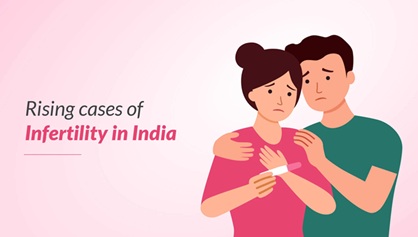
Infertility in India
Definition
- Infertility in India is defined as a condition in which a couple is unable to conceive despite 12 months of regular, unprotected sexual intercourse. Traditionally, it has been considered a women's problem due to deeply ingrained patriarchal norms in society.
- However, recent data indicate that male and female factors contribute almost equally. By 2026, attention has shifted to the silent crisis of male infertility and the biological impact of mental stress on gametes.
Key Trends and Statistics
- National Prevalence: Approximately 15–20% of couples in India (about 30 million) are affected by infertility, with higher rates in urban areas.
- Declining Total Fertility Rate (TFR): India's TFR has declined to 1.9, below the replacement level of 2.1. This is due to both voluntary and involuntary infertility.
- Increasing Male Factor: Male factors are now responsible for 40–50% of cases, linked to deterioration in sperm quality from environmental toxins and stress.
- Urban–Rural Difference: Primary infertility (never having conceived) is higher in urban areas, while secondary infertility, often caused by untreated infections, is higher in rural areas.
- Expansion of IVF: The Indian IVF market, valued at $900 million in 2024, is projected to grow to $1.8 billion by 2029, reflecting the growing demand for medical assistance.
Reasons for the Rise of Infertility in India
- Delayed Motherhood and Fatherhood: Career priorities and the pursuit of financial stability are pushing the average age of first-time parents beyond the biologically optimal age. For example, Bengaluru and Mumbai saw a 25% increase in the number of women seeking fertility treatment after the age of 35 during 2025–26.
- Environmental Pollution: Endocrine-disrupting chemicals (EDCs) present in air and water are affecting hormonal balance. For example, a study in Delhi found that sperm motility in healthy young men temporarily decreased on days with poor air quality.
- Lifestyle diseases: Obesity and polycystic ovary syndrome (PCOS) have become widespread due to sedentary lifestyles and processed diets. Example: By 2026, an estimated one in five Indian women will suffer from PCOS, a leading cause of anovulatory infertility.
- Chronic mental stress: Workplace stress increases cortisol levels, which disrupts the HPA axis, affecting ovulation and sperm production. Example: Research published in Frontiers in Endocrinology (2024) found that depression in Indian men is associated with reduced sperm density.
- Untreated reproductive infections: The stigma associated with STIs and pelvic inflammatory disease (PID) in rural areas leads to blockage of the fallopian tubes. Example: In states like Bihar, many tubal factor infertility cases were linked to untreated postpartum infections or tuberculosis.
Key Challenges Associated with Infertility
- Social Stigma and Exclusion: Women who are unable to conceive are called derogatory names and excluded from social and religious gatherings. For example, in many rural areas of Tamil Nadu, the word "Maladi" is still used to socially isolate women.
- Exorbitant Cost of Treatment: IVF and ART procedures pose a significant financial burden for the middle and lower classes. For example, the average cost of an IVF cycle in 2026 is ₹1.5–3 lakh, while more than 90% of health insurance plans do not cover infertility.
- Silence on Male Infertility: Patriarchal thinking prevents men from seeking medical attention, forcing women to undergo unnecessary and invasive tests. For example, a 2025 clinical review found that men, on average, seek fertility testing for the first time 3–5 years later than women.
- Psychological Vicious Cycle: The stress of failing to conceive becomes a biological barrier. Example: Menstrual cycles of hope and despair in IVF patients have been linked to increased levels of salivary alpha-amylase, which reduces the likelihood of implantation.
- Regulatory gaps in Tier-II/III cities: Clinics rapidly opening in smaller cities are operating without standardized protocols and transparent success rates. Example: The ART 2025 guidelines have led to the closure of several illegal clinics in North India.
Government Initiatives
- ART and Surrogacy (Regulation) Act: Mandatory registration of all clinics under the 2025 guidelines and prevention of donor exploitation
- Budget 2026 Health Focus: Proposed upgrade of NIMHANS-2 and Regional Mental Health Institutes
- Project Sanjivani: Pilot project for reproductive health awareness in five states
- National Digital Registry: Transparent system for monitoring ART outcomes
Way Forward
- Health Integration: Mandatory counseling in every IVF cycle
- Insurance Coverage: Mandatory partial insurance for infertility by IRDAI
- Workplace Sensitization: Fertility leave and egg freezing support
- Male-Centric Campaign: Eliminate the stigma associated with male infertility
- Community Awareness: Through ASHA workers
Conclusion
In 2026, infertility is no longer just a biological problem, but a profound social and mental health challenge. By adopting a gender-neutral approach and combining scientific advances with sensitive social discourse, India can transform reproductive care from a journey of silent suffering to a process of dignity. True healing is possible only when both mind and body are given equal priority.






 Contact Us
  New Batch : 9555124124/ 7428085757
  Tech Support : 9555124124/ 7428085757