Prelims: (Economy + CA)
Mains: (GS 2 - Governance; GS 3 - Economy, Energy Security, Disaster Management, Environment) |
Why in News ?
The Public Investment Board (PIB) has recently approved the ₹26,070-crore Kamala Hydroelectric Project with an installed capacity of 1,720 MW in Arunachal Pradesh. The project represents a major step in India’s push to harness hydropower potential in the North-Eastern region, while simultaneously addressing flood moderation challenges in the Brahmaputra valley.
Background: Hydropower Development in Arunachal Pradesh
Arunachal Pradesh possesses nearly one-third of India’s untapped hydropower potential, owing to its mountainous terrain and perennial rivers originating in the Eastern Himalayas.
Policy Context
- Hydropower is a key pillar of India’s:
- Renewable energy transition
- Grid stability and peaking power needs
- The North-East has been prioritised under:
- National hydropower development plans
- Regional infrastructure and connectivity initiatives
Despite its vast potential, hydropower development in the region has faced challenges related to terrain, ecology, financing, and state participation, necessitating innovative implementation models.
About the Kamala Hydroelectric Project
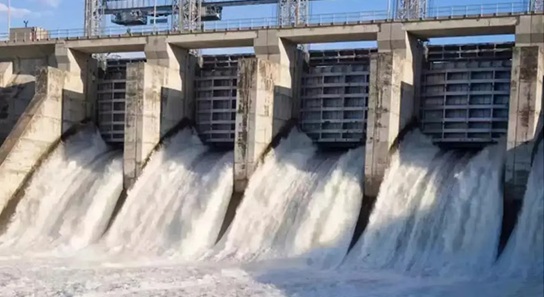
The Kamala Hydroelectric Project is a large storage-based hydropower scheme proposed on the Kamala River, a major tributary of the Subansiri River, in Kamle district of Arunachal Pradesh.
Key Technical Features
- Installed Capacity: 1,720 MW
- Estimated Cost: ₹26,070 crore
- River: Kamala River (Subansiri basin)
- Type: Storage-based hydroelectric project
Structural and Design Components
- Dam Type: Concrete gravity dam
- Powerhouse: Underground powerhouse
- Scheme Nature: Multipurpose, with both power generation and flood moderation objectives
The storage component allows controlled water release, making the project suitable for both electricity generation and downstream flood management.
Flood Moderation and Regional Significance
Flood Control Role
- The project includes a flood moderation component
- Aims to:
- Regulate excess monsoon flows
- Reduce flood intensity in the Brahmaputra valley, which frequently experiences devastating floods
Strategic Importance
- Enhances disaster resilience in Assam and downstream regions
- Integrates energy infrastructure with disaster management objectives
Implementation Model: BOOT-Based PPP Framework
The project will be implemented under a Build-Own-Operate-Transfer (BOOT) model through a joint venture company.
Equity Structure
- NHPC: 74% equity
- Government of Arunachal Pradesh (GoAP): 26% equity
Significance of the Model
- Reduces financial burden on the state
- Ensures technical expertise through NHPC
- Provides revenue and long-term ownership transfer benefits to the state
Why the Project Matters
Energy Security
- Contributes to India’s renewable energy targets
- Provides reliable base-load and peaking power
- Supports grid stability as renewable penetration increases
Regional Development
- Infrastructure creation in a remote district
- Employment generation during construction and operation
- Strengthens Centre–State cooperation in strategic sectors
Environmental and Governance Considerations
Environmental Aspects
- Storage-based projects have:
- Greater ecological footprints than run-of-the-river projects
- Require:
- Rigorous environmental impact assessments
- Biodiversity safeguards
- Resettlement and rehabilitation measures
Governance Challenges
- Balancing development with ecological sensitivity
- Ensuring transparent project execution
- Addressing local community concerns
Way Forward
- Strengthening environmental monitoring mechanisms
- Ensuring fair compensation and rehabilitation
- Leveraging hydropower for integrated river basin management
- Enhancing disaster-resilient infrastructure planning in the North-East
FAQs
1. What is the Kamala Hydroelectric Project ?
It is a 1,720 MW storage-based hydropower project proposed on the Kamala River in Arunachal Pradesh.
2. Which river basin does the project belong to ?
It is part of the Subansiri River basin, a major tributary system of the Brahmaputra.
3. What is the significance of the project beyond power generation ?
It includes a flood moderation component aimed at reducing floods in the Brahmaputra valley.
4. Who will implement the Kamala Hydroelectric Project ?
It will be implemented through a BOOT-based joint venture with NHPC holding 74% and the Government of Arunachal Pradesh 26% equity.
5. Why is Arunachal Pradesh important for India’s hydropower strategy ?
The state has vast untapped hydropower potential due to its Himalayan rivers and terrain.
|






 Contact Us
  New Batch : 9555124124/ 7428085757
  Tech Support : 9555124124/ 7428085757