Prelims: (Environment + CA)
Mains: (GS 3: Environment, Biodiversity Conservation, Science & Technology) |
Why in News ?
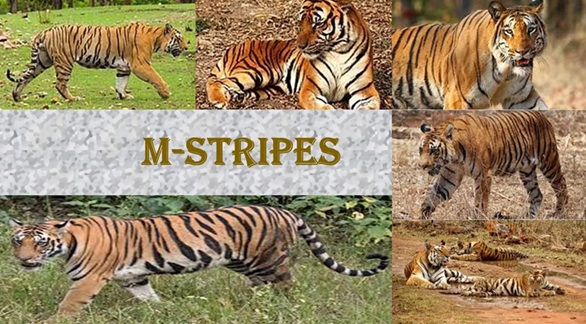
Forest staff involved in the upcoming tiger and wildlife census at the Anamalai Tiger Reserve will be using the Monitoring System for Tigers: Intensive Protection and Ecological Status (M-STrIPES) mobile application. The move highlights India’s increasing reliance on technology-enabled conservation tools to improve wildlife monitoring, protection, and management of protected areas.
Background: India’s Tiger Conservation Framework
India is home to nearly three-fourths of the world’s wild tiger population, making effective monitoring and protection critical.
Institutional Context
- Project Tiger was launched in 1973 to conserve tiger populations and habitats.
- The National Tiger Conservation Authority (NTCA) was established under the Wildlife (Protection) Act, 1972, to provide statutory backing to tiger conservation.
- Over time, conservation strategies evolved from manual patrols to data-driven and technology-assisted monitoring systems.
It was in this context that M-STrIPES was introduced to enhance ground-level protection and ecological assessment.
What is M-STrIPES ?
The Monitoring System for Tigers: Intensive Protection and Ecological Status (M-STrIPES) is a software-based wildlife monitoring system designed to assist in the patrolling, protection, and ecological assessment of tiger habitats.
Launch and Development
- Launched in 2010
- Developed by:
- National Tiger Conservation Authority (NTCA)
- Wildlife Institute of India (WII)
Objectives of M-STrIPES
- Strengthen anti-poaching efforts
- Enable real-time monitoring of forest patrols
- Improve scientific management of Protected Areas
- Support evidence-based decision-making in tiger reserves
Key Components of the M-STrIPES System
1. Analytical and Desktop Platform
- Centralised desktop software
- Online analysis tools
- Used for:
- Data storage
- Spatial and statistical analysis
- Generating management insights
2. Mobile-Based Field Application
- Android-based application
- Used by frontline forest staff
- Enables:
- Recording wildlife sightings
- Tracking patrol routes
- Uploading data using real-time GPS
Technologies Used in M-STrIPES
- Global Positioning System (GPS) – tracks patrol routes and locations
- General Packet Radio Services (GPRS) – enables data transmission
- Remote Sensing – supports habitat and landscape analysis
- Geographic Information Systems (GIS) – spatial mapping of wildlife data
- Statistical Tools – trend analysis and risk assessment
How M-STrIPES Works on the Ground
Role of Forest Guards
- Forest guards patrol their assigned beats
- Each patrol involves:
- Recording GPS tracks
- Logging animal sightings
- Noting signs of threats like poaching or encroachment
- Data is uploaded and analysed centrally
What is a Beat ?
- A beat is the smallest administrative unit of forest management in India
- Originates from the British forest administration system
- Typically:
- One forest guard is responsible for one beat
Significance of M-STrIPES in Wildlife Management
- Enhances accountability of patrol staff
- Enables real-time situational awareness
- Helps identify:
- Poaching hotspots
- Animal movement patterns
- Habitat degradation
- Improves coordination between:
- Field staff
- Reserve managers
- Policy authorities
Anamalai Tiger Reserve: Ecological Context
Location
- Situated in the Anamalai Hills
- Lies south of the Palakkad Gap
- Part of the Southern Western Ghats
Surrounding Protected Areas
- Parambikulam Tiger Reserve (east)
- Chinnar Wildlife Sanctuary
- Eravikulam National Park (south-west)
Biodiversity of Anamalai Tiger Reserve
Indigenous Communities
The reserve is inhabited by six indigenous communities:
- Kadar
- Muduvar
- Malasar
- Malai Malasar
- Eravalar
- Pulayar
Vegetation Types
- Wet evergreen forests
- Semi-evergreen forests
- Moist deciduous forests
- Dry deciduous and thorn forests
- Shola forests
- Montane grasslands, savannahs, and marshy grasslands
Flora
- Rich in wild relatives of cultivated plants:
- Mango
- Jackfruit
- Wild plantain
- Ginger, turmeric
- Pepper, cardamom
Fauna
- Tiger
- Asiatic elephant
- Sambar
- Spotted deer
- Barking deer
- Leopard
- Jackal
- Jungle cat
Why M-STrIPES Matters for Tiger Census
- Ensures scientific accuracy in population estimation
- Reduces manual errors
- Integrates protection and monitoring with census activities
- Strengthens India’s reputation as a global leader in tiger conservation
Challenges and the Way Forward
Challenges
- Dependence on digital connectivity in remote areas
- Need for regular training of frontline staff
- Data security and system maintenance
Way Forward
- Strengthening digital infrastructure in forest areas
- Continuous capacity building of forest personnel
- Integration with other wildlife databases and AI-based analytics
FAQs
1. What is M-STrIPES ?
M-STrIPES is a technology-based monitoring system used for patrolling, protection, and ecological assessment of tiger reserves.
2. Who developed and launched M-STrIPES ?
It was launched in 2010 by the NTCA in collaboration with the Wildlife Institute of India.
3. How does M-STrIPES help in tiger conservation ?
It enables real-time tracking of patrols, scientific data collection, and better management of tiger habitats.
4. What technologies are used in M-STrIPES ?
GPS, GPRS, remote sensing, GIS, and statistical analysis tools.
5. Why is M-STrIPES important for Anamalai Tiger Reserve ?
It improves the accuracy of wildlife census and strengthens protection in a biodiversity-rich and ecologically sensitive landscape.
|






 Contact Us
  New Batch : 9555124124/ 7428085757
  Tech Support : 9555124124/ 7428085757