Prelims: (Economy/Geography + CA)
Mains: (GS 1 – Geography; GS 3 – Economic Development) |
Why in the News ?
The government has authorised private entities accredited by the Quality Council of India (QCI) to act as Accredited Prospecting Agencies (APAs) under the Mines and Minerals (Development and Regulation) Act, 1957.
This reform aims to strengthen India’s mineral exploration ecosystem, enhance coal availability, and support long-term energy security through a more transparent, efficient, and diversified prospecting framework.
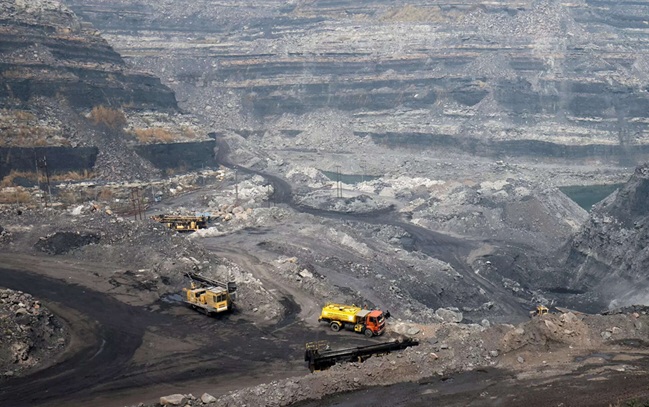
Role of Coal in India’s Energy Security
1. Backbone of India’s Power System
- Coal supplies 55% of India’s primary energy and fuels over 74% of electricity generation.
- Unlike variable renewables, coal-based plants ensure stable baseload power, essential for grid reliability.
2. Major Contributor to Government Finances
- The coal sector generates ₹70,000 crore+ annually through GST, royalties, DMF, and other levies.
- Coal transportation forms 49% of Indian Railways’ freight earnings, cross-subsidising passenger fares.
3. Essential for Core Industries
- Coking coal is indispensable for steelmaking—comprising ~42% of production cost.
- Coal also powers cement and other core industrial processes.
4. Large Employment Base
- Coal India Ltd employs 2.39 lakh people directly, with millions more in logistics, contracting, and ancillary services.
5. Driver of Clean Energy Transition Funding
- Government promoting coal gasification through an ₹8,500 crore incentive programme.
- Coal revenues help finance renewable expansion—e.g., NTPC’s planned 60 GW RE capacity by 2032.
Key Facts About India’s Coal Sector
About Coal
- A sedimentary fossil fuel formed from ancient plant matter compressed over millions of years.
- Different grades are formed through increasing heat and pressure.
Major Grades of Coal
- Anthracite (86–97% carbon): Highest grade; found in J&K.
- Bituminous (45–86% carbon): Jharkhand, West Bengal, Odisha, Chhattisgarh, MP.
- Subbituminous (35–45% carbon): Lower heat value.
- Lignite (25–35% carbon): High moisture; found in Tamil Nadu, Gujarat, Rajasthan, J&K.
Coal Reserves & Production
- India: 5th largest reserves, 2nd largest consumer globally.
- Odisha, Jharkhand, Chhattisgarh = ~69% of total reserves.
- FY 2024–25 production: 1,047 MT (5% growth).
- Coal imports declined 8.4% to 183 MT, saving USD 5.43 billion.
Challenges Facing India’s Coal Sector
1. Environmental & Health Damage
- Thermal power plants emit:
- 60% PM, 45% SO₂, 30% NO₂, 80% mercury
- Water use by power plants could meet needs of 251 million people.
- Fossil-fuel air pollution caused 1.72 million deaths in 2022 (Lancet Countdown 2025).
2. Import Dependence
- India imports 85% of coking coal, increasing vulnerability to price shocks and FX outflow.
3. Stranded Asset Risk
- New coal plants increasingly uneconomical vs. solar/wind.
- ~Two-thirds of coal power is now costlier than renewables (Greenpeace).
4. Social & Employment Transition
- Millions depend on coal-linked livelihoods → requires reskilling, safety nets, and gradual transition.
Pathways for a Just & Secure Coal Transition
1. Phased Reduction in Coal Use
- Retire old, inefficient plants.
- Use SCR, ESPs, and other pollution-control systems during transition.
2. Enforcing Pollution Standards
- Mandate full implementation of Flue Gas Desulfurization (FGD) systems in thermal plants.
- Reduce SO₂ emissions—major cause of respiratory disease.
3. Accelerated Renewable Expansion
- India targets 500 GW non-fossil capacity by 2030.
- Already surpassed 190 GW by mid-2025.
4. Strengthening Grid Storage & Transmission
- Develop Green Energy Corridors.
- Scale Battery Energy Storage Systems (BESS) and pumped hydro.
- VGF support for 4,000 MWh BESS capacity by 2030–31.
5. Strategic Role for Coal During Transition
- Coal plants can act as flexible peaking power—ramped up when renewables dip (night/monsoon).
- Ensures grid stability and 24/7 power availability.
FAQs
1. What are Accredited Prospecting Agencies (APAs) ?
Private or public entities accredited by QCI to undertake prospecting under the MMDR Act.
2. Why is coal still critical for India ?
It provides stable baseload power, fuels industries, generates revenue, and supports millions of jobs.
3. Which states hold the largest coal reserves ?
Odisha, Jharkhand, and Chhattisgarh (~69% of total).
4. Why does India import coking coal ?
Domestic reserves are insufficient and low quality; high-grade coking coal is sourced globally.
5. What is India’s long-term coal strategy ?
Gradual phase-down, pollution control, renewable expansion, BESS adoption, and a just transition for workers.
|






 Contact Us
  New Batch : 9555124124/ 7428085757
  Tech Support : 9555124124/ 7428085757