Why in News ?
- India has joined the international NeoSep1 (Neonatal Sepsis Trial-1), a landmark multi-country clinical trial aimed at identifying effective antibiotic combinations for treating antimicrobial-resistant (AMR) neonatal sepsis.
- The trial seeks to address one of the most pressing global health challenges—drug-resistant infections in newborns—and is expected to improve treatment outcomes while reducing neonatal deaths.
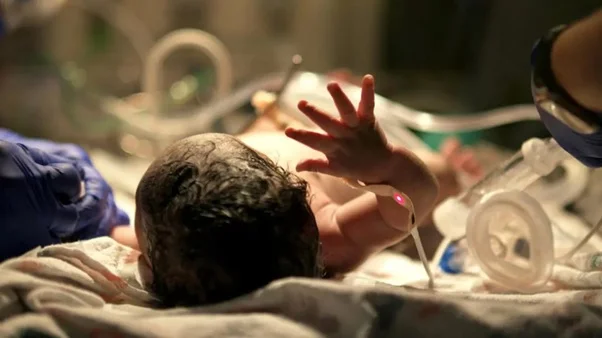
What is the NeoSep1 Trial ?
- NeoSep1 is an international, multi-centre, randomized clinical trial designed to evaluate safe, effective, and affordable antibiotic combinations for newborns suffering from sepsis, particularly infections caused by antibiotic-resistant bacteria.
- The study is sponsored by the Global Antibiotic Research and Development Partnership (GARDP) in collaboration with the UCL Innovative Clinical Trials Unit, City St George's, University of London, and the Penta Foundation.
- The trial aims to enrol approximately 3,000 newborns across Asia and Africa by the end of 2028.
Countries Participating in the Trial
- The NeoSep1 study is currently underway in: India, South Africa,Kenya, Ghana, Vietnam, Pakistan
- The trial will soon expand to:Malaysia,Bangladesh,Uganda.
What is Neonatal Sepsis ?
- Neonatal sepsis is a life-threatening bloodstream infection that affects babies up to 90 days of age, especially premature infants and those with low birth weight.
- Because newborns have immature immune systems, infections can spread rapidly, making sepsis one of the leading causes of neonatal mortality worldwide.
Classification of Neonatal Sepsis
1. Early-Onset Sepsis (EOS)
- Occurs within the first 72 hours of life.
- Usually results from infection transmitted from the mother during pregnancy or childbirth.
2. Late-Onset Sepsis (LOS)
- Occurs after 72 hours of birth, up to 28–90 days.
- May be acquired in hospitals (Healthcare-Associated Infection) or from the community.
Causes of Neonatal Sepsis
Bacterial infections are the most common cause of neonatal sepsis.
Major pathogens include :
- Escherichia coli (E. coli)
- Klebsiella pneumoniae
- Acinetobacter species
- Pseudomonas aeruginosa
- Listeria
- Certain strains of Streptococcus
The Herpes Simplex Virus (HSV) can also cause severe neonatal infections, particularly when the mother acquires a primary HSV infection during pregnancy.
Burden of Neonatal Sepsis in India
Neonatal sepsis remains one of the leading causes of newborn deaths in India despite improvements in neonatal healthcare.
According to recent studies :
- Neonatal sepsis contributes to 30–40% of all neonatal deaths in India.
- It is responsible for an estimated 200,000–250,000 preventable neonatal deaths every year.
- Although under-five mortality has declined significantly, progress in reducing neonatal mortality has been slower, with sepsis remaining a major public health challenge.
How is India Different from High-Income Countries ?
The microbiological profile of neonatal sepsis in India differs significantly from that seen in developed countries.
In high-income countries :
- Group B Streptococcus (GBS) is the leading cause of neonatal sepsis.
- In India Klebsiella pneumonia , Escherichia coli, Acinetobacter species ,Pseudomonas aeruginosa are the predominant pathogens.
- Many of these bacteria are multidrug-resistant (MDR), making conventional antibiotic treatment increasingly ineffective. This highlights the need for India-specific treatment strategies.
Why is the NeoSep1 Trial Important ?
The NeoSep1 trial aims to develop evidence-based treatment strategies tailored to the realities of low- and middle-income countries, including India.
Its key objectives include :
- Identifying the most effective antibiotic combinations.
- Developing treatment protocols for drug-resistant neonatal infections.
- Generating India-specific evidence on neonatal sepsis.
- Supporting clinicians in selecting the most appropriate antibiotics based on local resistance patterns.
- Reducing neonatal mortality through affordable and effective treatment options.
What is the PRACTical Trial Design ?
NeoSep1 uses an innovative Personalised Randomised Controlled Trial (PRACTical) design.
Key features include :
- Simultaneous evaluation of multiple antibiotic regimens.
- Ranking treatments based on their effectiveness.
- Adapting treatment choices to local antimicrobial resistance patterns.
- Conducting research under real-world clinical conditions.
This approach enables physicians to identify the most suitable treatment strategies for their local healthcare settings.
How is the Study Being Conducted in India ?
According to Dr. Nishad Plakkal, Principal Investigator of NeoSep1 in India and Head of the Department of Neonatology at JIPMER :
- Clinicians diagnose neonatal sepsis using routine clinical practice.
- A NeoOBS Sepsis Severity Score is used to ensure that only newborns with a high likelihood of infection are included.
- Blood cultures and, when required, cerebrospinal fluid (CSF) samples are collected to identify the infecting organism.
- Laboratory testing also determines whether the infection is resistant to commonly used antibiotics.
Objectives of the Study
Primary Outcome
Secondary Outcomes
- Mortality within 90 days.
- Requirement for additional antibiotics.
- Duration of hospital stay.
- Hospital readmission after discharge.
Treatment of Neonatal Sepsis
Neonatal sepsis is treatable if diagnosed early.
Treatment generally includes :
- Immediate hospitalization.
- Intravenous (IV) antibiotics.
- Intensive supportive care in a Neonatal Intensive Care Unit (NICU).
- Modification of antibiotic therapy based on culture and sensitivity reports.
Expected Outcomes of NeoSep1
Experts believe that the trial could :
- Develop new evidence-based antibiotic guidelines for neonatal sepsis.
- Improve survival rates among newborns with drug-resistant infections.
- Reduce neonatal mortality in low- and middle-income countries.
- Help combat the growing threat of antimicrobial resistance.
- Provide affordable treatment options suitable for resource-limited healthcare settings.
Conclusion
Antimicrobial resistance is rapidly reducing the effectiveness of antibiotics that have been used for decades to treat neonatal sepsis. As a result, newborns suffering from severe bloodstream infections face an increasing risk of death, particularly in low- and middle-income countries. India's participation in the international NeoSep1 trial marks a significant step towards developing safer, more effective, and affordable antibiotic treatments tailored to local disease patterns. The findings of this landmark study are expected to strengthen neonatal healthcare, improve clinical decision-making, and ultimately save thousands of newborn lives.
Q1. What is the NeoSep1 Trial ?
Answer : NeoSep1 (Neonatal Sepsis Trial-1) is an international, multi-centre clinical trial that evaluates safe, effective, and affordable antibiotic combinations for treating neonatal sepsis, particularly infections caused by antimicrobial-resistant (AMR) bacteria.
Q2. Why is the NeoSep1 Trial significant for India ?
Answer : India has a high burden of neonatal sepsis and increasing antimicrobial resistance. The trial will generate India-specific evidence on antibiotic effectiveness, helping clinicians choose the most appropriate treatment and reducing neonatal deaths.
Q4. What is neonatal sepsis?
Answer : Neonatal sepsis is a life-threatening bloodstream infection occurring in newborns up to 90 days of age. It is most common among premature and low-birth-weight infants due to their immature immune systems.
|






 Contact Us
  New Batch : 9555124124/ 7428085757
  Tech Support : 9555124124/ 7428085757