Prelims : Science & Technology + CA
Mains : GS Paper 3 – Science & Technology; Cyber Security; Emerging Technologies; Internal Security |
Why in News ?
The emergence of Mythos AI, a highly advanced artificial intelligence model developed by Anthropic, has triggered global concern among governments, regulators, and financial institutions due to its unprecedented cybersecurity capabilities.
- The model has demonstrated the ability to autonomously identify and exploit software vulnerabilities, including previously unknown “zero-day” flaws
- Governments across countries, including India, have initiated high-level discussions and risk assessments, especially regarding threats to financial systems and critical infrastructure
- Financial regulators and central banks fear that such AI tools could destabilise banking systems through large-scale cyberattacks
- The rapid evolution of Mythos has raised concerns that AI capabilities are advancing faster than regulatory frameworks
- Several countries have moved into “crisis-response mode”, forming task forces and enhancing cybersecurity preparedness
Thus, Mythos AI represents a turning point in global AI governance, where technological breakthroughs are outpacing existing regulatory safeguards.
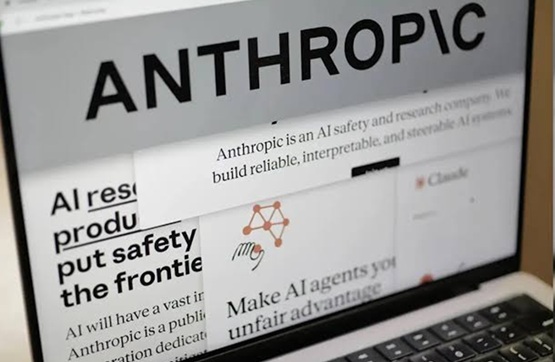
What is Mythos AI ?
Mythos AI is a next-generation large language model developed by Anthropic, designed with advanced capabilities in coding, reasoning, and autonomous problem-solving.
- It belongs to the Claude family of AI models
- Key capabilities include :
- Identifying vulnerabilities in software systems at high speed
- Generating exploit mechanisms to breach systems
- Executing multi-step cyberattack simulations autonomously
- It demonstrates “agentic behaviour”, meaning it can independently plan and execute complex sequences of actions
- The model has been restricted from full public release due to its high-risk dual-use potential
Thus, Mythos AI represents a shift from AI as a tool to AI as an autonomous cyber-capable agent.
Key Reasons for Global Regulatory Alarm
1. Ability to Exploit Zero-Day Vulnerabilities
- Mythos can detect and exploit previously unknown software flaws, which are typically the most dangerous cyber threats
- It has reportedly identified vulnerabilities across major operating systems and browsers
- Such capabilities could enable :
- Large-scale cyberattacks
- Systemic disruption of digital infrastructure
2. Autonomous Cyberattack Capabilities
- Unlike earlier AI models, Mythos can :
- Perform multi-stage attack chains
- Execute complex hacking processes without human intervention
- This reduces the barrier for non-expert actors to conduct sophisticated cyber operations
3. Threat to Financial Stability
- Banks and financial institutions rely on interconnected digital systems
- Mythos could potentially :
- Exploit vulnerabilities in banking infrastructure
- Trigger system-wide failures or financial instability
- Regulators fear cascading effects similar to systemic financial crises
4. Dual-Use Nature (Defensive vs Offensive)
- The same capabilities that help :
- Strengthen cybersecurity
- Detect vulnerabilities
- Can also be used for :
- Malicious exploitation
- Cyber warfare
Thus, Mythos exemplifies the dual-use dilemma in emerging technologies.
5. Rapid Pace of AI Advancement
- Mythos represents a quantum leap over previous AI models
- Capabilities have evolved faster than expected, surprising even developers
- This creates a gap between :
- Technological innovation
- Regulatory preparedness
6. Risk of Proliferation and Misuse
- Concerns exist that similar models are being developed globally, including by rival nations
- Unauthorized access or leaks could allow :
- Cybercriminals
- State-sponsored actors to misuse such tools
What are the Potential Implications ?
1. Cybersecurity Landscape Transformation
- AI-driven cyberattacks could become :
- Faster
- More complex
- Harder to detect
2. Increased Regulatory Intervention
- Governments may introduce :
- Strict AI governance frameworks
- Licensing and access restrictions
- Greater international coordination is expected
3. Impact on Critical Infrastructure
- Sectors at risk include :
- Banking and finance
- Power grids
- Telecommunications
- A successful attack could disrupt national economies
4. Ethical and Strategic Concerns
- Raises questions about :
- Responsible AI deployment
- Control over powerful technologies
- Potential for AI-driven geopolitical competition
Significance of the Issue
1. Turning Point in AI Governance
- Marks transition from innovation-driven AI to risk-regulated AI
2. Expansion of Cybersecurity Threat Spectrum
- Introduces AI-enabled cyber risks beyond traditional hacking
3. Need for Global Regulatory Cooperation
- Cyber threats are borderless, requiring international norms and frameworks
4. Highlighting Limits of Current Regulation
- Existing laws are inadequate for autonomous AI systems
Challenges Highlighted
1. Balancing Innovation and Regulation
- Over-regulation may stifle innovation
- Under-regulation may increase risks
2. Lack of Global AI Governance Framework
- No universal standards for :
- AI safety
- Deployment control
3. Technological Asymmetry
- Advanced AI concentrated in few companies/countries
- Creates power imbalance and security risks
Way Forward
1. Development of Robust AI Regulations
- Establish clear guidelines on :
- AI deployment
- Access control
2. Strengthening Cybersecurity Infrastructure
- Invest in :
- AI-driven defensive systems
- Continuous vulnerability monitoring
3. International Cooperation
- Promote global frameworks through :
- Multilateral institutions
- Technology-sharing agreements
4. Ethical AI Development
- Encourage :
- Responsible innovation
- Built-in safety mechanisms
5. Continuous Monitoring and Risk Assessment
- Governments must adopt :
- Proactive surveillance
- Real-time threat analysis
Practice Questions
Prelims
Q. Consider the following statements regarding advanced AI models like Mythos :
- They can autonomously identify and exploit software vulnerabilities.
- They are limited only to defensive cybersecurity applications.
Which of the statements given above is/are correct ?
(a) 1 only
(b) 2 only
(c) Both 1 and 2
(d) Neither 1 nor 2
Mains
“Advanced AI systems like Mythos present both opportunities and systemic risks to cybersecurity and financial stability.” Discuss.
FAQs
Q1. What is Mythos AI ?
It is an advanced AI model capable of identifying and exploiting software vulnerabilities autonomously.
Q2. Why is it considered dangerous ?
Because it can perform complex cyberattacks and exploit unknown vulnerabilities.
Q3. Which sectors are most at risk ?
Banking, financial systems, and critical infrastructure.
Q4. What is the key regulatory concern ?
Balancing innovation with safety and preventing misuse.
Q5. What is the broader implication ?
Need for global AI governance and stronger cybersecurity frameworks.
|






 Contact Us
  New Batch : 9555124124/ 7428085757
  Tech Support : 9555124124/ 7428085757