
- UPSC Exam
- State PCS
- One Day Exam
- Current Affairs
- PT Quiz
- Downlaods
- About Coaching
- Blog
- Videos

| Prelims: (Nuclear Technology + CA) Mains: (GS 2 – International Relations; GS 3 – Security, Infrastructure) |
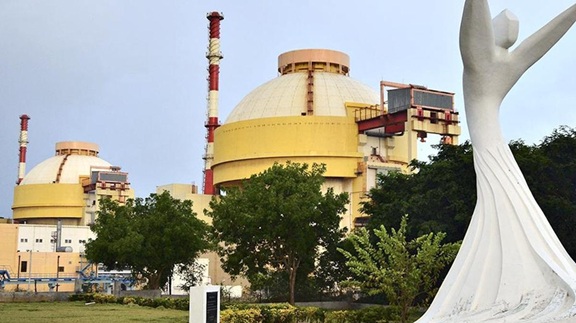
Russian President Vladimir Putin’s visit to India has renewed focus on the Kudankulam Nuclear Power Plant (KKNPP), as Russia accelerated fuel supply commitments and reiterated full support for completing India’s largest atomic energy project.
The Kudankulam announcements took place during the 23rd Annual India–Russia Summit, held in New Delhi in December 2025 — a key diplomatic mechanism that has continued since 2000 despite global geopolitical disruptions.
The 23rd Summit focused on:
The Summit reaffirmed that energy—particularly nuclear energy—remains the most durable pillar of India–Russia strategic relations.
Kudankulam, being the flagship nuclear project, became a central highlight of the discussions.
The Kudankulam project traces its origins to the 1988 India–USSR agreement, one of the last major deals signed before the Soviet collapse.
However, due to geopolitical upheavals and India’s nuclear isolation after the 1998 Pokhran tests, construction stalled for years.
The project regained momentum after the 2008 India–US Civil Nuclear Agreement, which opened the door for nuclear cooperation with international partners, including Russia.
Since then:
Putin’s 2025 visit marks the most significant push for the project since its inception.
President Putin, during his two-day visit to India, announced that the Kudankulam expansion is progressing rapidly and reaffirmed Russia’s strong backing for the project.
Russia’s state nuclear agency Rosatom recently delivered the first batch of nuclear fuel for Unit 3, marking a major milestone as the reactor moves closer to commissioning.
The fuel consignment was specially flown in from Russia, highlighting the priority Moscow attaches to the project.
“Two out of six reactor units have already been connected to the energy network, and four are still under construction. Achieving full power output will make an impressive contribution to India’s energy requirements.”
Alongside the existing collaboration, Putin also proposed cooperation in:
Reiterating Russia’s role as India’s “most dependable energy partner,” Putin assured continued supply of oil, gas, coal, and nuclear materials without disruption.
1. Strengthening the Southern Power Grid
Units 1 and 2 already supply 2,000 MW to Tamil Nadu and neighbouring states—easing peak load pressure and enabling reliable baseload electricity.
2. Boost to India’s Clean Energy Goals
3. Enhancing Energy Security
Long-term fuel supply agreements with Russia ensure stability and predictability in nuclear operations.
Broader Impact: Deepening India–Russia Strategic Energy Partnership
The project’s momentum highlights the alignment between India’s long-term energy planning and Russia’s strategic export priorities.
FAQs1. Why has Kudankulam returned to the spotlight ? Putin’s visit accelerated fuel supply and reaffirmed Russia’s commitment to completing all six units, fast-tracking the plant’s expansion. 2. What type of reactors does Kudankulam use ? It uses VVER-1000 pressurized light-water reactors supplied by Russia. 3. Which units are currently operational ? Units 1 and 2 are operational, while Units 3 to 6 are under construction. 4. Why is Kudankulam important for India’s energy sector ? It strengthens the southern grid, increases clean energy capacity, reduces fossil fuel dependence, and contributes to long-term energy security. 5. What new areas of cooperation did Putin propose ? Small Modular Reactors (SMRs), floating nuclear plants, and applications of nuclear technology in medicine and agriculture. |


Our support team will be happy to assist you!

 Contact Us
  New Batch : 9555124124/ 7428085757
  Tech Support : 9555124124/ 7428085757