
- UPSC Exam
- State PCS
- One Day Exam
- Current Affairs
- PT Quiz
- Downlaods
- About Coaching
- Blog
- Videos

|
Prelims: (Polity + CA) |
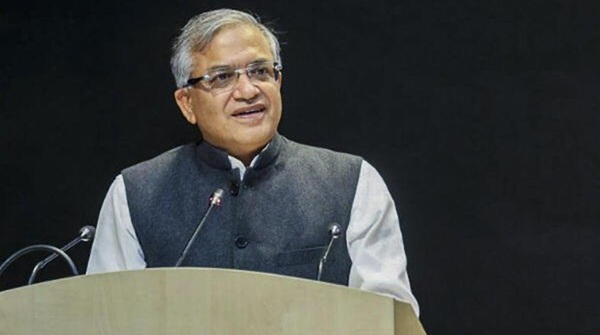
The Opposition is preparing to move a motion seeking the removal of Gyanesh Kumar, the Chief Election Commissioner (CEC) of the Election Commission of India, alleging biased conduct.
Under the Constitution, the CEC can be removed only through a process similar to the removal of a judge of the Supreme Court of India, ensuring a high level of institutional independence.
The move has reignited discussions about the constitutional safeguards and legal procedures governing the removal of the Chief Election Commissioner.
The Election Commission of India is a constitutional body responsible for conducting free and fair elections to:
It derives its authority from Article 324 of the Constitution of India, which vests the superintendence, direction and control of elections in the Commission.
The Commission typically consists of:
To ensure independence, the Constitution provides strong protections regarding tenure and removal of the CEC.
Opposition parties have initiated steps to move an impeachment motion against Gyanesh Kumar.
Key Allegations
Opposition parties are currently gathering signatures from Members of Parliament to initiate the formal removal motion.
The removal of the Chief Election Commissioner is governed by Article 324(5) of the Constitution of India.
Key Provisions
This constitutional safeguard prevents arbitrary removal by the government.
Parliament has enacted legislation to regulate the appointment and service conditions of Election Commissioners.
The relevant law is the Chief Election Commissioner and Other Election Commissioners (Appointment, Conditions of Service and Term of Office) Act, 2023.
Section 11 of the Act
Section 11 reiterates that:
Grounds for Removal
The grounds for removal are identical to those applicable to judges under Article 124(4) of the Constitution of India.
A Chief Election Commissioner can be removed only on the grounds of:
These grounds must be established through a formal inquiry process before Parliament.
The procedure for removal follows the mechanism laid down in the Judges (Inquiry) Act, 1968.
The process consists of multiple stages.
A motion for removal must be supported by a minimum number of Members of Parliament.
The motion is then submitted to the Speaker of the Lok Sabha or the Chairman of the Rajya Sabha.
The presiding officer of the House has the authority to:
If admitted, the removal process formally begins.
Once admitted, a three-member investigation committee is constituted to examine the charges.
The committee includes:
The committee investigates the allegations and submits its findings to the presiding officer of the House.
If the committee finds the charges proved, the motion is taken up for voting in Parliament.
To pass, the motion must secure:
Additionally, both Houses of Parliament must pass the motion in the same session.
After both Houses pass the motion, an address is sent to the President of India.
The President then issues an order removing the Chief Election Commissioner from office.
1. Ensuring Independence of the Election Commission
The stringent removal process protects the Election Commission from political interference, enabling it to function impartially.
2. Strengthening Democratic Institutions
By requiring a special majority in Parliament, the Constitution ensures that removal occurs only in exceptional cases.
3. Promoting Electoral Integrity
The security of tenure for the CEC enhances public confidence in the credibility of elections.
4. Checks and Balances
The procedure balances accountability and independence, allowing removal in cases of proven misconduct while preventing arbitrary dismissal.
5. Upholding Constitutional Governance
The removal framework reflects the broader principle of institutional autonomy for constitutional authorities in India’s democratic system.
FAQs1. Which constitutional provision governs the removal of the Chief Election Commissioner ? The removal of the CEC is governed by Article 324(5) of the Constitution of India. 2. On what grounds can the Chief Election Commissioner be removed ? The CEC can be removed only for proved misbehaviour or incapacity, similar to the grounds for removing a Supreme Court judge. 3. How many MPs are required to initiate a removal motion ? A removal motion must be supported by 100 members of the Lok Sabha or 50 members of the Rajya Sabha. 4. Which law governs the inquiry process for removal ? The inquiry process follows the procedure laid down in the Judges (Inquiry) Act, 1968. 5. Who issues the final order removing the Chief Election Commissioner ? After Parliament passes the motion, the President of India issues the final order removing the CEC from office. |


Our support team will be happy to assist you!

 Contact Us
  New Batch : 9555124124/ 7428085757
  Tech Support : 9555124124/ 7428085757