Prelims: (Environment + CA)
Mains: (GS 3: Environment, Biodiversity Conservation; GS 2: Governance) |
Why in News ?
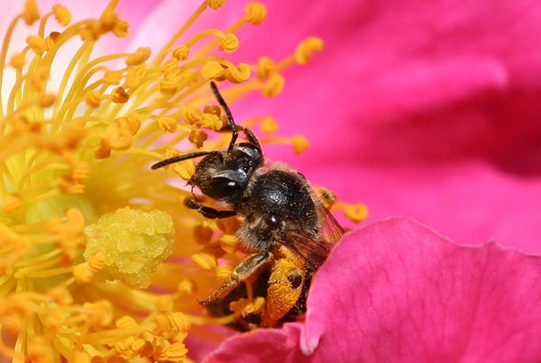
The Satipo Municipality in Peru has adopted the Declaration of Rights for Native Stingless Bees (Tribe Meliponini) through a municipal ordinance, granting legal rights to Amazonian stingless bees. This marks the world’s first legal recognition of insect rights, reinforcing biocultural conservation and rights-of-nature–based governance.
Background & Context
In recent decades, environmental governance has witnessed a paradigm shift from human-centric conservation to rights-of-nature frameworks, where ecosystems and species are recognised as legal entities. Countries like Ecuador and Bolivia have constitutionalised nature’s rights, while courts in New Zealand, Colombia, and India have experimented with legal personhood for rivers and ecosystems.
The recognition of legal rights for Amazonian stingless bees represents a significant evolution of this framework—extending legal protection to insects, which are foundational yet often overlooked components of biodiversity and food systems.
What are Amazonian Stingless Bees ?
- Amazonian stingless bees belong to the Meliponini tribe and are native pollinators of tropical and subtropical ecosystems, particularly the Amazon Rainforest.
- They are among the oldest bee species on Earth and play a critical role in maintaining rainforest ecology by pollinating a vast majority of native plant species.
- Although called “stingless,” they possess a vestigial stinger that cannot be used for defence; instead, they protect their colonies by biting or secreting irritating resins.
Habitat, Behaviour and Cultural Significance
- Habitat: Native to tropical and subtropical regions worldwide, with the highest diversity in the Amazon Basin.
- Behaviour: Highly social (eusocial) insects living in perennial colonies, often nesting in hollow tree trunks or natural cavities.
- Cultural Value: Stingless bees are deeply embedded in the traditions of Indigenous communities such as the Asháninka and Kukama-Kukamiria, who have protected and cultivated them for generations.
Ecological and Economic Importance
Biodiversity Support
- Pollinate over 80% of Amazonian flora
- Maintain ecosystem stability and forest regeneration
- Support global food crops such as coffee, cocoa, avocados, and blueberries
Meliponiculture
- Traditional practice of breeding stingless bees for honey and medicinal use
- Practised widely by Indigenous communities across tropical regions
- Represents a sustainable, low-impact livelihood system
Medicinal Value
- Stingless bee honey, often called the “miracle liquid”, has:
- Anti-inflammatory
- Antibacterial
- Antiviral properties
- Traditionally used to treat eye ailments such as cataracts
- Distinct characteristics:
- Higher moisture content
- Slight acidity
- Sweet–sour taste
- Non-gooey texture, unlike commercial honey
Threats Facing Stingless Bees
Stingless bees face escalating threats from:
- Deforestation and illegal logging
- Agricultural expansion and cattle grazing
- Forest fires
- Rising temperatures and climate change
- Habitat fragmentation and forced migration to higher elevations
These pressures threaten not only bee populations but also Indigenous knowledge systems and rainforest resilience.
What is the Declaration of Rights for Native Stingless Bees ?
The Declaration is a Rights of Nature–based legal framework incorporated into municipal law by Satipo, setting a global precedent for insect conservation.
Rights Recognised Include:
- Right to exist and flourish
- Right to maintain healthy populations
- Right to a pollution-free habitat
- Right to ecologically stable climatic conditions
- Right to regenerate natural cycles
- Right to legal representation in cases of harm or threat
Since stingless bees cannot represent themselves, human guardians—such as Indigenous leaders, environmental experts, or community institutions—are authorised to act on their behalf and initiate legal action against polluters.
Significance of the Move
- First formal recognition of insect rights globally
- Strengthens biocultural conservation, linking biodiversity with Indigenous heritage
- Expands the scope of environmental jurisprudence
- Provides a legal tool to address ecological harm at the local governance level
Indian Parallel: Nature as a Rights Holder
India has witnessed similar judicial thinking, though not yet extended to insects:
- Animal Welfare Board of India vs A. Nagaraja (2014): The Supreme Court interpreted Article 21 expansively to include animal life with intrinsic worth, dignity, and freedom from unnecessary suffering.
- Mohd. Salim vs State of Uttarakhand (2017): The Uttarakhand High Court granted legal personhood to the rivers Ganga and Yamuna, inspired by global precedents. However, this ruling was later stayed by the Supreme Court, keeping the issue unresolved.
These cases reflect India’s evolving environmental jurisprudence, though legislative backing remains limited.
Analysis: Why This Development Matters
- Highlights the ecological importance of insects in climate resilience
- Bridges conservation with Indigenous rights and traditional knowledge
- Pushes environmental law beyond charismatic megafauna
- Reinforces decentralised, community-led environmental governance
The move signals a shift from symbolic conservation to enforceable ecological justice.
Way Forward
- Replicate rights-of-nature frameworks in biodiversity hotspots
- Integrate Indigenous knowledge into conservation policy
- Strengthen local governance mechanisms for ecological protection
- Build international consensus on legal protection for pollinators
- Link climate finance with biocultural conservation initiatives
FAQs
Q1. Why are Amazonian stingless bees ecologically important ?
They pollinate over 80% of Amazonian flora, sustaining biodiversity and forest regeneration.
Q2. What makes this declaration globally significant ?
It is the world’s first legal recognition of insect rights, extending rights-of-nature jurisprudence.
Q3. How are stingless bees represented legally ?
Human guardians such as Indigenous leaders or experts can represent them in legal proceedings.
Q4. What is meliponiculture ?
It is the traditional practice of rearing stingless bees for honey and medicinal purposes.
Q5. Does India recognise legal rights of animals or nature ?
Indian courts have recognised animal welfare and experimented with legal personhood for rivers, but comprehensive rights-of-nature legislation is still absent.
|






 Contact Us
  New Batch : 9555124124/ 7428085757
  Tech Support : 9555124124/ 7428085757