
- UPSC Exam
- State PCS
- One Day Exam
- Current Affairs
- PT Quiz
- Downlaods
- About Coaching
- Blog
- Videos

| Prelims: (International Relations + CA) Mains: (GS 3 – Economy, International Trade, Global Financial Architecture, Currency Dynamics) |
Gold prices have surged past the $5,000 per ounce mark for the first time, even as the US dollar slid to a four-month low. The rally is being driven not only by households but by aggressive buying from central banks worldwide.
Major central banks have emerged as key buyers of gold, signalling a strategic shift in reserve management. While households traditionally buy gold as a hedge, it is the actions of central banks that underline a deeper structural change in the global financial system.
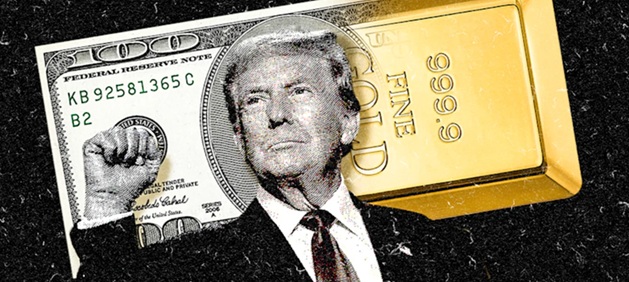
The underlying driver of this trend is Donald Trump’s policy approach. His trade wars, sanctions-heavy foreign policy, and use of the US dollar as a geopolitical weapon have prompted many countries to reduce reliance on dollar-denominated assets. As trust in the dollar’s neutrality weakens, gold—being politically neutral and free from sanctions risk—has regained prominence as a reserve asset.
For decades, the US dollar has been the backbone of the global monetary system, serving as:
However, growing geopolitical fragmentation, rising protectionism, and the strategic use of financial sanctions have begun to challenge this dominance. In response, countries are increasingly seeking diversification in reserve assets, particularly through gold and non-dollar currencies.
India’s central bank, the Reserve Bank of India (RBI), reported a sharp rise in foreign exchange reserves, with nearly one-third of the increase coming from gains in the value of its gold holdings.
Although the RBI added only a small quantity of gold, the 70% rise in gold prices over the past year significantly boosted the value of its reserves, far outpacing gains from foreign currency assets.
What matters more than absolute purchases is gold’s share in total reserves:
This reflects a strategic recalibration of reserve portfolios toward assets insulated from currency depreciation and geopolitical risk.
Experts attribute the move away from the dollar to a combination of:
US President Trump has repeatedly asserted the need to preserve the dollar’s global dominance, even threatening BRICS countries with punitive tariffs if they pursue alternatives to the dollar. Ironically, this aggressive use of tariffs, sanctions, and economic coercion has:
These dynamics have contributed to a sharp weakening of the US dollar—down about 9% in 2025, its steepest fall in nearly a decade.
De-dollarisation is most visible in commodities, with a growing share of global energy trade now priced in non-dollar contracts, weakening the dollar’s traditional dominance.
The trend is also evident in government bond holdings:
Concerns are no longer limited to states:
The European Union holds about $10.4 trillion in US portfolio assets, accounting for nearly 29% of foreign ownership. Trump has warned of “big retaliation” if Europe sells US bonds, underscoring how financial flows are becoming tools of geopolitical leverage.
De-dollarisation has been gradual but persistent:
This reflects steady diversification by central banks into gold and other currencies.
Despite these shifts, the US dollar remains overwhelmingly dominant, accounting for 89% of global over-the-counter foreign exchange turnover.
However, if current US policies and rhetoric continue—especially under the Trump administration—the pace of diversification away from the dollar could accelerate, leading to more visible structural change in the global monetary system.
FAQs1. Why are central banks buying more gold ? Because gold is politically neutral, free from sanctions risk, and acts as a hedge against currency depreciation and geopolitical uncertainty. 2. How has the RBI’s gold strategy affected India’s forex reserves ? Nearly one-third of the recent increase in India’s forex reserves came from gains in the value of gold holdings due to rising gold prices. 3. What is de-dollarisation ? It is the process by which countries reduce reliance on the US dollar in trade, reserves, and financial transactions. 4. How have US policies contributed to de-dollarisation ? Trade wars, sanctions, and economic coercion have weakened trust in the dollar’s neutrality, prompting countries to diversify away from dollar assets. 5. Will the US dollar lose its global dominance soon ? Not immediately—the dollar remains dominant in global markets, but ongoing policy trends could accelerate gradual diversification and weaken its long-term position. |



Our support team will be happy to assist you!

 Contact Us
  New Batch : 9555124124/ 7428085757
  Tech Support : 9555124124/ 7428085757