Why in the News ?
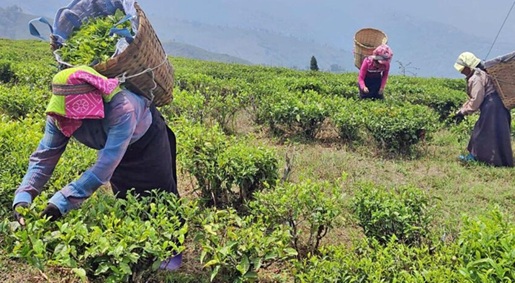
The labor exploitation hidden behind the lush greenery of West Bengal's tea plantations is now resonating internationally. Workers, led by the West Bengal Tea Workers Committee (PBCMS), have filed a formal complaint with the International Labor Organization (ILO). This complaint is not limited to wages; it is a grim account of decades of systematic exploitation, structural discrimination, and human rights violations.
What is ILO Article 24 ?
- Article 24 of the ILO Constitution is a powerful legal tool. It empowers any industrial organization (employers or workers) to file a complaint against a member country that has ratified an international labor convention but fails to implement it on the ground.
- In this case, the Indian government is accused of ignoring international standards related to minimum wages, discrimination, and social security.
Key points of exploitation: A human tragedy
- The picture workers paint of the plantations resembles modern-day slavery.
- Starvation and malnutrition : The death of an Adivasi worker from starvation in 2024 has put the entire system under scrutiny.
- Economic violence : Unpaid wages, provident fund (PF), and gratuity have not been paid for years.
- The scourge of landlessness : Despite working for generations, tea workers lack ownership of their land.
- Tourism versus displacement : Plantation lands are being diverted for commercial use in the name of 'tea tourism,' increasing the risk of worker displacement.
Health Report: Alarming Statistics
- Recent surveys have revealed that the health situation in tea plantations is akin to a "serious emergency" :
- BMI crisis : 44% of workers surveyed had a body mass index (BMI) of less than 17, which medically qualifies as severe malnutrition.
- Invisible epidemic : Nearly 20,000 workers are suffering from problems such as anemia, weakness, and underweight, which are directly linked to low income and inadequate food.
Structural and Caste Discrimination
- The report highlights that this exploitation is not just economic, but also gender and caste based :
- Neglect of women workers : Women constitute the majority of the plantation workforce, but are excluded from decision-making processes and higher positions.
- Tribal communities : Most workers in plantations are from tribal or Dalit communities. They are trapped in a system of "bonded labor" without legal protection.
Failure of Regulatory Mechanisms: Silence of the Central and State Governments
- PBCMS attributes this crisis to administrative failures at two levels :
- Central Government (Tea Act 1953) : The Central Government has the power to take over the management of distressed plantations, but this power has not been exercised.
- State Government (Minimum Wage) : No legal framework for minimum wages has yet been established for tea workers in West Bengal, which is a constitutional failure.
- Weak Inspection : The Labor Department's inspection mechanisms have been rendered "ineffective" under industrial pressure.
Repressive Policies: Attempts to Stifle Unions
- Workers say they face repression when they speak out for their rights :
- Filing of false criminal cases against protesters.
- Intimidation and workplace harassment by plantation management.
- This is a direct violation of the ILO principle of “freedom of association”.
Conclusion:
This struggle of tea plantation workers is no longer just a fight for wages, but a fight for human dignity. This complaint, filed under ILO Article 24, is a warning to the global community. "The dignity of labor cannot remain confined to papers and slogans. As long as the last plantation worker goes to bed hungry, India's claims of economic development remain incomplete."






 Contact Us
  New Batch : 9555124124/ 7428085757
  Tech Support : 9555124124/ 7428085757