
- UPSC Exam
- State PCS
- One Day Exam
- Current Affairs
- PT Quiz
- Downlaods
- About Coaching
- Blog
- Videos

|
Prelims: UNESCO Tentative List 2026 |
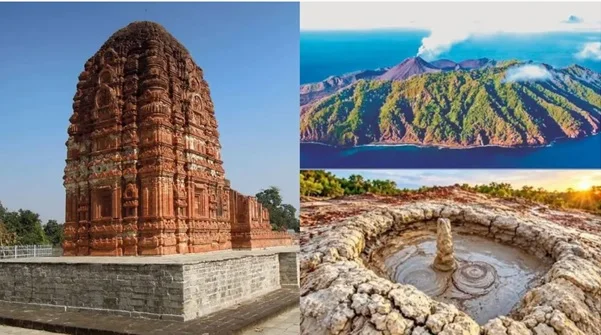
The Permanent Delegation of India to UNESCO proposed these three sites on September 28, 2026.
Location: Andaman and Nicobar Islands
Category: Natural Heritage
Baratang Island, located in the Bay of Bengal, is known for its limestone caves, karst formations and mud volcanoes.
The mud volcanoes are associated with underground sediment and geological processes. According to the information provided in the nomination document, these mud volcanoes became active again in 2025 after a long period of inactivity.
Location: Andaman and Nicobar Islands
Category: Natural Heritage
This proposed site includes Barren Island and Narcondam Island, two volcanic islands in the Andaman Sea. They help explain volcanic activity associated with the movement of tectonic plates in the region.
The site is significant for understanding tectonic activity, volcanic processes and the relationship between geological features and biodiversity.
Location: Mahasamund district, Chhattisgarh
Category: Cultural Heritage
Sirpur is a historic settlement located on the eastern bank of the Mahanadi River, approximately 78 kilometres from Raipur. It is known for its archaeological remains and evidence of ancient urban life, trade and religious traditions.
Key features of Sirpur include:
Sirpur provides valuable insights into the region’s historical development, religious interactions and cultural heritage.
The process generally involves four stages:
A site must demonstrate Outstanding Universal Value and meet the applicable criteria to be inscribed on the World Heritage List.
The inclusion of these sites highlights different aspects of India’s natural and cultural heritage.
The addition of the three sites to UNESCO’s Tentative List highlights India’s diverse geological formations and historical heritage. Baratang and the Andaman Subduction Volcanoes represent the country’s natural heritage, while Sirpur reflects its rich archaeological and cultural traditions. Their inclusion is an initial step toward possible World Heritage recognition and may help strengthen awareness of their conservation needs.
Prelims Practice QuestionQ. Consider the following statements regarding the three Indian sites added to UNESCO’s Tentative List in 2026:
Which of the statements given above is/are correct? (a) 1 and 2 only (b) 2 and 3 only (c) 1 and 3 only (d) 1, 2 and 3 Mains Practice Question“India’s natural and cultural heritage reflects its geological diversity and historical richness.” Discuss the significance of UNESCO’s Tentative List in promoting heritage conservation in India. |
1. Which three Indian sites were added to UNESCO’s Tentative List in 2026?The Baratang Karst-Mud-Volcano Complex, Andaman Subduction Volcanoes and Sirpur Cultural and Archaeological Landscape. 2. Which of the three sites are natural heritage sites?The Baratang Karst-Mud-Volcano Complex and Andaman Subduction Volcanoes are proposed as natural heritage sites. 3. Where is the Sirpur Cultural and Archaeological Landscape located?It is located in Mahasamund district of Chhattisgarh, near the Mahanadi River. 4. Does inclusion in UNESCO’s Tentative List mean a site is a World Heritage Site?No. It is a preliminary step toward possible nomination and inscription on the World Heritage List. 5. What is the importance of UNESCO’s Tentative List?It identifies sites that a country may nominate for World Heritage status and forms part of the nomination process. |


Our support team will be happy to assist you!

 Contact Us
 New Batch : 9555124124/ 7428085757
 Tech Support : 9555124124/ 7428085757
