
- UPSC Exam
- State PCS
- One Day Exam
- Current Affairs
- PT Quiz
- Downlaods
- About Coaching
- Blog
- Videos

| Prelims: (Economics + CA) Mains: (GS 3 – Infrastructure, Energy, Technology, Climate Change) |
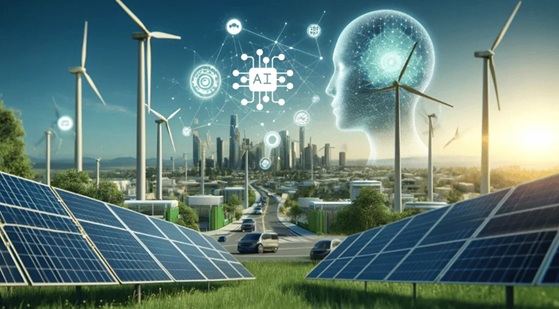
At the India AI Impact Summit held at Bharat Mandapam, policymakers and global experts deliberated on the theme ‘Global Mission on AI for Energy Scaling through Citizen-Centric India Energy Stack’.The government highlighted Artificial Intelligence (AI) as a transformative force for scaling Distributed Renewable Energy (DRE) and modernising India’s power sector.
India is undergoing a dual transformation:
With rising rooftop solar, solar pumps, and decentralised energy systems, traditional grids face structural stress. AI integration is now viewed as critical to managing this complexity and enabling predictive governance.
DRE refers to decentralised, small-scale renewable systems (kW to MW scale) located near consumption points.
Examples include:
Unlike centralised power plants, DRE promotes:
Key Data:
Major Schemes:
Public investment:
Structural Challenges:
AI Applications in DRE:
Government vision: Shift from reactive governance to predictive governance.
AI is being conceptualised as core infrastructure—similar to:
This aligns with India’s Digital Public Infrastructure (DPI) model. The proposed India Energy Stack aims to replicate the success of the India Stack in fintech.
Strategic Vision:
Energy transition increases system complexity. AI integration raises concerns about:
Governance Principles Proposed:
1. Legacy Grid Infrastructure
Transformers and feeders require modernisation.
2. DISCOM Financial Stress
AI deployment requires financial viability of utilities.
3. Data Governance Risks
AI systems require robust regulatory oversight.
4. Digital Divide
Unequal access to smart infrastructure may widen disparities.
AI-powered DRE convergence is not merely technological—it is strategic.
It determines whether India:
The AI–Energy nexus sits at the heart of:
FAQs1. What is Distributed Renewable Energy (DRE) ? Small-scale renewable systems located near consumption points, such as rooftop solar and solar pumps. 2. Why is AI needed in the renewable energy sector ? To manage grid complexity, predict demand, optimise performance, and ensure stability with rising decentralised generation. 3. What is the India Energy Stack ? A proposed interoperable digital framework for energy markets, inspired by India’s digital public infrastructure model. 4. How does AI help consumers ? It can reduce costs, improve reliability, and empower consumers to become electricity producers (prosumers). 5. What are the risks of AI integration in energy ? Data privacy concerns, cybersecurity threats, and risk of monopolisation by large technology firms. |



Our support team will be happy to assist you!

 Contact Us
  New Batch : 9555124124/ 7428085757
  Tech Support : 9555124124/ 7428085757