
- UPSC Exam
- State PCS
- One Day Exam
- Current Affairs
- PT Quiz
- Downlaods
- About Coaching
- Blog
- Videos

| Prelims: (Polity & Governance + CA) Mains: (GS 3 – Indian Economy, Taxation Policy, Investment Climate) |
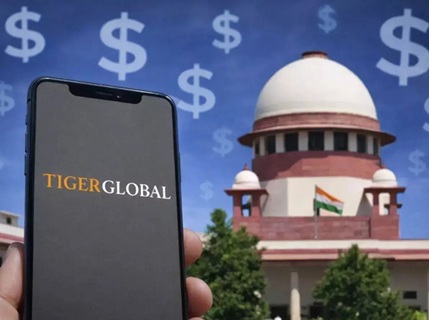
The Supreme Court of India has ruled that venture capital firm Tiger Global’s $1.6-billion stake sale in Flipkart to Walmart is taxable in India. The verdict, closely watched by foreign investors, is considered a landmark judgment with the potential to reshape cross-border deal structures and influence India’s startup investment landscape.
In denying DTAA protection, the Supreme Court overturned an August 2024 ruling of the Delhi High Court, which had earlier set aside a 2020 decision of the Authority for Advance Rulings (AAR).
The AAR had concluded that the transaction was prima facie structured to avoid tax, and therefore did not merit treaty protection.
Mauritius had long been a favoured investment route into India due to the non-taxability of capital gains until 2016.
The judgment comes at a time when startup funding is slowing, as investors increasingly prioritise profitability, regulatory clarity, and tax certainty—potentially reshaping how foreign capital approaches Indian startup exits.
After acquiring a stake in Flipkart, Mauritius-based entities of Tiger Global—Tiger Global International II, III, and IV Holdings—went on to invest in several Indian companies.
The matter was taken to the Authority for Advance Rulings, which in 2020 dismissed Tiger Global’s claim.
The AAR found that the investment structure was primarily designed to obtain DTAA benefits and that effective control lay outside Mauritius, particularly in the United States, through a complex web of entities.
On appeal, the Delhi High Court overturned the AAR ruling, holding that the conclusion of tax avoidance was arbitrary and unsustainable.
The judgment reinforces a shift toward examining economic substance.
Investors must now demonstrate:
The ruling increases uncertainty for venture capital and private equity exits.
Exit planning, valuations, and indemnity clauses may require reassessment amid higher scrutiny and litigation risk.
Tax insurance and indemnity mechanisms are expected to become scarcer and more expensive, raising compliance costs and complicating deal-making for startups and foreign investors.
The Supreme Court ruling coincides with a broader slowdown in India’s startup funding.
In 2025, Indian tech startups raised $10.5 billion, representing:
While seed-stage funding fell sharply, early-stage investments showed relative resilience, indicating selective but continued investor confidence.
FAQs1. Why is the Tiger Global–Flipkart ruling significant ? It clarifies that treaty benefits cannot be claimed automatically and that capital gains from such exits may be taxable in India based on substance. 2. What is the India–Mauritius DTAA ? It is a tax treaty designed to prevent double taxation between India and Mauritius, historically used for routing investments into India. 3. What does the Supreme Court mean by “substance over form” ? It means that courts will look beyond legal structures to assess the real economic control and purpose of transactions. 4. How will this affect foreign investors in Indian startups ? It increases tax uncertainty, compliance costs, and litigation risk, influencing how future investments and exits are structured. 5. Does this ruling impact past closed transactions ? While closed cases may not automatically reopen, reassessments are now more likely where legally permissible. |



Our support team will be happy to assist you!

 Contact Us
  New Batch : 9555124124/ 7428085757
  Tech Support : 9555124124/ 7428085757