
- UPSC Exam
- State PCS
- One Day Exam
- Current Affairs
- PT Quiz
- Downlaods
- About Coaching
- Blog
- Videos

| Prelims : (Polity & Governance + CA) Mains : (GS 2 – Governance, Federalism, Tribal Administration) |
The Government of Meghalaya has extended the tenure of the Garo Hills Autonomous District Council (GHADC) by six months, raising focus on the functioning and constitutional role of Autonomous District Councils under the Sixth Schedule.
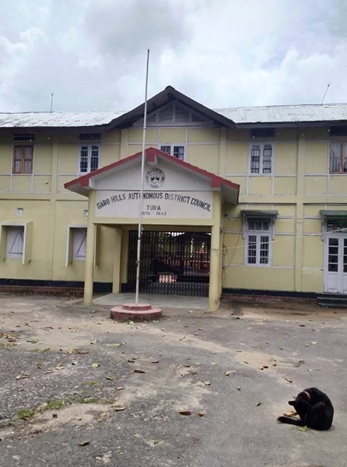
India’s North-East is characterised by ethnic diversity, tribal traditions, and distinct socio-cultural systems, necessitating special governance mechanisms.
To protect the identity, customs, and land rights of tribal communities, the Constitution incorporated the Sixth Schedule of the Indian Constitution.
This Schedule provides for Autonomous District Councils (ADCs) with legislative, administrative, and financial powers to ensure self-governance in tribal areas.
The extension of GHADC’s tenure reflects administrative considerations and highlights the importance of continuity in local governance institutions.
ADCs can generate revenue through :
1. Ensuring Continuity in Governance
2. Protection of Tribal Interests
3. Strengthening Decentralisation
4. Flexibility in Constitutional Mechanism
5. Focus on Institutional Reforms
FAQs1. What is an Autonomous District Council (ADC) ? It is a constitutional body under the Sixth Schedule that provides self-governance to tribal areas. 2. Which states have ADCs ? Assam, Meghalaya, Tripura, and Mizoram. 3. What is the tenure of an ADC ? Normally five years, but it can be extended under special circumstances. 4. What powers do ADCs have ? They have legislative, administrative, and financial powers related to land, customs, and local governance. 5. Why was GHADC’s tenure extended ? To ensure continuity in governance and avoid administrative disruptions in the region. |



Our support team will be happy to assist you!

 Contact Us
  New Batch : 9555124124/ 7428085757
  Tech Support : 9555124124/ 7428085757