The Supreme Court recently expressed serious concern over the increasing number of alleged fake law degree holders practising as advocates in courts. The issue came up during the hearing of a plea related to the designation of senior advocates in the Delhi High Court.
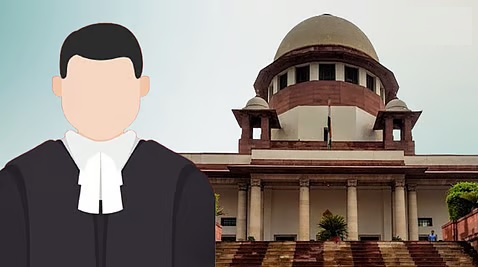
Supreme Court’s Concern Over Fake Law Degrees
A bench comprising Surya Kant and Joymalya Bagchi observed that there were “thousands of fraudulent people wearing black robes” whose law degrees were under serious doubt.
The CJI remarked:
“I have serious doubts about the genuineness of their law degrees.”
He further stated that he was awaiting an appropriate case to possibly order a probe by the Central Bureau of Investigation (CBI) into the issue, particularly involving several Delhi-based advocates.
Criticism of Lawyers’ Social Media Conduct
- The Supreme Court also raised concerns over the conduct of certain lawyers on social media platforms such as Facebook and YouTube.
- The CJI stated :-“The things they are posting on Facebook, YouTube, etc., do they think we are not watching?”
- The Court specifically objected to the language allegedly used online by advocate Sanjay Dubey, who appeared for the petitioner.
Addressing the advocate, the CJI reportedly said:-
“Let people understand the kind of language you are using on Facebook. I will show you what discipline in the profession means.”
Remarks on Activism and Institutional Criticism
- The CJI also criticised what he described as a growing trend among unemployed youths engaging in activism and online criticism instead of pursuing professional careers.
- According to him, some individuals become “media”, “social media”, “RTI activists”, or other forms of activists and begin targeting institutions and individuals.
He remarked:-“There are already parasites of society who attack the system, and you want to join hands with them?”
Later clarification indicated that these remarks were directed at individuals allegedly entering professions through fake credentials.
Senior Advocate Designation Debate
- Justice Bagchi questioned whether the designation of Senior Advocate was increasingly becoming a status symbol rather than an opportunity to strengthen the justice delivery system.
- The petition before the Court alleged that the Delhi High Court had not fully implemented Supreme Court guidelines regarding the designation of Senior Advocates.
- However, after the Court declined to entertain the plea and made strong observations, the petitioner withdrew the case.
- The petitioner had earlier challenged the Delhi High Court’s refusal to consider him for Senior Advocate designation and had also filed a contempt petition, which the Supreme Court dismissed in December last year.
Bar Council of India Chairperson’s Statement: “35–40% Advocates May Be Fake”
According to him :
- Many allegedly obtained fabricated degrees or purchased certificates.
- Such individuals are practising law on the basis of these documents.
- During degree verification exercises initiated by the BCI, around 40% of advocates reportedly did not submit verification forms, raising suspicions regarding authenticity.
Mishra said that the issue had already been brought to the attention of the Chief Justice of India.
Clarification on CJI’s “Cockroach” Remark
- The BCI Chairperson clarified that the CJI’s controversial reference to unemployed youths as “cockroaches” was specifically aimed at individuals using fake degrees to enter the legal profession.
- He stated that the remarks were made in the context of persons obtaining fake credentials, wearing black coats and bands, and practising in courts.
Key Issues Emerging from the Debate
- Authenticity of Law Degrees – Concerns over fake legal qualifications and their impact on judicial credibility.
- Need for Verification Mechanisms – Calls for stricter degree verification and possible investigative action.
- Professional Ethics – Questions regarding lawyers’ conduct on social media and standards of professional discipline.
- Senior Advocate Designation – Debate on whether the designation is becoming status-oriented rather than service-oriented.
- Institutional Integrity – Broader concerns regarding preserving trust in the justice delivery system.






 Contact Us
  New Batch : 9555124124/ 7428085757
  Tech Support : 9555124124/ 7428085757