
- UPSC Exam
- State PCS
- One Day Exam
- Current Affairs
- PT Quiz
- Downlaods
- About Coaching
- Blog
- Videos

|
Prelims : Art & Culture+ CA |
The festival of Baisakhi 2026, celebrated on 14 April, has gained renewed attention due to its cultural, religious, and socio-economic relevance, especially in northern India.
In recent years, the festival has also intersected with contemporary developments such as farmer mobilisations and agrarian concerns, thereby enhancing its importance beyond a traditional celebration and bringing it into the domain of current affairs.
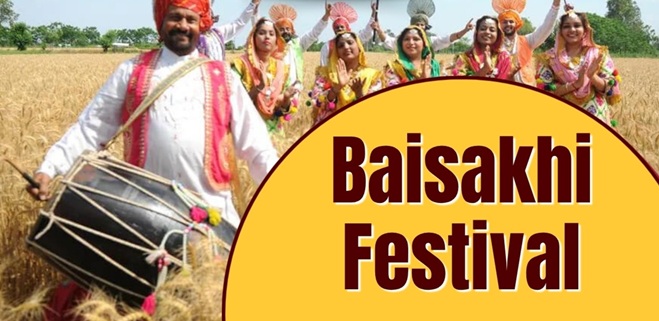
Baisakhi, also known as Vaisakhi, is one of the most significant festivals celebrated primarily in the states of Punjab and Haryana, although its cultural and religious importance extends across India and among the global Sikh diaspora.
It is a multi-dimensional festival, which simultaneously represents :
The festival marks the beginning of the month of Vaisakh according to the solar calendar and is associated with the Sun’s transition into the zodiac sign Aries (Mesha Sankranti).
Thus, Baisakhi forms part of a broader pattern of pan-Indian seasonal transitions and cultural renewal.
One of the most defining historical events associated with Baisakhi is the establishment of the Khalsa Panth by Guru Gobind Singh in 1699 at Anandpur Sahib.
On this day :
This event transformed Sikhism by giving it a collective identity rooted in both spirituality and martial tradition, making Baisakhi a cornerstone of Sikh religious history.
Baisakhi also carries a deeply tragic historical significance due to the Jallianwala Bagh Massacre of 13 April 1919 in Amritsar.
This incident became a turning point in India’s freedom struggle, strengthening the demand for independence and exposing the brutality of colonial governance.
Baisakhi marks the harvesting season of Rabi crops, particularly wheat, in northern India.
In states like Punjab and Haryana, where agriculture forms the backbone of the economy, Baisakhi is not merely symbolic but deeply connected to the economic well-being of farming communities.
Baisakhi holds profound religious significance for Sikhs as it commemorates the birth of the Khalsa Panth.
The festival reinforces the core Sikh values of :
Among Hindus, Baisakhi is observed as a solar New Year festival, associated with Mesha Sankranti.
Thus, Baisakhi reflects religious diversity and shared cultural traditions.
Baisakhi is also a vibrant cultural festival that showcases the richness of Punjabi traditions.
These cultural expressions strengthen :
The celebration of Baisakhi involves a combination of religious, cultural, and social practices.
In recent years, Baisakhi has also become associated with farmer identity and agrarian issues.
The festival reflects the continued importance of agriculture in India’s socio-economic landscape
Prelims
Q. Baisakhi is associated with which of the following events ?
(a) Birth of Guru Nanak
(b) Formation of Khalsa Panth
(c) Start of Mughal Empire
(d) Champaran Satyagraha
Mains
“Baisakhi reflects the intersection of agriculture, religion, and history in India.” Discuss.
FAQsQ1. When is Baisakhi celebrated ? It is celebrated on 13th or 14th April every year. Q2. Why is it important for Sikhs ? It marks the formation of the Khalsa Panth by Guru Gobind Singh. Q3. What is its agricultural significance ? It celebrates the harvest of Rabi crops, especially wheat. Q4. What historical event is linked with Baisakhi ? The Jallianwala Bagh Massacre of 1919. Q5. Why is it relevant today ? It represents cultural identity, agrarian significance, and socio-political relevance. |



Our support team will be happy to assist you!


 Contact Us
  New Batch : 9555124124/ 7428085757
  Tech Support : 9555124124/ 7428085757