Why in the news ?
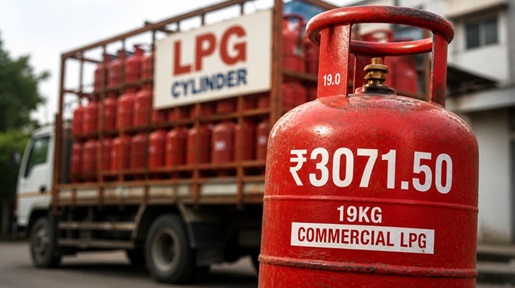
- The government increased the price of a 19-kilogram commercial LPG cylinder by approximately ₹933.
- The price increased to ₹3,071.50 in Delhi.
- Domestic LPG, petrol, and diesel prices were kept stable.
- This particularly impacted small businesses like restaurants, dhabas, bakeries, and cloud kitchens.
What is commercial LPG and why is it important ?
- Domestic LPG is used for cooking in homes.
- It is a 14-kilogram cylinder.
- It is a subsidized product and a politically sensitive issue.
- Commercial LPG is used by businesses like restaurants, hotels, catering services, cloud kitchens, bakeries, and canteens.
- It is a 19-kilogram cylinder.
- For millions of small food businesses, cooking gas is not just a cost,
- it is their business itself.
- Therefore, a sudden increase in commercial LPG prices impacts the informal economy far more severely than inflation figures.
Main Reasons for Price Rise
US-Iran War
- Global supply disruptions caused by the US-Iran war have led to a decline in profit margins.
- A sudden, sharp increase in fuel costs, on top of these existing pressures, threatens to trigger a chain reaction across the economy.
Why is the timing sensitive ?
- This price increase comes at a critical time.
- India's small businesses were already grappling with several problems, such as :
- Weak consumer demand
- Increased raw material costs
Chain Reaction – How Does a Price Rise Spread ?
- When commercial LPG prices rise, the impact isn't limited to restaurants, but gradually spreads throughout the economy.
- First, costs increase for restaurants, dhabas, and small eateries, as cooking gas is their primary expense.
- Subsequently, pressure mounts on small businesses, as their profits are already low and they can't afford the additional costs. Therefore, many small operators either scale back their operations or temporarily close down.
- When businesses are affected, workers are the first to be affected, especially those who work on daily or weekly wages. Their working hours are reduced, and their incomes decrease.
- Next, consumers are affected, as businesses either raise food prices or reduce the quantity of food to cover their increased costs. This leads to food inflation.
- This then impacts the supply chain, as restaurants place fewer orders, reducing the workload of vegetable vendors, dairy suppliers, transporters, and packaging units.
- As a result, small and medium enterprises (MSMEs) face a cash crunch and their business begins to decline.
- Finally, this entire process weakens local demand, slowing economic activity in urban and semi-urban areas.
Government Approach - Protection for Families, Pressure on Businesses
- The government kept domestic LPG prices stable, providing relief to the common man and helping control domestic inflation.
- This decision also prevented immediate public anger, as domestic gas is a matter directly affecting every family.
- However, experts believe that the economic pressure has not ended; it is now manifesting indirectly.
- This pressure is particularly felt by restaurants, small businesses, and the informal sector, where commercial LPG has become more expensive.
- This is leading to signs of supply shortages, as many small businesses are reducing their production.
- Additionally, high prices and slow economic activity are also reducing demand, which is a serious concern for the future.
- Simply put, the government protected families, but increased the burden on businesses.
PNG Alternatives – Opportunities and Constraints
- The sudden increase in commercial LPG prices is now increasing the likelihood of a shift to PNG (piped natural gas).
- This shift is significant because policymakers and city gas companies are already promoting PNG, and the high cost of LPG may now lead businesses to consider this option more.
Advantages of PNG
- PNG gas is continuously available (24x7) through pipelines, eliminating the need for frequent refilling or storage of cylinders.
- This reduces the risk of sudden supply interruptions, which are often seen with LPG.
- PNG is considered safer because it is lighter than air and disperses quickly in the event of a leak, whereas LPG can accumulate in closed spaces and become dangerous.
- Furthermore, PNG is easier to use from an operational perspective and its price fluctuations are expected to be relatively low.
Limitations of PNG
- However, PNG's biggest drawback is that it is not yet available nationwide, with limited access, especially in smaller towns and rural areas.
- Furthermore, it is difficult for small shopkeepers, dhabas, and informal businesses to switch to PNG, as it requires new pipeline connectivity, equipment modifications, and government approvals.
- All of this poses an additional financial burden, especially when their costs are already rising.
Conclusion
PNG is a better and safer option, but its limited availability and initial cost make it a viable solution for all small businesses.






 Contact Us
  New Batch : 9555124124/ 7428085757
  Tech Support : 9555124124/ 7428085757