
- UPSC Exam
- State PCS
- One Day Exam
- Current Affairs
- PT Quiz
- Downlaods
- About Coaching
- Blog
- Videos

Recently, the Union Minister for Science & Technology dedicated the UMMID Programme, a national initiative aimed at improving healthcare services for individuals and families affected by inherited and rare genetic disorders.
The programme marks an important step toward strengthening early diagnosis, genetic counselling, and affordable healthcare support for patients suffering from rare diseases in India.
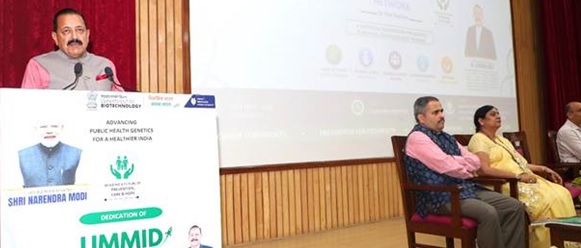
UMMID (Unique Methods of Management of Inherited Disorders) is a national programme launched to address rare genetic disorders and inherited diseases in India.
The initiative focuses on promoting early intervention, timely diagnosis, and affordable healthcare services for affected families.
It aims to improve the diagnosis, management, and prevention of inherited and rare genetic disorders through an integrated public health approach.
The UMMID Programme has been introduced with the following objectives :
The UMMID Programme represents India’s first comprehensive national initiative specifically designed to address inherited genetic disorders through an integrated framework.
The programme adopts a multi-dimensional approach covering :
This integrated strategy seeks to establish structured systems for managing rare genetic diseases at the national level.
The programme operates through three major pillars :
NIDAN Kendras serve as specialised centres for :
These centres aim to strengthen early detection and improve patient management.
The programme includes outreach activities in Aspirational Districts to improve access to healthcare services in underserved regions.
The outreach component focuses on :
The initiative establishes specialised training centres to build capacity among healthcare professionals.
These centres provide :
The UMMID Programme supports the implementation of the National Policy for Rare Diseases (NPRD), 2021.
It contributes by creating structured care pathways for patients suffering from inherited and rare disorders.
The programme helps improve :
The programme is implemented under the leadership of the Department of Biotechnology.
The Department of Biotechnology (DBT) under the Ministry of Science & Technology serves as the nodal agency responsible for implementing the initiative.
The UMMID Programme is significant because it :
The initiative is expected to improve healthcare outcomes and reduce the burden of inherited genetic disorders in India.
The UMMID Programme represents a major step in India’s healthcare system by creating an integrated framework for managing inherited and rare genetic disorders.
Through diagnostics, counselling, outreach activities, training, and public awareness, the programme seeks to strengthen early intervention and ensure better healthcare access for affected families.
By supporting the National Policy for Rare Diseases, 2021, the initiative is expected to improve long-term care systems and advance India’s rare disease management ecosystem.



Our support team will be happy to assist you!

 Contact Us
  New Batch : 9555124124/ 7428085757
  Tech Support : 9555124124/ 7428085757