Prelims: BRICS, Cross-Border Payments, Central Bank Digital Currency (CBDC), Fast Payment Systems, Rupee Internationalisation, RBI, Local Currency Trade, Artificial Intelligence in Banking
Mains: GS Paper III – Indian Economy, Banking & Financial Technology; Science & Technology – AI and Emerging Technologies
Keywords: BRICS 2026, RBI, Sanjay Malhotra, CBDC, UPI, Fast Payment Systems, Cross-Border Payments, Rupee Internationalisation, Local Currencies, Responsible AI |
Why in News?
Members of the BRICS grouping are discussing the possibility of linking their respective fast payment systems and Central Bank Digital Currencies (CBDCs) to make cross-border payments faster, cheaper and more efficient.
Important Point
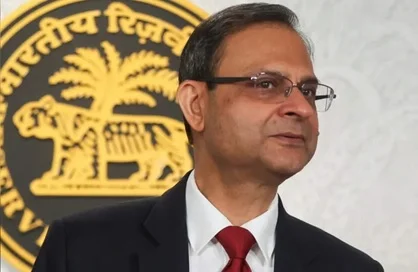
- Reserve Bank of India (RBI) Governor Sanjay Malhotra said that reducing the cost of cross-border payments is an important area of interest for BRICS countries.
- He added that several options, including CBDC connectivity and linkages between fast payment systems, remain under discussion.
- India is hosting the 2026 BRICS Summit, giving New Delhi an important platform to advance discussions on financial integration and alternative cross-border payment mechanisms.
What is the Proposal?
The discussions focus on exploring two major possibilities:
1. Linking Fast Payment Systems
- BRICS countries could explore interoperability between their domestic instant-payment platforms.
- India's Unified Payments Interface (UPI) is one of the world's major real-time payment systems and has already been linked with payment systems in several countries.
- Such interoperability could allow individuals and businesses to make cross-border payments more directly, potentially reducing dependence on traditional correspondent banking channels.
2. Linking Central Bank Digital Currencies
Another option under consideration is creating mechanisms through which the CBDCs of participating countries can interact with each other. CBDCs are digital forms of sovereign currency issued by central banks.
A connected CBDC ecosystem could potentially enable:
- Faster international settlements
- Lower transaction costs
- Greater transparency
- Reduced dependence on intermediaries
- More efficient trade payments
- Greater use of local currencies
However, the proposal remains at the discussion stage and does not represent a finalized BRICS payment system.
Why are Cross-Border Payments Important?
International payments can involve multiple intermediaries, currency conversions and settlement systems.
These processes can increase:
- Transaction costs
- Settlement time
- Foreign-exchange conversion costs
- Operational complexity
For emerging economies, cheaper and faster payment mechanisms can support trade, remittances, investment and financial inclusion. BRICS cooperation could therefore contribute to building alternative payment channels that complement existing global financial infrastructure.
India's Push for Rupee Internationalisation
The RBI Governor also stated that the central bank will continue efforts to internationalise the Indian rupee and encourage the use of local currencies in cross-border payments and trade.
Rupee internationalisation refers to increasing the use of the Indian rupee in:
- International trade
- Cross-border settlements
- Financial markets
- Investment transactions
- Invoicing and payment arrangements
Greater use of the rupee could reduce India's dependence on foreign currencies for certain international transactions and potentially lower currency-conversion risks.
BRICS and Alternative Payment Mechanisms
- BRICS has increasingly discussed ways to strengthen financial cooperation among member countries.
- The broader objective is not necessarily to create a single common currency but to develop more efficient mechanisms for cross-border payments and settlements.
- A common BRICS currency would require significant monetary, financial and institutional integration, whereas payment-system interoperability can be pursued through technical and regulatory cooperation.
What are the Challenges?
Despite the potential benefits, connecting national payment systems and CBDCs would involve several challenges.
- Regulatory Differences: Each country has its own rules governing payments, capital flows, data protection and financial institutions.
- Cybersecurity Risks: Greater connectivity between financial systems could increase the potential impact of cyberattacks.
- Data and Privacy: Countries would need agreements regarding cross-border financial data, privacy and data localisation.
- Exchange-Rate Risk: Transactions involving multiple currencies still require mechanisms to manage foreign-exchange fluctuations.
- Technical Interoperability: Different countries may use different technological architectures and standards for their fast payment systems and CBDCs.
- Geopolitical Considerations: BRICS includes economies with different strategic interests and financial systems. Building consensus on common payment infrastructure could therefore be complex.
Responsible Use of Artificial Intelligence in Banking
- The RBI Governor also highlighted the growing role of Artificial Intelligence (AI) in the banking sector.
- He argued that AI should be viewed as a capability that can be harnessed rather than merely as a risk to be controlled.
- Indian banks, according to the Governor, cannot remain passive observers of AI adoption. Banks should identify the AI models being used across their operations and establish board-approved AI governance frameworks.
AI can potentially improve:
- Fraud detection
- Credit assessment
- Customer service
- Risk management
- Cybersecurity
- Compliance
- Operational efficiency
However, uncontrolled use of AI can create risks related to cybersecurity, model errors, bias, data protection and governance. The RBI's approach therefore emphasises a balance between innovation and safety.
Significance for India
- The BRICS payment-system discussions could have wider implications for India's economic and strategic interests.
- First, stronger cross-border payment connectivity could support India's growing international trade.
- Second, greater use of the rupee could contribute to its internationalisation.
- Third, India's experience with UPI provides an opportunity to promote Indian payment technology internationally.
- Fourth, CBDC cooperation could strengthen India's position in the emerging global digital-finance ecosystem.
- Finally, India's leadership in BRICS 2026 provides an opportunity to shape discussions on the future architecture of international payments.
Conclusion
- The discussion on linking BRICS fast payment systems and CBDCs reflects the broader transformation of the global financial system.
- For India, the initiative is particularly significant because it aligns with three parallel objectives: internationalising the rupee, expanding digital payment connectivity and strengthening financial cooperation with emerging economies.
- However, technological interoperability must be accompanied by strong safeguards for cybersecurity, data protection, financial stability and regulatory coordination.
- As the RBI Governor emphasised in the context of AI, innovation and safety need not be opposing goals. The same principle will be crucial if BRICS moves from discussions on payment connectivity towards implementation.
Prelims MCQ
Q. With reference to the proposed BRICS cooperation on cross-border payments, consider the following statements:
- BRICS members are discussing possible linkages between fast payment systems.
- Linkages between Central Bank Digital Currencies are also under discussion.
- The proposal has already resulted in the creation of a common BRICS currency.
Which of the statements given above is/are correct?
A. 1 and 2 only
B. 2 and 3 only
C. 1 and 3 only
D. 1, 2 and 3
Mains Practice Question
Q. How can interoperability of fast payment systems and CBDCs among BRICS countries transform cross-border payments? Discuss the opportunities and challenges for India.
|
FAQs
1. What is the BRICS payment-system proposal?
BRICS members are discussing possible linkages between their fast payment systems and CBDCs to facilitate cheaper and faster cross-border payments.
2. What is a CBDC?
A Central Bank Digital Currency is a digital form of sovereign currency issued and backed by a country's central bank.
3. How can this benefit India?
It could support cross-border trade, promote rupee internationalisation, reduce transaction costs and strengthen India's role in digital payments.
4. Does this mean BRICS is creating a common currency?
No. The current discussions concern payment-system and CBDC interoperability. They do not amount to the creation of a common BRICS currency.
5. Why is this important for UPSC?
The topic connects BRICS, international economic cooperation, digital payments, CBDCs, rupee internationalisation, financial technology, cybersecurity and India's role in global governance, making it relevant for both Prelims and GS Paper III.
|






 Contact Us
  New Batch : 9555124124/ 7428085757
  Tech Support : 9555124124/ 7428085757