Why in News?
World Arthritis Day is observed every year on 12 October to raise awareness about arthritis and rheumatic and musculoskeletal diseases (RMDs).
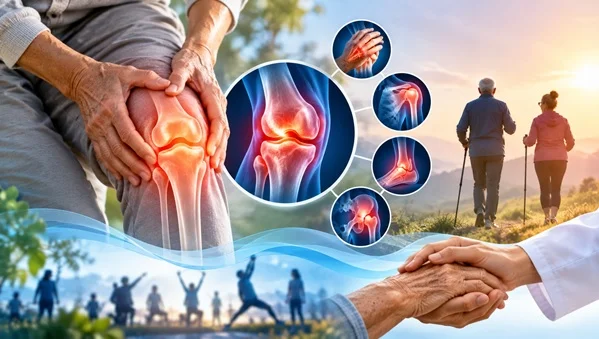
Key Facts
|
Particular
|
Fact
|
|
Observed on
|
12 October
|
|
Established in
|
1996
|
|
Initiated by
|
Arthritis and Rheumatism International (ARI)
|
|
Organisation
|
European Alliance of Associations for Rheumatology (EULAR)
|
|
2026 Theme
|
Achieve Your Dreams
|
|
Main focus
|
Awareness, early diagnosis, treatment and disability prevention
|
History
- World Arthritis Day was established in 1996 by Arthritis and Rheumatism International (ARI) to increase global awareness of arthritis.
- It aims to improve public understanding of rheumatic and musculoskeletal diseases and their impact on everyday life.
- Over time, organisations such as EULAR have supported international awareness campaigns, patient education and improved access to healthcare.
What is Arthritis?
- Refers to a group of conditions that affect the joints and may cause pain, swelling, stiffness and reduced mobility. It can affect people of all ages, although some forms are more common among older adults.
- Arthritis includes more than 100 different conditions affecting joints and related tissues. Severe or untreated arthritis may cause chronic pain, joint damage, disability and reduced quality of life.
Major Types of Arthritis
- Osteoarthritis: The most common form of arthritis, involving deterioration of joint tissues. It commonly affects the knees, hips and hands.
- Rheumatoid Arthritis: A chronic autoimmune disease in which the immune system attacks the body's tissues, particularly the joints.
- Gout: A form of inflammatory arthritis caused by the accumulation of monosodium urate crystals in joints.
- Psoriatic Arthritis: An inflammatory joint condition associated with psoriasis, a chronic skin disease.
- Juvenile Idiopathic Arthritis: A group of inflammatory joint diseases that begin before the age of 16.
Global Burden of Arthritis
- According to the World Health Organization (WHO), approximately 528 million people worldwide were living with osteoarthritis in 2019.
- About 73% of people with osteoarthritis were older than 55 years, while approximately 60% were women.
- WHO estimated that around 18 million people worldwide were living with rheumatoid arthritis in 2019.
- Osteoarthritis is a major contributor to disability and rehabilitation needs globally.
Arthritis in India
- Arthritis is an important public health concern in India because of its impact on mobility, productivity and quality of life.
- India's ageing population, rising prevalence of obesity and changing lifestyles may increase the burden of osteoarthritis.
- Rural and underserved areas often face difficulties in accessing rheumatologists, physiotherapists and specialised healthcare facilities.
- Delayed diagnosis and inadequate treatment can contribute to chronic pain, disability and financial difficulties.
Causes and Risk Factors
- Ageing: Increasing age is a major risk factor for osteoarthritis.
- Obesity: Excess body weight places additional stress on weight-bearing joints.
- Genetic Factors: Family history may increase susceptibility to certain types of arthritis.
- Autoimmune Conditions: Abnormal immune responses contribute to diseases such as rheumatoid arthritis.
- Joint Injuries: Previous injuries and repetitive joint stress may increase the risk of osteoarthritis.
Importance
- Health Awareness: Encourages recognition of arthritis symptoms and timely medical consultation.
- Early Diagnosis: Helps reduce the risk of irreversible joint damage, particularly in inflammatory arthritis.
- Disability Reduction: Promotes treatment and rehabilitation to preserve mobility and independence.
- Healthy Ageing: Supports active lifestyles and better health among older adults.
- Social Inclusion: Encourages equal participation of people with chronic musculoskeletal conditions in education, employment and community life.
Arthritis Prevention and Management
- Regular Exercise: Appropriate physical activity helps maintain joint mobility and muscle strength.
- Weight Management: Maintaining a healthy weight can reduce pressure on the knees and hips.
- Early Medical Consultation: Persistent joint pain, swelling or stiffness should be evaluated by a healthcare professional.
- Medical Treatment: Medicines, including disease-modifying antirheumatic drugs for appropriate inflammatory conditions, can help manage disease.
- Physiotherapy: Improves flexibility, strength and functional independence.
Major Health Initiatives in India
- Ayushman Bharat-PM-JAY: Provides eligible beneficiaries with financial protection for specified secondary and tertiary hospitalisation services, including covered orthopaedic procedures.
- Ayushman Arogya Mandirs: Strengthen comprehensive primary healthcare, including screening, management and referral services for various health conditions.
- National Programme for Health Care of the Elderly (NPHCE): Focuses on improving healthcare services for older adults, including age-related mobility and functional problems.
- National Programme for Prevention and Control of Non-Communicable Diseases (NP-NCD): Strengthens prevention and management of major non-communicable diseases and associated risk factors.
- Accessible India Campaign: Promotes accessibility in public infrastructure, transportation and information systems for persons with disabilities.
Challenges
- Low Awareness: Arthritis symptoms are sometimes ignored or incorrectly considered an unavoidable part of ageing.
- Delayed Diagnosis: Limited awareness and specialist availability may delay appropriate treatment.
- High Treatment Costs: Long-term medication, investigations, rehabilitation and surgery may create financial burdens.
- Healthcare Inequality: Rural populations may face limited access to specialised rheumatology services.
- Growing Elderly Population: Increasing life expectancy creates additional demand for musculoskeletal healthcare.
Prelims MCQ
Q. With reference to World Arthritis Day, consider the following statements:
- World Arthritis Day is observed annually on 12 October.
- It was established in 1996 by Arthritis and Rheumatism International.
- Rheumatoid arthritis is an autoimmune disease.
Which of the statements given above are correct?
(a) 1 and 2 only
(b) 2 and 3 only
(c) 1 and 3 only
(d) 1, 2 and 3
Mains Practice Question
Q. Discuss the growing burden of arthritis in India and the importance of early diagnosis, rehabilitation and accessible healthcare.
|
FAQs
When is World Arthritis Day observed?
12 October.
When was World Arthritis Day established?
In 1996.
What is the 2026 EULAR campaign theme?
Achieve Your Dreams
Which is the most common type of arthritis?
Osteoarthritis.
What is rheumatoid arthritis?
It is a chronic autoimmune inflammatory disease that primarily affects the joints.
|






 Contact Us
  New Batch : 9555124124/ 7428085757
  Tech Support : 9555124124/ 7428085757