|
Prelims:-Lonar Lake, Buldhana District (Maharashtra), Meteorite Impact Crater, Third 100 IUGS Geological Heritage Sites, International Union of Geological Sciences (IUGS), Deccan Traps, Basaltic Rocks, Saline-Alkaline Lake and Geological Survey of India (GSI).
Mains: GS Paper I:-Geographical Features, Geological Processes and Earth's Evolution.
GS Paper III:-Environmental Conservation, Geoheritage Protection, Scientific Research and Sustainable Tourism.
Keywords:-Lonar Lake, Maharashtra, Third 100 IUGS Geological Heritage Sites, Meteorite Impact Crater, IUGS, GSI, Deccan Traps, Geological Heritage, Basaltic Rocks, Geoheritage Conservation.
|
Why in the News?
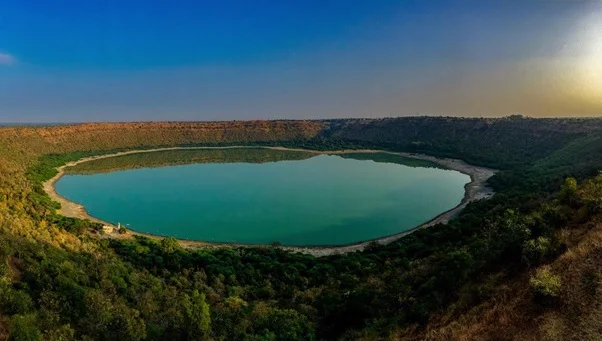
- Lonar Lake, located in Maharashtra’s Buldhana district, has been included in the ‘Third 100 IUGS Geological Heritage Sites’, an international list recognising some of the world's most important geological locations.
- The recognition highlights the lake's scientific importance and its unique origin as a meteorite-impact crater.
What Are IUGS Geological Heritage Sites?
- The International Union of Geological Sciences (IUGS) identifies geological heritage sites that represent important geological features, processes and discoveries.
- These sites help scientists understand the Earth's formation, geological history and natural processes.
- The programme has recognised geological sites in three phases:
- First 100: Announced in Zumaia, Spain, in 2022.
- Second 100: Announced during the 37th International Geological Congress in Busan, South Korea, in 2024.
- Third 100: Includes 100 additional important geological sites across the world.
More than 1,000 experts from 90 countries and 20 international organisations have contributed to this programme since 2022.
Key Facts About Lonar Lake
- Location: Buldhana district, Maharashtra.
- Origin: Formed by a meteorite impact.
- Age: Approximately 12,000 years.
- Diameter: Around 1.88 km.
- Geological setting: Located within the Deccan Traps.
- Lake type: Saline and alkaline.
Lonar Lake is one of the youngest and best-preserved bowl-shaped hypervelocity impact craters on Earth.
Why Is Lonar Lake Geologically Important?
- Lonar Lake is one of the rare meteorite-impact craters formed in basaltic rocks. It is among only five known hypervelocity impact craters on Earth formed in basaltic rock formations.
- Its important geological features include:
- Circular Shape: Its nearly circular structure provides evidence of a meteorite impact.
- Basaltic Rocks: The crater was formed in the basaltic rocks of the Deccan Traps.
- Impact Materials: Impact glass, spherules and melt rocks provide evidence of the high-energy meteorite impact.
- Unique Lake Ecosystem: Its saline and alkaline water creates a distinctive geological and ecological environment.
- Crater Structure: Its depth, exposed lava flows, rock fragments and ejecta deposits help scientists study impact processes.
Role of the Geological Survey of India (GSI)
- The Geological Survey of India (GSI) played an important role in securing this international recognition.
- It submitted Lonar Lake's nomination to the IUGS as part of its efforts to conserve and promote India's geological heritage.
Global Distribution of the Third 100 Geological Heritage Sites
The Third 100 list includes geological sites from 47 countries.
|
Region
|
Number of Sites
|
|
Africa
|
11
|
|
Americas
|
22
|
|
Asia-Pacific
|
22
|
|
Middle East
|
6
|
|
Europe
|
34
|
|
Antarctica
|
2
|
|
High Seas
|
3
|
|
Total
|
100
|
Other internationally recognised locations include Mount Fuji in Japan, the fjords of Norway, the San Andreas Fault in the United States, Mount Aconcagua in Argentina and the Chocolate Hills in the Philippines.
Significance of the Recognition
- The inclusion of Lonar Lake in the IUGS Geological Heritage Sites list is important for several reasons:
- International Recognition: It gives Lonar Lake greater global visibility.
- Scientific Research: It encourages further research into meteorite impacts and geological processes.
- Geoheritage Conservation: It highlights the need to protect India's unique geological sites.
- Educational Importance: It can serve as an important resource for students, researchers and geologists.
- Tourism Promotion: It may encourage geological and scientific tourism in Maharashtra.
Conclusion
The inclusion of Lonar Lake in the Third 100 IUGS Geological Heritage Sites is a significant achievement for India's geological heritage. It recognises the lake's unique meteorite-impact origin and scientific importance while highlighting the need for its conservation and sustainable development.
Prelims Practice Question
Q. With reference to Lonar Lake, consider the following statements:
- It is located in Buldhana district of Maharashtra.
- It was formed due to a meteorite impact.
- It is situated in the Deccan Traps.
- It is a freshwater lake.
Which of the statements given above are correct?
(a) 1 and 2 only
(b) 1, 2 and 3 only
(c) 2, 3 and 4 only
(d) 1, 2, 3 and 4
Mains Practice Question
Q. Discuss the geological significance of Lonar Lake and examine the importance of international recognition in conserving India's geological heritage. (150 Words)
|
FAQs
1. Where is Lonar Lake located?
Ans. It is located in Buldhana district of Maharashtra.
2. How was Lonar Lake formed?
Ans. It was formed by a meteorite impact approximately 12,000 years ago.
3. What is the geological importance of Lonar Lake?'
Ans. It is one of the rare meteorite-impact craters formed in basaltic rocks.
4. What are the IUGS Geological Heritage Sites?
Ans. These are important geological locations recognised for their scientific value.
5. Which organisation nominated Lonar Lake for international recognition?
Ans. The Geological Survey of India (GSI) submitted its nomination to the IUGS.
|