New
Final Result - UPSC CSE Result, 2025 GS Foundation (P+M) - Delhi : 1st April 2026, 11:30 AM GS Foundation (P+M) - Prayagraj : 3rd April 2026, 5:30PM Final Result - UPSC CSE Result, 2025 GS Foundation (P+M) - Delhi : 1st April 2026, 11:30 AM GS Foundation (P+M) - Prayagraj : 3rd April 2026, 5:30PM

Current Affairs for 02 April 2026

What is Antariksh Venture Capital Fund? Objectives, Features and Impact Explained

Prelims : Science & Technology + CA
Mains : GS 3 – Science & Technology, Space, Innovation, Startups

Why in News ?

  • The Union Government has announced that investments under the Antariksh Venture Capital Fund are expected to begin from Q1 of FY2027.
  • The fund aims to support India’s growing private space sector by providing capital to startups and emerging companies.

About Antariksh Venture Capital Fund

  • The Antariksh Venture Capital Fund is a dedicated investment fund for India’s space sector.
  • Key features :
    • It is a close-ended fund, meaning:
    • It has a fixed tenure
    • Investors cannot withdraw funds before maturity
  • Registered with Securities and Exchange Board of India as a :
    • Category II Alternative Investment Fund (AIF)

Key Institutional Structure

  • Key Investor :
    • Indian National Space Promotion and Authorization Centre under the Department of Space
  • Sponsor :
    • SIDBI Venture Capital Limited
  • Reflects :
    • Strong public institutional backing
    • Alignment with India’s space policy reforms

Investment Objective

  • The fund aims to :
  • Provide risk capital to space startups at :
    • Early stage
    • Growth stage
    • Commercialisation stage
  • Support :
    • Scaling of operations
    • Development of new technologies
  • Enable :
    • Transition from innovation to market-ready solutions

Investment Focus and Criteria

  • The fund will invest:
  • Exclusively in Indian space companies
  • Companies with :
    • Technology Readiness Level (TRL) of 4 and above 
      • Indicates technologies that are : 
        • Tested in laboratory or relevant environment
        • Ready for further development and deployment

What is Technology Readiness Level (TRL)? (Static Prelims Boost)

  • TRL is a measurement system used to assess the maturity of a technology :
  • TRL 1–3 :
    • Basic research and concept stage
  • TRL 4–6 :
    • Validation and prototype development
  • TRL 7–9 :
    • Fully developed and commercially deployable systems
  • The fund focuses on TRL ≥ 4, ensuring :
    • Lower risk compared to early-stage research
    • Higher chances of commercial success

About IN-SPACe: Key Institutional Mechanism

  • Indian National Space Promotion and Authorization Centre is:
  • A single-window, autonomous agency under the Department of Space
  • Created as part of space sector reforms to :
    • Facilitate private sector participation

Functions of IN-SPACe

  • Promotes and authorises :
    • Private sector space activities
  • Enables :
    • Building of satellites and launch vehicles
  • Facilitates :
    • Access to ISRO infrastructure
  • Acts as :
    • Interface between Indian Space Research Organisation and private entities

Organisational Structure

  • Three key directorates :
  • Promotion Directorate (PD)
  • Technical Directorate (TD)
  • Programme Management & Authorisation Directorate (PMAD)

Significance of the Fund

1. Boost to Private Space Ecosystem

  • Provides :
    • Dedicated funding support to startups
  • Encourages :
    • Innovation in space technologies

2. Strengthening India’s Space Economy

  • Helps :
    • Expand India’s share in the global space market
  • Promotes :
    • Commercialisation of space technologies

3. Bridging Funding Gap

  • Space startups face :
    • High capital requirements
    • Long gestation periods
  • The fund addresses :
    • Lack of patient capital

4. Strategic and Technological Advantage

  • Supports development of :
    • Indigenous technologies
  • Reduces :
    • Dependence on foreign systems

Challenges and Concerns

1. High Risk and Long Gestation

  • Space projects require : 
    • Large investments
    • Long development timelines

2. Regulatory and Policy Complexity

  • Need for : 
    • Clear licensing frameworks
    • Ease of doing business in the space sector

3. Limited Private Expertise

  • India’s private space ecosystem is : 
    • Still evolving

4. Global Competition

  • Competing with : 
    • US, China, and private players like SpaceX

Core Analysis: Public Funding vs Private Innovation

Need for Government Support

  • Space sector requires : 
    • Heavy initial investment
    • Strategic direction

Role of Private Sector

  • Drives : 
    • Innovation
    • Efficiency
    • Cost reduction
  • The fund represents : 
    • A hybrid model combining public support with private innovation

Way Forward

Policy Measures

  • Strengthen : 
    • Space policy framework
    • Ease of entry for startups

Institutional Support

  • Enhance : 
    • Collaboration between ISRO and private players

Financial Ecosystem

  • Encourage : 
    • More venture capital participation
    • Public-private partnerships

Practice Questions

Prelims :
Q. The Antariksh Venture Capital Fund is registered under which category ?
(a) Category I AIF
(b) Category II AIF
(c) Category III AIF
(d) Mutual Fund

Mains :
“Discuss the role of venture capital funding in developing India’s private space ecosystem with reference to the Antariksh Venture Capital Fund.”

FAQs

1. What is the Antariksh Venture Capital Fund ?

A fund to invest in Indian space startups.

2. Who regulates it ?

SEBI as a Category II AIF.

3. Who is the key investor ?

IN-SPACe under the Department of Space.

4. What is TRL ?

A scale to measure technological maturity.

5. Why is it important ?

It supports innovation and growth in India’s space sector.

Rebate of State and Central Taxes and Levies (RoSCTL) Scheme: Extension, Features and Export Competitiveness Explained

Prelims : (Economy + Government Schemes + CA)
Mains : (GS 3 – Indian Economy, External Sector, Export Promotion Policies)

Why in News ?

  • The Ministry of Textiles has extended the Rebate of State and Central Taxes and Levies (RoSCTL) Scheme for exports of apparel/garments and made-ups till 30th September 2026.
  • The move aims to provide continued support to the textile export sector amid global demand uncertainties.
  • It reinforces India’s commitment to boosting labour-intensive exports.

Background and Evolution of the Scheme

  • The RoSCTL Scheme was launched on 7th March 2019.
  • It replaced the earlier Rebate of State Levies (RoSL) Scheme.

Evolution:

  • RoSL Scheme :
    • Covered only State taxes/levies
    • Limited scope in addressing export cost disadvantages
  • RoSCTL Scheme :
    • Expanded coverage to include both State and Central taxes/levies
    • Provided a more comprehensive refund mechanism

Reflects a shift towards WTO-compliant export support mechanisms

Objective of the RoSCTL Scheme

  • To reimburse embedded taxes and levies that are not refunded through other mechanisms.
  • To enhance export competitiveness of Indian apparel and textile products.
  • To support exporters over and above the Duty Drawback Scheme.

Key Features of the RoSCTL Scheme

1. Rebate Mechanism

  • Provided in the form of duty credit scrips
  • Compensates for : 
    • State taxes (e.g., VAT on fuel, electricity duty)
    • Central levies not refunded elsewhere

2. Electronic Issuance

  • Scrips are issued electronically via the Customs system
  • Ensures : 
    • Transparency
    • Faster processing
    • Reduced manual intervention

3. Utilisation of Scrips

  • Can be used for payment of Basic Customs Duty on imports
  • Provides liquidity support to exporters

4. Transferability

  • Duty credit scrips are freely transferable
  • However : 
    • Must be transferred as a whole (no partial transfer allowed)

5. Validity

  • Valid for one year from date of issuance
  • Transfer does not alter validity period

6. Eligibility Criteria

  • Applicable to : 
    • Exporters of garments/apparel and made-ups manufactured in India
  • Not applicable to : 
    • Entities under Denied Entity List (DGFT)

7. Implementing Authority

  • Implemented by the Department of Revenue under Ministry of Finance

Why Extension of RoSCTL is Important

1. Boost to Textile Exports

  • Textile sector is : 
    • Labour-intensive
    • Export-oriented
  • Helps India compete with countries like : 
    • Bangladesh
    • Vietnam

2. Cost Neutralisation

  • Offsets: 
    • Hidden taxes
    • Logistics and production costs
  • Ensures level playing field in global markets

3. Employment Generation

  • Apparel sector employs : 
    • Large number of women workers
    • MSMEs

✔ Extension ensures stability in employment

Significance of the Scheme

1. Enhancing Export Competitiveness

  • Reduces cost burden on exporters
  • Improves price competitiveness globally

2. Supporting MSMEs

  • Many textile exporters are : 
    • Small-scale units
  • Scheme improves their cash flow and viability

3. Alignment with Global Trade Norms

  • Designed to be WTO-compliant
  • Avoids classification as export subsidy

4. Strengthening External Sector

  • Promotes : 
    • Export diversification
    • Foreign exchange earnings

Challenges and Issues

1. Limited Sectoral Coverage

  • Applicable only to : 
    • Apparel and made-ups
  • Other sectors demand similar support

2. Fiscal Burden

  • Requires significant government expenditure
  • Raises concerns on : 
    • Long-term sustainability

3. Implementation Challenges

  • Delays in : 
    • Issuance of scrips
    • Refund processing

4. Global Trade Pressures

  • Increasing scrutiny under : 
    • WTO rules
  • Risk of disputes over export incentives

Core Analysis: Export Promotion vs Fiscal Sustainability

Need for Export Promotion

  • Boost manufacturing
  • Enhance global competitiveness
  • Generate employment

Concerns of Fiscal Sustainability

  • High subsidy burden
  • Potential inefficiencies

Core Challenge : Balancing export incentives with fiscal prudence and WTO compliance

Way Forward

Policy Measures

  • Expand similar schemes to : 
    • Other labour-intensive sectors
  • Ensure timely disbursement

Institutional Reforms

  • Strengthen : 
    • Digital processing systems
    • Monitoring mechanisms

Strategic Approach

  • Combine : 
    • Export incentives
    • Infrastructure development
    • Trade agreements

Practice Questions

Prelims

Q. The RoSCTL Scheme primarily aims to :
(a) Promote domestic consumption
(b) Provide export subsidies
(c) Reimburse embedded State and Central taxes on exports
(d) Regulate foreign trade

Mains

“Discuss the role of schemes like RoSCTL in enhancing India’s export competitiveness. Highlight associated challenges.”

FAQs

1. What is the RoSCTL Scheme ?

It is a scheme to reimburse embedded State and Central taxes on export of garments and made-ups.

2. Why was it introduced ?

To replace RoSL and provide broader tax reimbursement including Central levies.

3. What is the form of benefit ?

Duty credit scrips issued electronically.

4. Who implements it ?

Department of Revenue under Ministry of Finance.

5. Why is its extension important ?

It supports export competitiveness, employment, and textile sector growth.


What is FCRA Amendment Bill 2026: Key Changes, Concerns and Kerala Political Context Explained

Prelims : Polity + Governance  + CA

Mains : GS 2 – Governance, Civil Society, Transparency & Accountability

Why in News?

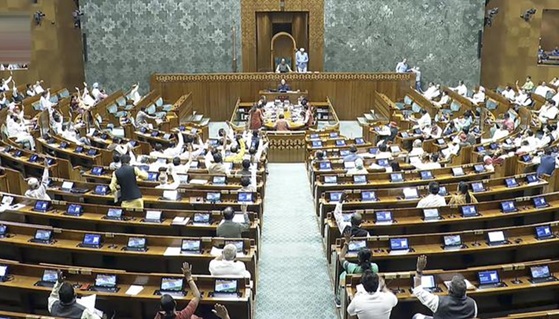
  • The Union government has deferred discussion on the FCRA Amendment Bill, 2026 in the Lok Sabha.
  • The Bill proposes major changes to the regulation of foreign funding under the Foreign Contribution (Regulation) Act, 2010.
  • It has triggered political controversy, especially in Kerala, with Opposition parties alleging potential adverse effects on minority institutions and NGOs.

Background and Evolution of FCRA

  • The Foreign Contribution (Regulation) Act, 2010 governs the acceptance and utilisation of foreign funds by individuals, NGOs, and associations in India.
  • Historical evolution :
  • FCRA 1976 :
    • Enacted during the Emergency period
    • Aimed to prevent foreign interference in domestic politics and governance
  • FCRA 2010 :
    • Consolidated and modernised the framework
    • Strengthened compliance and monitoring mechanisms
  • Subsequent Amendments (2016, 2018, 2020) :
    • Increased regulatory oversight
    • Introduced stricter compliance norms
    • Centralised fund flow through designated bank accounts

Key Features of the Existing FCRA Framework

1. Registration and Prior Permission

  • Organisations must :
    • Obtain FCRA registration or prior permission
    • Renew registration periodically
  • Ensures that only verified entities receive foreign funds

2. Permitted Utilisation of Funds

  • Foreign contributions can be used only for :
    • Cultural
    • Economic
    • Educational
    • Social
    • Religious purposes
  • Prevents diversion of funds into political or anti-national activities

3. Scale and Significance

  • Around 16,000 organisations are registered under FCRA
  • Annual foreign funding inflow is approximately ₹22,000 crore
  • Reflects : 
    • Importance of NGOs in development
    • Role of foreign funding in social sector delivery

Why the Amendment Bill, 2026 is Proposed

  • The government has identified several structural and operational gaps in the current law:
  • Lack of clarity on :
    • Handling of assets when registration lapses
    • Utilisation timelines for foreign funds
  • Issues in enforcement :
    • Multiple investigations with inconsistent penalties
    • Absence of a centralised authority for asset management
  • Ambiguity in :
    • Suspension and cancellation procedures
    • Cessation of organisational existence

FCRA Amendment Bill 2026: Key Changes

1. Introduction of a “Designated Authority”

  • A central authority appointed by the Union government will :
    • Take control of foreign funds and assets
    • Manage them in cases of regulatory lapse
  • Applies when registration is :
    • Cancelled
    • Surrendered
    • Expired or not renewed
  • This marks a shift from regulatory oversight to direct administrative control

2. Clear Definition of Registration Expiry

  • Registration will be deemed expired if :
    • No renewal application is filed
    • Renewal is denied
    • Renewal is not obtained before expiry
  • Introduces legal clarity but also stricter compliance pressure

3. Asset Management and Disposal Framework

  • The designated authority can :
  • Temporarily manage assets :
    • Until registration is restored
  • Return assets :
    • If registration is renewed
  • Permanently take over assets :
    • If organisation becomes defunct
    • If registration is not restored within a specified period
  • Assets may then be :
    • Transferred to government bodies
    • Sold or disposed of as per rules

4. Special Provision for Religious Institutions

  • In case of places of worship :
    • Management may be reassigned
    • Religious character must be preserved
  • Reflects an attempt to balance regulation with religious sensitivity

Why the FCRA Amendment Bill is Controversial

Government’s Justification

  • Plugging Legal Gaps :
    • Addresses ambiguity in asset handling and regulatory processes
  • National Security Concerns :
    • Targets misuse of foreign funds
    • Particularly in areas like : 
      • Illegal activities
      • Alleged forced religious conversions
  • Administrative Efficiency :
    • Central authority ensures uniform enforcement

Opposition’s Concerns

  • Risk of Asset Takeover :
    • NGOs may lose control over assets due to : 
      • Delayed renewals
      • Procedural issues
  • Excessive Government Control :
    • Centralised authority may : 
      • Undermine NGO autonomy
      • Increase bureaucratic discretion
  • Chilling Effect on Civil Society :
    • Fear of regulatory action may discourage : 
      • Activism
      • Independent reporting

The Kerala Dimension

  • The controversy has intensified in Kerala, where:
  • Christians form a significant minority population (~61 lakh)
  • Many :
    • Educational institutions
    • Healthcare organisations
    • Charitable NGOs

depend on foreign funding

Political Significance

  • The issue has gained traction ahead of :
    • State elections
  • Both :
    • Left parties
    • Congress

have opposed the Bill

  • It has become :
    • A major electoral issue
    • A debate on minority rights and federal politics

Significance of the Amendment

1. Strengthening Regulatory Framework

  • Provides : 
    • Clear procedures for asset management
    • Improved enforcement mechanisms

2. National Security and Sovereignty

  • Ensures : 
    • Foreign funds are not used for activities 
      • Against national interest
      • Affecting public order

3. Governance and Accountability

  • Promotes : 
    • Transparency in fund utilisation
    • Better compliance among NGOs

Challenges and Issues

1. Balance Between Regulation and Freedom

  • Risk of conflict with :  Freedom of association (Article 19)

2. Federal Concerns

  • Centralised authority may : 
    • Overlap with state jurisdiction
    • Create Centre-State tensions

3. Operational Challenges

  • Implementation may face : 
    • Administrative overload
    • Legal challenges in courts

4. Impact on Development Sector

  • NGOs play a key role in :
    • Health
    • Education
    • Welfare
  • Excessive restrictions may :
    • Affect service delivery
    • Reduce external funding inflows

 Key Concepts

1. FCRA Registration

  • Mandatory approval for receiving foreign funds

2. Foreign Contribution

  • Any donation, delivery, or transfer from a foreign source

3. Civil Society Organisations (CSOs)

  • Non-governmental organisations working in public interest

4. Article 19(1)(c)

  • Guarantees freedom to form associations

Core Analysis: Regulation vs Civil Society Autonomy

Need for Regulation

  • Prevent misuse of foreign funds
  • Ensure national security
  • Maintain transparency

Need for Autonomy

  • Protect democratic space
  • Enable independent functioning of NGOs
  • Encourage social sector participation
  • The key challenge lies in : 
    • Balancing state control with democratic freedoms

Way Forward

Policy Measures

  • Introduce : 
    • Transparent guidelines for asset takeover
    • Time-bound grievance redressal mechanisms

Institutional Safeguards

  • Ensure : 
    • Judicial oversight
    • Independent review mechanisms

Balanced Approach

  • Combine : 
    • Strong regulation
    • Protection of civil society space

Practice Questions

Prelims :
Q. What is the primary objective of the FCRA Act ?
(a) Regulate domestic donations
(b) Control foreign exchange reserves
(c) Regulate foreign funding of individuals and organisations
(d) Promote exports

Mains :
“Discuss the implications of the FCRA Amendment Bill, 2026 on civil society organisations and democratic governance in India.”

FAQs

1. What does the FCRA Amendment Bill, 2026 propose ?

It introduces a designated authority to manage foreign-funded assets when registration lapses.

2. Why is the Bill controversial ?

Due to concerns over government control and impact on NGOs.

3. What is the Kerala angle ?

The issue is politically sensitive due to the role of minority institutions.

4. What is FCRA ?

A law regulating foreign contributions to individuals and organisations.

5. What is the key challenge ?

Balancing national security with civil society autonomy.

What Was Samprati’s Contribution to Jainism in Ancient India

Prelims : History + Culture + CA
Mains : GS 1 – Indian Culture, Ancient History, Religion

Why in News ?

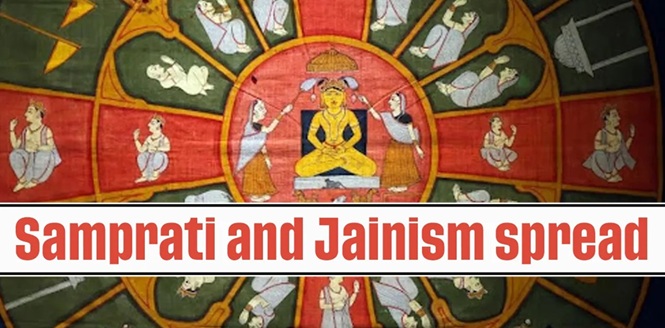
  • On the occasion of Mahavir Jayanti, the Prime Minister inaugurated the Samrat Samprati Museum in Gandhinagar, highlighting the legacy of Samprati, grandson of Ashoka.
  • While Ashoka is widely known for spreading Buddhism, Samprati is remembered in Jain traditions for actively promoting and expanding Jainism across India and beyond.

Background and Context: Mauryan Empire and Religious Traditions

  • The Mauryan Empire (3rd century BCE) marked one of the most significant phases of political unification and cultural development in India.
  • Ashoka (c. 269–232 BCE) :
    • Expanded the empire extensively
    • Promoted Buddhism through Dhamma, inscriptions, and missionary activities
    • Influenced regions beyond India, especially Southeast Asia
  • However, alongside Buddhism, Jainism also remained an important religious tradition during this period.

Jainism Within the Mauryan Era

  • Jain traditions associate key Mauryan rulers with the faith:
  • Chandragupta Maurya :
    • Believed (in Jain traditions) to have adopted Jainism
    • Migrated south during a famine
    • Practised sallekhana (ritual fasting) at Shravanabelagola
  • Padmavati (Ashoka’s wife) :
    • Considered in some traditions to have been associated with Jainism
  • After Ashoka’s death (232 BCE) :
    • The empire is believed to have been divided between his grandsons : 
      • Dasharatha
      • Samprati

Samprati: The Jain Counterpart to Ashoka

  • Samprati (c. 230–220 BCE) is portrayed in Shvetambara Jain texts as one of the greatest royal patrons of Jainism.
  • His role in Jain history is often compared to Ashoka’s role in Buddhism, as he :
    • Promoted religious teachings
    • Built institutions
    • Expanded the geographical reach of the faith

Conversion and Religious Commitment

  • According to Jain traditions :
  • Samprati was initiated into Jainism under the monk Suhastin at Ujjain
  • He adopted :
    • Jain lay practices
    • Daily rituals including icon worship
  • His commitment is described as :
    • Deeply personal and spiritual
    • Not merely political or symbolic

Expansion of Jainism Across Regions

  • Samprati is credited with systematically spreading Jainism across the Indian subcontinent through organised efforts.
  • Key regions influenced :
  • Southern India :
    • Andhra Pradesh
    • Tamil Nadu
    • Karnataka
  • Western and Central India :
    • Maharashtra
    • Gujarat
    • Malwa
    • Rajputana
  • Some traditions even claim expansion beyond India to :
    • Central Asia
    • Afghanistan
    • Nepal and Bhutan
    • Myanmar and China
  • His approach included :
    • Sending Jain monks to distant regions
    • Supporting missionary activities
    • Promoting religious teachings among the masses

Temple Building and Religious Infrastructure

  • Like Ashoka’s construction of stupas, Samprati is credited with institutionalising Jain religious practices through large-scale infrastructure development.
  • Jain texts attribute to him :
  • Construction of 1,25,000 temples
  • Renovation of 36,000 temples
  • Installation of millions of Jain icons (Jinas)
  • Establishment of 700 charitable centres
  • While these numbers may be symbolic or exaggerated, they indicate :
    • The scale of his religious patronage
    • The emphasis on institution-building in Jainism

Role in Consolidating Jainism

  • Samprati’s contributions helped :
  • Transform Jainism from a regional religious tradition into a wider organised faith
  • Strengthen :
    • Religious networks
    • Monastic traditions
    • Temple-based worship practices
  • Embed Jainism deeply in :
    • Western and Southern India

Legacy in Jain Tradition

  • In many parts of western India :
    • Ancient temples and icons without clear historical origins are often attributed to Samprati
  • His legacy represents :
    • A ruler who combined political authority with religious patronage
    • A figure who ensured the continuity and expansion of Jain traditions

Historical Sources and Accounts

  • Samprati’s life and contributions are described in Jain texts such as:
  • Sampratikatha
  • Parishistaparva
  • Prabhavakcharita
  • These texts, though written later, provide :
    • Valuable insights into Jain traditions
    • Religious memory of Mauryan rulers

Jainism Key Concepts

1. Founder of Jainism

  • Mahavira (6th century BCE)

2. Core Principles

  • Ahimsa (Non-violence)
  • Aparigraha (Non-possession)
  • Anekantavada (Multiplicity of viewpoints)

3. Sects of Jainism

  • Digambara (sky-clad monks)
  • Shvetambara (white-clad monks)

4. Sallekhana

  • Ritual fasting unto death in Jain tradition

5. Jina

  • Conqueror of inner passions; revered spiritual teacher

Significance

  • Religious Expansion: Helped spread Jainism across vast regions
  • Cultural Integration: Strengthened religious diversity in ancient India
  • Institutional Development: Promoted temple culture and organised religious practices
  • Historical Continuity: Demonstrates Mauryan legacy beyond Ashoka

Core Analysis: Ashoka vs Samprati

Ashoka

  • Promoted Buddhism
  • Used inscriptions and state policy
  • Focused on moral governance (Dhamma)

Samprati

  • Promoted Jainism
  • Focused on temples and icon worship
  • Emphasised grassroots religious expansion
  • Together, they reflect : 
    • Plurality of religious patronage in ancient India

Practice Questions

Prelims :
Q. Which Mauryan ruler is associated with the spread of Jainism according to Jain traditions ?
(a) Ashoka
(b) Chandragupta Maurya
(c) Samprati
(d) Bindusara

Mains :
“Discuss the role of Samprati in the spread of Jainism and compare it with Ashoka’s contribution to Buddhism.”

FAQs

1. Who was Samprati ?

A Mauryan ruler and grandson of Ashoka known for promoting Jainism.

2. How did he spread Jainism ?

By sending monks, building temples, and installing Jain icons.

3. Which tradition highlights his role ?

Mainly Shvetambara Jain texts.

4. What is his significance ?

He expanded Jainism across India and institutionalised its practices.

5. How is he compared to Ashoka ?

As a Jain counterpart to Ashoka’s role in Buddhism.

Amaravati declared as Andhra Pradesh Capital: Lok Sabha Passes Reorganisation Amendment Bill

Prelims : (Polity + Governance + CA)
Mains : GS 2 – Governance, Federalism, Centre-State Relations

Why in News?

  • The Lok Sabha has passed the Andhra Pradesh Reorganisation (Amendment) Bill, 2026, granting statutory status to Amaravati as the sole capital of Andhra Pradesh.
  • The move aims to end long-standing uncertainty over the state’s capital, which persisted since bifurcation in 2014.
  • The Bill witnessed political opposition, with the YSR Congress Party staging a walkout during the debate.

Background and Context

  • The issue of Andhra Pradesh’s capital dates back to the Andhra Pradesh Reorganisation Act (2014), which :
    • Bifurcated the state into Telangana and Andhra Pradesh
    • Designated Hyderabad as a temporary common capital for 10 years
  • After bifurcation :
    • Andhra Pradesh required a new permanent capital
    • Amaravati was identified as the proposed capital
  • However, the issue remained contentious due to :
    • The three-capital proposal (2020) : 
      • Executive: Visakhapatnam
      • Legislative: Amaravati
      • Judicial: Kurnool
    • Legal challenges and political disagreements
  • The latest amendment seeks to provide clarity and finality to this prolonged debate.

Key Provisions of the Amendment Bill, 2026

  • The Bill amends the 2014 Reorganisation Act to :
  • Declare Amaravati as the Sole Capital : Provides legal and statutory recognition to Amaravati
  • End Multi-Capital Ambiguity : Overrides earlier decentralisation proposals
  • Ensure Administrative Stability : Establishes a single centre of governance
  • Respond to State Resolution : Based on a resolution passed by the Andhra Pradesh Legislative Assembly requesting Centre’s approval

About Amaravati: The Proposed Capital

  • Amaravati is a greenfield capital city project located on the banks of the Krishna River.
  • Key features :
  • Developed through an innovative land pooling scheme, with farmers contributing over 33,000 acres of land
  • Planned as :
    • A sustainable, modern administrative hub
    • A city inspired by global capitals with advanced infrastructure
  • Core institutions planned :
    • Legislative Assembly
    • Secretariat
    • High Court

Rationale Behind the Bill

1. Need for Administrative Certainty

  • A state requires a fixed administrative centre for effective governance.
  • Frequent policy shifts created : 
    • Confusion in administration
    • Delays in infrastructure development

2. Investor Confidence and Economic Growth

  • The Bill is expected to :
    • Restore investor confidence
    • Unlock large-scale infrastructure investments (estimated ₹56,000 crore)
  • A stable capital is essential for :
    • Attracting domestic and foreign investment
    • Urban and industrial development

3. Honouring Stakeholder Commitments

  • Thousands of farmers contributed land under the land pooling model.
  • The decision is seen as : 
    • Recognising their sacrifice
    • Ensuring continuity of the capital project

4. Political and Legal Clarity

  • Resolves : 
    • Policy inconsistencies across successive governments
    • Legal disputes over the capital issue

Significance of the Decision

Governance and Administration

  • Establishes a clear seat of power, improving : 
    • Coordination between institutions
    • Policy implementation

Federal Structure

  • Highlights : 
    • Role of Parliament in matters linked to state reorganisation
    • Interaction between Centre and State in governance decisions

Economic Development

  • Expected to : 
    • Boost infrastructure development
    • Generate employment opportunities
    • Strengthen regional growth

Urban Planning

  • Promotes development of : 
    • A planned, modern capital city
    • Sustainable and smart infrastructure

Concerns and Criticism

1. Regional Imbalance

  • Critics argue : 
    • Concentrating development in one region may neglect others

2. Political Opposition

  • Some parties have opposed : 
    • Central intervention
    • Scrapping decentralisation approach

3. Financial Burden

  • Development of a greenfield capital requires : 
    • Massive investment
    • Long gestation periods

Core Analysis: Stability vs Decentralisation Debate

Advantages of Single Capital Model

  • Administrative efficiency
  • Policy clarity
  • Investor confidence

Arguments for Decentralisation

  • Balanced regional development
  • Reduced regional disparities
  • Inclusive governance
  • The debate reflects a broader question : 
    • Centralised efficiency vs decentralised equity

Way Forward

Short-Term Measures

  • Ensure smooth implementation of the capital project
  • Address concerns of different regions

Long-Term Strategy

  • Promote balanced regional development alongside Amaravati
  • Strengthen infrastructure across all regions

Policy Focus

  • Combine: 
  • Administrative efficiency
  • Inclusive development

Practice Questions

Prelims :
Q. Which Act governs the bifurcation of Andhra Pradesh and creation of Telangana ?
(a) States Reorganisation Act, 1956
(b) Andhra Pradesh Reorganisation Act, 2014
(c) Government of India Act, 1935
(d) None of the above

Mains :
“Discuss the significance of declaring Amaravati as the sole capital of Andhra Pradesh in the context of governance and federalism.”

FAQs

1. What does the new Bill state ?

It declares Amaravati as the sole capital of Andhra Pradesh.

2. Why was this needed ?

To resolve long-standing uncertainty over the capital.

3. What was the earlier proposal ?

A three-capital model (executive, legislative, judicial).

4. What is the significance ?

Ensures administrative stability and boosts investment.

5. What is the key concern ?

Risk of regional imbalance in development.

« »
  • SUN
  • MON
  • TUE
  • WED
  • THU
  • FRI
  • SAT
Have any Query?

Our support team will be happy to assist you!

OR
X