New
Hindi Medium: (Delhi) - GS Foundation (P+M) : 8th June 2026, 6:30 AM Hindi Medium: (Prayagraj) - GS Foundation (P+M) : 1st June 2026, 5:30 PM English Medium: (Prayagraj) - GS Foundation (P+M) : 7th June 2026, 8:00 AM Hindi Medium: (Delhi) - GS Foundation (P+M) : 8th June 2026, 6:30 AM Hindi Medium: (Prayagraj) - GS Foundation (P+M) : 1st June 2026, 5:30 PM English Medium: (Prayagraj) - GS Foundation (P+M) : 7th June 2026, 8:00 AM

Current Affairs for 04 May 2026

Is it necessary to reconsider the jurisdiction of Public Interest Litigation (PIL)?

Why in the news ?

  • The issue of Public Interest Litigation (PIL) has recently been in the news because the Central Government has asked the Supreme Court to review its jurisdiction. 
  • This issue was particularly raised during the hearing of the Sabarimala Reference Case, where the government argued that PIL litigation has deviated from its original purpose and is being transformed into "agenda-driven litigation."
  • The government and some other parties argue that PIL, once an effective tool for securing justice for marginalized people, is now being used in many cases to advance political, ideological, or propagandistic interests. 
  • This is unnecessarily burdening the judiciary and often forcing courts to intervene in complex policy-making issues for which they are not environmentally appropriate.
  • Furthermore, the courts' instances of incomplete or hastily filed petitions, the rise in "proxy PILs" and "public interest litigation" have also raised concerns. This not only wastes judicial time but also impacts the hearing of serious cases involving genuine public interest.

The Limits of Judicial Intervention and the Question of Environmental Capacity

  • Through public interest litigation, courts have often challenged executive inaction and brought about change in governance. But it is equally important that courts recognize their environmental limitations.
  • The judiciary is not designed for policymaking or administrative functions.
  • The recent refusal of the Supreme Court to direct a law on hate speech reflects that the Court is aware of the limits of its jurisdiction.
  • Therefore, judicial intervention through PILs is justified only if it is limited to protecting fundamental rights and does not interfere in every aspect of governance.

Neglect of Stakeholders

  • A major problem with PILs has been that courts often reach decisions without hearing the affected parties.
  • This was clearly evident in the slum demolition cases in Delhi, where petitions were filed by residential welfare associations, but slum dwellers were not made parties.
  • Similarly, broad court orders in environmental matters often ignored the interests of local communities.
  • This makes it clear that it is crucial to ensure the participation of all stakeholders in PILs, otherwise judicial intervention may create imbalance rather than social justice.

The Rise of 'Agenda-Driven' and 'Fake' PILs

  • The problem of misuse of PILs has become increasingly apparent in recent years.
  • Many petitions are filed for personal, political, or publicity-driven purposes, which has come to be known as "Publicity Interest Litigation."
  • Furthermore, in some cases, incomplete and hasty petitions are filed solely to stall genuine petitions.
  • This wastes the judiciary's time and resources, and the real issues are left behind.

The Role of the Amicus Curiae: Impartial Assistance or Over-Activism?

  • The role of the amicus curiae (counsel counsel to the court) is crucial in public interest litigation, but this role can sometimes become controversial.
  • In cases such as T.N. Godavarman Thirumulpad v. Union of India (1995/1996), the amicus actively represented the petitioner, raising questions about impartiality.
  • Therefore, it is necessary to establish clear guidelines for the role of the amicus curiae, so that they only assist the court and not represent any particular party.

Public Interest Litigation (PIL) :-

  • Public interest litigation is an innovative concept in the Indian judiciary that sought to take justice beyond the confines of formality and make it accessible to the general public.
  • In the 1970s, when courts realized that the traditional justice system was inaccessible to the poor, workers, and marginalized groups, PIL emerged as a solution.
  • It not only democratized access to justice but also ensured state accountability.

Origins and Development: From American Idea to Indian Innovation

  • The concept of public interest litigation is believed to have its origins in American jurisprudence, but it took on a distinct and comprehensive form in India.
  • ​​In the late 1970s and 1980s, progressive judges like Justice V. R. Krishna Iyer and Justice P. N. Bhagwati actively developed it.
  • These judges freed justice from formalities, ensuring that the judiciary became a vehicle for social justice rather than merely a dispute-resolving institution. During this period, the Public Interest Litigation Act (PIL) became a key pillar of Indian judicial activism.

Expansion of Locus Standi :

  • A key basis for the success of PILs was the relaxation of the rules of locus standi, established by the Supreme Court in landmark cases such as Hussainara Khatoon vs. State of Bihar (1979).
  • Before the advent of PILs, courts followed a strict rule of "locus standi," which required only a person whose rights were directly affected to file a petition.
  • PILs relaxed this principle and allowed third parties to file petitions.
  • This change made the judicial process more inclusive and made it possible to provide justice to those previously denied justice.

Constitutional Basis: The Statutory Strength of PILs

(A) Article 32: The Supreme Means of Protecting Fundamental Rights

  • Article 32 of the Indian Constitution, which B. R. Ambedkar called "the heart and soul of the Constitution," gives citizens the right to enforce their fundamental rights directly by approaching the Supreme Court.
  • Through PIL, the scope of this right has expanded to include individuals who cannot approach the court themselves.

(B) Article 39A: Equal Justice and Free Legal Aid

  • Article 39A, included in the Directive Principles of State Policy, directs the State to ensure that no person is deprived of justice for economic or social reasons.
  • The moral and philosophical foundation of PIL derives from this provision, making it a powerful instrument of social justice.

(C) Article 226: Extensive Powers of High Courts

  • Under Article 226, High Courts have the power to issue writs, allowing them to intervene through PILs on administrative failures, environmental issues, and regional problems.
  • This provision makes PIL decentralized and more accessible.

Supreme Court Guidelines: Controlling Abuse

(a) Balwant Singh Chaufal Guidelines (2010)

  • In State of Uttaranchal vs. Balwant Singh Chaufal (2010), the Supreme Court issued detailed guidelines to prevent misuse of PILs.
  • These were intended to ensure that only cases involving genuine public interest are given priority.
  • These include measures such as examining the petitioner's credibility, verifying facts, the absence of personal or political interests, and penalizing frivolous petitions.

(b) Supreme Court Rules, 2013

  • These rules require the petitioner to provide details of his or her interests, income, occupation, and previously filed petitions.
  • The objective is to bring transparency to the judicial process and prevent fraudulent or motivated petitions at the initial stage.

Importance of Public Interest Litigation (PIL)

  • Public interest litigation is an important pillar of social justice, helping to secure justice for the weak and disadvantaged.
  • It is an effective means of protecting the rights of bonded laborers, undertrials, women, children, and other vulnerable groups.
  • PIL is a means of obtaining justice for those who cannot approach the court themselves due to poverty, illiteracy, or lack of resources.
  • It has profoundly influenced Indian jurisprudence and evolved it to suit social needs.
  • The "Absolute Liability Principle" was developed in M. C. Mehta v. Union of India (1986).
  • Narmada Bachao Andolan v. Union of India (2000) focused on rehabilitation and human rights.
  • Vishaka v. State of Rajasthan (1997) established guidelines against sexual harassment at the workplace.

The first landmark PIL case :

  • Hussainara Khatoon vs. State of Bihar (1979) is considered India's first major public interest litigation.
  • This case exposed the inhumane conditions in prisons and ensured the release of thousands of undertrials. It also established the "right to a speedy trial" as a fundamental right, laying the foundation for the development of PIL.

Measures to strengthen PIL

  • Courts should strictly adhere to the Balwant Singh Chauphal guidelines so that only cases involving genuine public interest are accepted.
  • Abuse of publicity-motivated or proxy petitions should be punished with heavy penalties and a ban on future petitions.
  • PIL cells or screening committees should be established in the Supreme Court and High Courts to conduct preliminary scrutiny of petitions.
  • Non-serious cases should be screened and rejected at the initial stage.
  • Special benches should be constituted for complex subjects such as environment, health, and education.
  • The use of specialist benches such as the Green Bench can be increased in some cases to enhance efficiency and expertise.
  • A clear legal framework or dedicated legislation should be enacted to clarify the scope of PILs.

Corporate Ethics and Social Security

Context

  • A serious incident involving the Tata Consultancy Services (TCS) office in Nashik, Maharashtra, has sparked a new debate on corporate ethics and social security. Last month, the Nashik police claimed to have busted a major racket involving serious crimes such as forced religious conversions and sexual harassment. Nine FIRs have been registered so far, and eight arrests have been made.

Key Points Related to the Case

Sequence of Complaints and Main Allegations

  • The entire case came to light when a 23-year-old female employee filed a complaint in March 2026.
  • The victim alleges that a co-worker had physical relations with her under the pretext of marriage. She later discovered that the accused was already married.
  • Besides the main accused, two other co-workers are accused of hurting the victim's religious sentiments and inciting her against Hinduism.
  • According to the police, a male employee has also complained that he was forced to eat beef and follow Islamic rituals. Other FIRs allege rape, attempts to convert through obscene remarks, and insulting deities.

Police Action and Nature of Investigation

Nashik Police have formed a 12-member Special Investigation Team (SIT) to get to the bottom of this complex case.

  • Police claimed they conducted a secret operation in the office disguised as employees to gather evidence.
  • Cases have been registered against the accused under various sections of the Indian Penal Code (IPC) and the SC/ST (Prevention of Atrocities) Act. These include sections such as sexual intercourse by deception (Section 69), stalking, and religious insult.
  • TCS has initiated an internal investigation and suspended the named employees, although the company says it has not yet received any formal internal complaint.

Controversy and Concerns of Civil Rights Groups

While the police are calling it an organized conspiracy, civil rights activists have questioned the impartiality of the investigation:

  • Activists argue that serious issues of sexual exploitation are being given a communal spin, such as love jihad or corporate jihad, to distract attention from the core problem.
  • Concerns have been raised about the police's covert operation based on information from a political activist and the claim of an organized conspiracy without any concrete evidence.
  • Misleading reports were also spread regarding the position of the accused woman, which the company later clarified was not in a leadership position.

Legal and Defense Arguments

Defense lawyers have presented their arguments in court on two key points:

  • Maharashtra currently has no specific law against religious conversion, so the legal basis for the allegations of forced conversion has been questioned.
  • Lawyers claim that the acts being alleged as crimes may have been committed with mutual consent or voluntarily.

Conclusion

  • This Nashik case could prove to be a turning point in Indian corporate history. It reminds us that the workplace is not just a place of work, but a microcosm of society, where social prejudices and conflicts can also enter.
  • While the social security of women and employees is paramount, it is also essential to protect the judicial process from sensational claims and communal discourse. The court's verdict on May 2nd will not only decide the fate of the accused, but will also clarify where the boundaries of law and decorum intersect in modern workplaces.

Lipulekh Pass dispute: New tensions emerge in the India-Nepal-China triangle

Why in the news ?

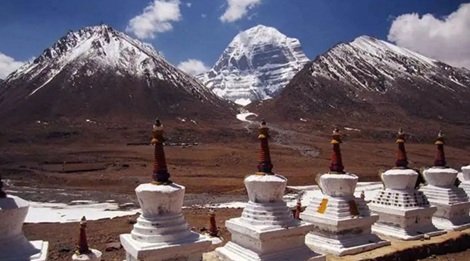
  • In April 2026, India announced the resumption of the Kailash Mansarovar Yatra for June-August.
  • Nepal lodged a formal protest, calling it a violation of its sovereignty.
  • The issue has again highlighted the trilateral sensitivities between India, Nepal, and China.
Background - Lipulekh Dispute :

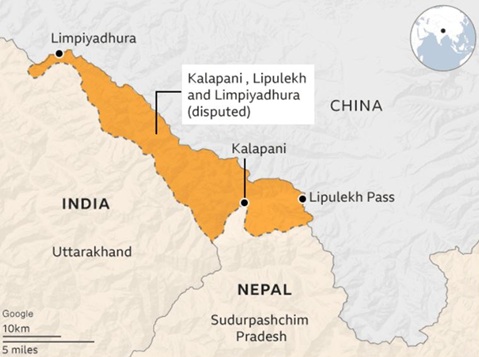
  • The Lipulekh Pass is a strategic pass located at the tri-junction of India, Nepal, and China.
  • It is an important route for trade and the Kailash Mansarovar pilgrimage.
  • Historical Basis
    • Nepal claims that Limpiyadhura, Kalapani, and Lipulekh fall within its territory based on the Sugauli Treaty of 1816.
  • The root cause of the dispute is differing interpretations of the source of the Mahakali River.
India's Position

  • India has been using this route for pilgrimage since 1954.
  • India considers Nepal's claims historically inconsistent.

China's Role

  • China has maintained a relatively silent stance while maintaining trade cooperation with India.
  • ​​Recent cooperation has given the dispute a trilateral dimension.

Stakeholder Positions

Nepal

  • Claims territorial sovereignty based on historical treaties and maps.
  • Demands trilateral talks (India-Nepal-China).
  • Expects a halt to activities in the disputed area.

India

  • Emphasis on traditional use and religious significance.
  • Supports resolving the border dispute within a bilateral framework.
  • Calls Nepal's claims "artificial enlargement."
  • Importance to India
    • Geopolitical : Maintaining influence in Nepal
    • Security : Control over Himalayan passes
    • Cultural : Continuation of the Kailash Mansarovar Yatra

China

  • A balanced and cautious approach while maintaining commercial interests.

Historical development of the dispute

  • 1954 : India begins using the route as a travel route
  • 2020 : India builds a road, Nepal releases a new map
  • 2025 : Nepal protests India-China trade
  • 2026 : Announcement of travel resumption sparks tensions

Key Issues and Challenges

Border Ambiguity

  • The primary cause of the border dispute between India and Nepal is the disputed interpretation of the exact source of the Kali River in the Sugauli Treaty, leading to ambiguity in the demarcation.
  • Domestic Politics and Nationalism
    • The border issue has become a highly sensitive and nationalistic topic in Nepal's domestic politics, often used by political parties to garner public support.

Strategic Sensitivity

  • Tri-junctions like Kalapani and Lipulekh are of immense strategic importance to India, as any activity there has a direct and profound impact on the security situation of India-China relations.
  • Bilateral vs. Trilateral Approach
    • Nepal : Nepal has been supporting trilateral talks (between China, India, and Nepal) to resolve border disputes or territorial issues.
    • India : In contrast, India has always insisted on resolving these issues through bilateral solutions by directly negotiating with the concerned country.
  • Cultural impact: Kailash Mansarovar is a center of faith for Hindus, Buddhists, and Jains. Disruption to the pilgrimage weakens centuries-old cultural and religious bridges.

Way Forward

  • Activating the border dialogue mechanism
    • Intensifying meetings of India-Nepal Joint Committees
  • Evidence-based solutions
    • Use of historical maps, satellite data, and joint surveys
  • Confidence Building Measures (CBMs)
    • Temporary arrangements for pilgrimage even while the dispute continues
  • Diplomatic restraint
    • Avoiding inflammatory rhetoric
  • Limited trilateral coordination
    • Balanced dialogue with China as needed

Conclusion

The Lipulekh dispute reflects the complex geopolitics of the Himalayan region, where history, geography, and nationalism are intertwined. The Kailash Mansarovar Yatra may be the immediate trigger, but the underlying issue is the unresolved border dispute. Dialogue, mutual respect, and balanced diplomacy are the most effective paths to maintaining India-Nepal relations and regional stability.

« »
  • SUN
  • MON
  • TUE
  • WED
  • THU
  • FRI
  • SAT
Have any Query?

Our support team will be happy to assist you!

OR