New
Hindi Medium: (Delhi) - GS Foundation (P+M) : 10th Aug 2026, 3:00 PM Hindi Medium: (Prayagraj) - GS Foundation (P+M) : 18th Aug 2026, 8:00 AM English Medium: (Delhi) - GS Foundation (P+M) : 6th Aug 2026 English Medium: (Prayagraj) - GS Foundation (P+M) : 15th July 2026, 8:00 AM Hindi Medium: (Delhi) - GS Foundation (P+M) : 10th Aug 2026, 3:00 PM Hindi Medium: (Prayagraj) - GS Foundation (P+M) : 18th Aug 2026, 8:00 AM English Medium: (Delhi) - GS Foundation (P+M) : 6th Aug 2026 English Medium: (Prayagraj) - GS Foundation (P+M) : 15th July 2026, 8:00 AM

Current Affairs for 05 August 2026

Hexavalent Vaccine Could Strengthen India’s Universal Immunisation Programme

Mains: GS Paper II: Health, Government Policies & Interventions, Human Resource Development, Public Health
Keywords: Hexavalent Vaccine, Universal Immunisation Programme (UIP), Combination Vaccine, Pentavalent Vaccine, Fractional IPV, DTP Booster, Immunisation, Cold Chain, Gavi, Childhood Vaccination

Why in News?

A multi-institutional study led by the Union Ministry of Health and Family Welfare has concluded that introducing the Hexavalent Vaccine into India's Universal Immunisation Programme (UIP) can improve operational efficiency and reduce the logistical burden of childhood immunisation. 

What is the Hexavalent Vaccine?

A Hexavalent Vaccine is a combination vaccine that protects infants against six life-threatening diseases through a single injection. It combines multiple antigens into one dose, thereby reducing the number of injections required during routine immunisation visits.

Diseases Covered

  • Diphtheria
  • Tetanus
  • Pertussis (Whooping Cough)
  • Hepatitis B
  • Haemophilus influenzae type b (Hib)
  • Polio (Inactivated Polio Vaccine – IPV)

Combination vaccines are recommended globally because they improve vaccination compliance, reduce discomfort for children, and simplify immunisation schedules.

About India's Universal Immunisation Programme (UIP)

The Universal Immunisation Programme (UIP) was launched in 1985 and is one of the world's largest public health programmes. It aims to provide free vaccination against vaccine-preventable diseases to all eligible children and pregnant women.

Key Facts

  • Implemented by the Ministry of Health and Family Welfare.
  • Covers nearly 26 million infants and around 29 million pregnant women annually.
  • Provides free vaccines through an extensive network of government health facilities.
  • Supported through initiatives such as Mission Indradhanush and Intensified Mission Indradhanush to improve immunisation coverage.

Key Findings of the Study

The study evaluated two implementation scenarios:

  • Replacing the current Pentavalent Vaccine and Fractional IPV with the Hexavalent Vaccine during the primary immunisation schedule.
  • Replacing both the primary schedule and the DTP booster dose with a Hexavalent Booster.

The researchers assessed costs from both the government's perspective and the household perspective, including:

  • Vaccine procurement costs
  • Syringes and injection equipment
  • Cold-chain logistics
  • Healthcare worker time
  • Caregiver travel and waiting time

The findings indicate that while the Hexavalent Vaccine has a higher procurement cost, it generates significant operational savings by reducing injections, simplifying logistics, and lowering programme management costs.

Major Benefits of Introducing the Hexavalent Vaccine

1. Fewer Injections for Infants

Instead of receiving multiple injections during immunisation visits, children can receive protection against six diseases through a single shot. This reduces pain, anxiety, and vaccine hesitancy among caregivers.

2. Improved Convenience for Families

Parents spend less time visiting vaccination centres, reducing travel expenses and loss of daily wages, particularly in rural and economically weaker households.

3. Reduced Workload for Frontline Health Workers

ANMs, ASHAs, and other frontline workers can administer fewer injections, improving service delivery and allowing more time for counselling and community outreach.

4. Better Cold-Chain Management

Since fewer vaccine vials need to be transported and stored, the demand for refrigeration, storage space, and transportation is reduced, making the immunisation programme more efficient.

5. Operational Efficiency

A simplified vaccination schedule reduces inventory management challenges, lowers vaccine wastage, and streamlines immunisation sessions.

Economic Implications

  • The study identified vaccine procurement price as the most significant factor influencing programme costs.
  • Researchers estimated that if the price of the Hexavalent Vaccine decreases by around 50%, the savings generated through reduced logistics, cold-chain requirements, healthcare worker time, and caregiver costs would outweigh the additional expenditure on vaccine procurement.
  • This indicates that long-term adoption could become economically sustainable, particularly if domestic manufacturing expands and procurement costs decline.

Significance for India's Public Health System

Introducing the Hexavalent Vaccine aligns with India's broader goal of strengthening primary healthcare and improving immunisation coverage.

It could:

  • Improve vaccination compliance.
  • Reduce missed or delayed doses.
  • Enhance healthcare efficiency.
  • Strengthen India's progress toward reducing child mortality.
  • Support Sustainable Development Goal (SDG) 3 on ensuring healthy lives and promoting well-being for all.

With India operating one of the world's largest immunisation programmes, even small improvements in efficiency can have significant national-level health and economic benefits.

Challenges

Despite its advantages, several challenges remain:

  • High initial procurement cost of the vaccine.
  • Need for sustainable financing mechanisms.
  • Domestic manufacturing capacity must be expanded.
  • Updating national immunisation guidelines and training healthcare workers.
  • Ensuring uninterrupted vaccine supply across all states and Union Territories.
  • Careful evaluation by the National Technical Advisory Group on Immunization (NTAGI) before nationwide introduction.

Way Forward

India should continue evaluating the Hexavalent Vaccine through cost-effectiveness studies and phased implementation strategies. Strengthening indigenous vaccine production under the 'Make in India' initiative can help reduce procurement costs. Policymakers should also consider long-term operational savings, improved programme efficiency, and better health outcomes while making decisions regarding its inclusion in the Universal Immunisation Programme.

Prelims MCQ

Q. With reference to the Hexavalent Vaccine, consider the following statements:

  1. It provides protection against six diseases through a single injection.
  2. It includes protection against Polio and Hepatitis B.
  3. It has already been introduced nationwide under India's Universal Immunisation Programme.

Which of the statements given above is/are correct?

A. 1 and 2 only
B. 2 and 3 only
C. 1 and 3 only
D. 1, 2 and 3

Mains Question

"Combination vaccines have the potential to improve public health outcomes while reducing operational costs." Discuss this statement in the context of the proposed introduction of the Hexavalent Vaccine under India's Universal Immunisation Programme.

FAQs

1. What is the Hexavalent Vaccine?

It is a six-in-one combination vaccine that protects against Diphtheria, Tetanus, Pertussis, Hepatitis B, Hib, and Polio.

2. Why is the Hexavalent Vaccine important?

It reduces the number of injections, improves vaccination compliance, and simplifies immunisation logistics.

3. What is the Universal Immunisation Programme (UIP)?

Launched in 1985, UIP is India's national programme providing free vaccines to children and pregnant women against vaccine-preventable diseases.

4. Has India introduced the Hexavalent Vaccine under UIP?

No. The recent study recommends its consideration, but it has not yet been included in the national immunisation schedule.

5. Which organisations participated in the study?

The study involved the Ministry of Health and Family Welfare, George Institute for Global Health India, Gates Foundation, Gavi – The Vaccine Alliance, and John Snow India Pvt. Ltd.

TRAI MyCall & Telecom Regulatory Authority of India (TRAI): Features, Objectives, Working and Significance

Why in News?

  • The Telecom Regulatory Authority of India (TRAI) has launched a revamped version of the "TRAI MyCall" mobile application to enable telecom consumers to assess and report their voice-calling experience in real time
  • The initiative aims to improve telecom service quality by integrating consumer feedback with technical network parameters.


What is TRAI MyCall?

TRAI MyCall is a citizen-centric mobile application developed by the Telecom Regulatory Authority of India (TRAI) that enables telecom subscribers to provide real-time feedback on the quality of voice calls. The application combines users' experience with relevant network information to help improve the Quality of Service (QoS) and Quality of Experience (QoE) across telecom networks.

Objectives of TRAI MyCall

  • To empower telecom consumers to report their voice-calling experience directly. 
  • To improve telecom network performance through consumer feedback. 
  • To strengthen evidence-based regulatory oversight by TRAI. 
  • To help Telecom Service Providers (TSPs) identify network deficiencies and take corrective measures. 
  • To enhance customer satisfaction and transparency in the telecom sector. 

Key Features of the Revamped TRAI MyCall App

1. Real-Time Consumer Feedback

  • Allows users to rate every voice call immediately after completion. 
  • Uses a simple 1–5 star rating system

2. Reporting of Call Issues

Consumers can report problems such as:

  • Call drops 
  • Echo during calls 
  • Audio delay 
  • Cross connection 
  • Voice breaking 
  • One party unable to hear the other 
  • Long call connection time 

The complaints are shared with the concerned Telecom Service Provider (TSP) for corrective action.

3. Automatic Feedback Prompt

  • Displays an automatic prompt after calls, making it easier for users to participate without opening the app separately. 

4. Interactive Map

  • Shows the history of ratings and feedback on an interactive map. 
  • Helps consumers monitor network performance across locations. 

5. Coverage Test

  • Enables users to test signal strength and network coverage in their area. 

6. Multilingual Support

  • Integrated with Bhashini to support multiple Indian languages, making the application accessible to a wider population. 

How Does TRAI MyCall Work?

  • Users install the application on Android smartphones. 
  • After every voice call, the app prompts the user to provide feedback. 
  • The user rates the call and reports any issues experienced. 
  • The feedback is transmitted in an anonymised form to both TRAI and the concerned Telecom Service Provider. 
  • Service providers analyze the data, identify network deficiencies, and undertake corrective measures. 
  • TRAI uses the aggregated data to evaluate telecom service quality and improve regulatory oversight. 

Importance of the Application

  • Improves Quality of Service (QoS) :-The app helps telecom operators identify network problems and improve service quality based on actual consumer experiences.
  • Measures Quality of Experience (QoE) :-Technical network parameters alone cannot capture users' real experiences. TRAI MyCall bridges this gap by incorporating consumer feedback.
  • Enhances Consumer Participation :-Consumers become active participants in improving telecom services rather than passive users.
  • Supports Data-Driven Regulation :-TRAI receives large-scale real-time data that supports informed regulatory decisions and policy interventions.
  • Promotes Transparency and Accountability :-Telecom operators become more accountable as consumers can directly report deficiencies.

Difference Between QoS and QoE

Quality of Service (QoS)

Quality of Experience (QoE)

Technical measurement of network performance

User's actual experience while using telecom services

Based on network parameters

Based on customer perception

Measured by telecom operators and regulators

Measured through consumer feedback

Includes latency, signal strength, call setup time, etc.

Includes call clarity, call drops, voice quality, connectivity experience

Telecom Regulatory Authority of India (TRAI)

The Telecom Regulatory Authority of India (TRAI) is the statutory regulatory body responsible for regulating the telecommunications sector in India.

Establishment

  • Established under the Telecom Regulatory Authority of India Act, 1997
  • Created through an Act of Parliament. 

Objectives

  • Promote orderly growth of the telecommunications sector. 
  • Ensure fair competition among telecom service providers. 
  • Protect consumer interests. 
  • Ensure affordable and quality telecom services. 
  • Create a transparent regulatory framework. 

Major Functions

Regulation

  • Regulates telecom tariffs. 
  • Frames regulations for telecom services. 
  • Issues recommendations on licensing and spectrum-related matters. 

Consumer Protection

  • Ensures high-quality telecom services. 
  • Addresses consumer grievances. 
  • Prevents unfair trade practices such as misleading advertisements and hidden charges. 

Monitoring

  • Monitors compliance with Quality of Service standards. 
  • Assesses telecom performance across service providers. 

Policy Recommendations

  • Advises the Central Government on licensing, spectrum allocation, and telecom reforms. 

Composition

TRAI consists of:

  • One Chairperson 
  • Maximum two Full-Time Members 
  • Maximum two Part-Time Members 

Appointment :-Appointed by the Central Government. 

Tenure :-Three years or until attaining the age of 65 years, whichever is earlier. 

Powers of TRAI

  • Regulates telecom tariffs. 
  • Monitors Quality of Service. 
  • Protects consumer interests. 
  • Issues regulations and directions. 
  • Recommends licensing conditions. 
  • Ensures fair competition among telecom operators. 

Telecom Disputes Settlement and Appellate Tribunal (TDSAT)

The Telecom Disputes Settlement and Appellate Tribunal (TDSAT) was established through an amendment to the TRAI Act to separate TRAI's regulatory and adjudicatory functions.

Functions

TDSAT adjudicates disputes:

  • Between the Government (licensor) and telecom licensees. 
  • Between two or more telecom service providers. 
  • Between service providers and groups of consumers. 
  • Hears appeals against TRAI's directions, decisions, and orders. 

Significance for India

  • Strengthens digital governance through citizen participation. 
  • Improves telecom infrastructure using real-time feedback. 
  • Supports India's Digital India initiative. 
  • Enhances transparency and accountability in telecom regulation. 
  • Facilitates evidence-based policymaking. 
  • Improves customer satisfaction across telecom networks. 

Challenges

  • Consumer participation may remain low unless awareness increases. 
  • Feedback quality depends on active user engagement. 
  • Privacy and data protection must be ensured despite anonymisation. 
  • Rural smartphone penetration may limit participation. 
  • Only Android availability may reduce inclusivity. 

Way Forward

  • Increase public awareness campaigns to encourage app adoption. 
  • Expand the application to iOS and other platforms. 
  • Integrate AI-based analytics for faster identification of network issues. 
  • Publish periodic network quality reports based on aggregated consumer feedback. 
  • Strengthen collaboration between TRAI and Telecom Service Providers for timely corrective action.

FAQs on TRAI MyCall 

Q1. What is TRAI MyCall?

Answer: TRAI MyCall is a citizen-centric mobile application launched by the Telecom Regulatory Authority of India (TRAI) that allows telecom users to provide real-time feedback on their voice-calling experience and network quality.

Q2. Why was the TRAI MyCall app launched?

Answer: The app was launched to improve the Quality of Service (QoS) and Quality of Experience (QoE) by collecting consumer feedback and helping telecom service providers identify and resolve network issues.

Q3. Who developed the TRAI MyCall application?

Answer: The application has been developed and launched by the Telecom Regulatory Authority of India (TRAI).

Glaw Lake Becomes India's 101st Ramsar Site; Arunachal Pradesh Gets Its First Ramsar Wetland

Prelims: Environment & Ecology (Wetlands, Ramsar Sites, Biodiversity, Protected Areas, International Environmental Conventions)
Mains: GS Paper III – Environment & Ecology, Biodiversity Conservation, Wetland Conservation, Climate Change, Ecosystem Management, Sustainable Development.

Why in News?

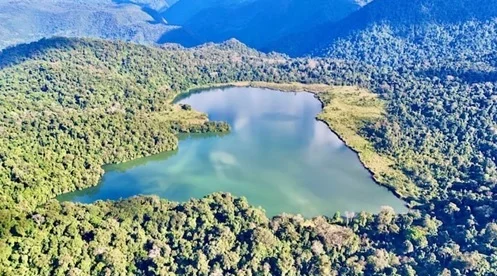
Glaw Lake, located in Arunachal Pradesh, has been designated as India's 101st Ramsar Site under the Ramsar Convention on Wetlands. The designation also marks Arunachal Pradesh's first Ramsar Site, highlighting the ecological significance of the lake and strengthening India's commitment to wetland conservation and biodiversity protection.

What is Glaw Lake?

  • Glaw Lake is a pristine freshwater lake situated within the Kamlang Tiger Reserve and Wildlife Sanctuary in Lohit district, Arunachal Pradesh. 
  • Nestled in the Eastern Himalayas, the lake is fed by perennial mountain streams and surrounded by dense forests, making it an ecologically rich and biodiverse wetland ecosystem.
  • The lake and its catchment area support more than 150 tree species and 49 orchid species, highlighting its importance as a biodiversity hotspot and a vital habitat for diverse flora and fauna.

Why is the Ramsar Designation Important?

  • The inclusion of Glaw Lake has increased India's total Ramsar Sites from 100 to 101. 
  • It also makes Arunachal Pradesh the latest state to have a Ramsar-designated wetland. 
  • The recognition acknowledges the lake's international ecological importance and is expected to strengthen wetland conservation, biodiversity protection, and sustainable management in the region.
  • The designation also enhances opportunities for scientific research, eco-tourism, community participation, and international cooperation in wetland conservation.

What is a Ramsar Site?

  • A Ramsar Site is a wetland recognised as being of international importance under the Ramsar Convention, an international treaty adopted in 1971 at Ramsar, Iran, for the conservation and wise use of wetlands.
  • The Convention promotes the protection of wetlands that play a crucial role in:
  • Conserving biodiversity
  • Maintaining water resources
  • Regulating climate
  • Supporting livelihoods and ecosystem services

India's Ramsar Network

  • India has significantly expanded its Ramsar network in recent years.

Year

Number of Ramsar Sites

2014

26

2026

101

  • The addition of Glaw Lake reflects India's continued commitment to wetland conservation, biodiversity protection, and sustainable ecosystem management.

India's Global Ranking in Ramsar Sites

  • India currently ranks third in the world in terms of the number of Ramsar Sites, after the United Kingdom and Mexico. 
  • With the addition of Glaw Lake as its 101st Ramsar Site, India also has the highest number of Ramsar Sites in Asia.

About Glaw Lake

Feature

Details

Location

Lohit district, Arunachal Pradesh

Protected Area

Kamlang Tiger Reserve & Wildlife Sanctuary

Type

Freshwater Lake

Region

Eastern Himalayas

Water Source

Perennial mountain streams

Biodiversity

150+ tree species and 49 orchid species

Recognition

India's 101st Ramsar Site

Significance

First Ramsar Site in Arunachal Pradesh

Prelims Practice Question

Q. With reference to Glaw Lake, consider the following statements:

  1. It is located in Arunachal Pradesh.
  2. It is situated within the Kamlang Tiger Reserve and Wildlife Sanctuary.
  3. It has been designated as India's 101st Ramsar Site.

Which of the statements given above is/are correct?

  1. 1 and 2 only

  2. 2 and 3 only

  3. 1 and 3 only

  4. 1, 2 and 3

Mains Practice Question

Wetlands are among the most productive ecosystems on Earth and play a vital role in biodiversity conservation and climate resilience. Discuss in the context of the recent designation of Glaw Lake as India's 101st Ramsar Site.

FAQs: Glaw Lake & Ramsar Site

Q1. Why is Glaw Lake in the news?

Answer: Glaw Lake has been designated as India's 101st Ramsar Site, making it the first Ramsar Site in Arunachal Pradesh.

Q2. Where is Glaw Lake located?

Answer: Glaw Lake is located within the Kamlang Tiger Reserve and Wildlife Sanctuary in Lohit district, Arunachal Pradesh, in the Eastern Himalayas.

Q3. What is a Ramsar Site?

Answer: A Ramsar Site is a wetland recognized as being of international importance under the Ramsar Convention (1971) for its ecological, hydrological, and biodiversity value.

Q4. Why is Glaw Lake ecologically important?

Answer: Glaw Lake is a freshwater wetland that supports rich biodiversity, including more than 150 tree species and 49 orchid species, making it an important ecological hotspot in the Eastern Himalayas.

Q5. How many Ramsar Sites does India have now?

Answer: With the inclusion of Glaw Lake, India now has 101 Ramsar Sites.

upsc english
« »
  • SUN
  • MON
  • TUE
  • WED
  • THU
  • FRI
  • SAT
Have any Query?

Our support team will be happy to assist you!

OR