
- UPSC Exam
- State PCS
- One Day Exam
- Current Affairs
- PT Quiz
- Downlaods
- About Coaching
- Blog
- Videos

| Mains: GS Paper II: Health, Government Policies & Interventions, Human Resource Development, Public Health Keywords: Hexavalent Vaccine, Universal Immunisation Programme (UIP), Combination Vaccine, Pentavalent Vaccine, Fractional IPV, DTP Booster, Immunisation, Cold Chain, Gavi, Childhood Vaccination |
A multi-institutional study led by the Union Ministry of Health and Family Welfare has concluded that introducing the Hexavalent Vaccine into India's Universal Immunisation Programme (UIP) can improve operational efficiency and reduce the logistical burden of childhood immunisation.
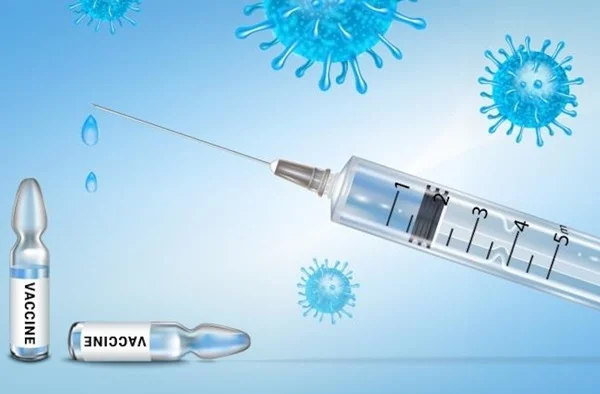
A Hexavalent Vaccine is a combination vaccine that protects infants against six life-threatening diseases through a single injection. It combines multiple antigens into one dose, thereby reducing the number of injections required during routine immunisation visits.
Combination vaccines are recommended globally because they improve vaccination compliance, reduce discomfort for children, and simplify immunisation schedules.
The Universal Immunisation Programme (UIP) was launched in 1985 and is one of the world's largest public health programmes. It aims to provide free vaccination against vaccine-preventable diseases to all eligible children and pregnant women.
The study evaluated two implementation scenarios:
The researchers assessed costs from both the government's perspective and the household perspective, including:
The findings indicate that while the Hexavalent Vaccine has a higher procurement cost, it generates significant operational savings by reducing injections, simplifying logistics, and lowering programme management costs.
Instead of receiving multiple injections during immunisation visits, children can receive protection against six diseases through a single shot. This reduces pain, anxiety, and vaccine hesitancy among caregivers.
Parents spend less time visiting vaccination centres, reducing travel expenses and loss of daily wages, particularly in rural and economically weaker households.
ANMs, ASHAs, and other frontline workers can administer fewer injections, improving service delivery and allowing more time for counselling and community outreach.
Since fewer vaccine vials need to be transported and stored, the demand for refrigeration, storage space, and transportation is reduced, making the immunisation programme more efficient.
A simplified vaccination schedule reduces inventory management challenges, lowers vaccine wastage, and streamlines immunisation sessions.
Introducing the Hexavalent Vaccine aligns with India's broader goal of strengthening primary healthcare and improving immunisation coverage.
It could:
With India operating one of the world's largest immunisation programmes, even small improvements in efficiency can have significant national-level health and economic benefits.
Despite its advantages, several challenges remain:
India should continue evaluating the Hexavalent Vaccine through cost-effectiveness studies and phased implementation strategies. Strengthening indigenous vaccine production under the 'Make in India' initiative can help reduce procurement costs. Policymakers should also consider long-term operational savings, improved programme efficiency, and better health outcomes while making decisions regarding its inclusion in the Universal Immunisation Programme.
Prelims MCQQ. With reference to the Hexavalent Vaccine, consider the following statements:
Which of the statements given above is/are correct? A. 1 and 2 only Mains Question"Combination vaccines have the potential to improve public health outcomes while reducing operational costs." Discuss this statement in the context of the proposed introduction of the Hexavalent Vaccine under India's Universal Immunisation Programme. |
1. What is the Hexavalent Vaccine?It is a six-in-one combination vaccine that protects against Diphtheria, Tetanus, Pertussis, Hepatitis B, Hib, and Polio. 2. Why is the Hexavalent Vaccine important?It reduces the number of injections, improves vaccination compliance, and simplifies immunisation logistics. 3. What is the Universal Immunisation Programme (UIP)?Launched in 1985, UIP is India's national programme providing free vaccines to children and pregnant women against vaccine-preventable diseases. 4. Has India introduced the Hexavalent Vaccine under UIP?No. The recent study recommends its consideration, but it has not yet been included in the national immunisation schedule. 5. Which organisations participated in the study?The study involved the Ministry of Health and Family Welfare, George Institute for Global Health India, Gates Foundation, Gavi – The Vaccine Alliance, and John Snow India Pvt. Ltd. |


Our support team will be happy to assist you!

 Contact Us
  New Batch : 9555124124/ 7428085757
  Tech Support : 9555124124/ 7428085757