New
Hindi Medium: (Delhi) - GS Foundation (P+M) : 8th June 2026, 6:30 PM Hindi Medium: (Prayagraj) - GS Foundation (P+M) : 1st June 2026, 5:30 PM English Medium: (Prayagraj) - GS Foundation (P+M) : 7th June 2026, 8:00 AM Hindi Medium: (Delhi) - GS Foundation (P+M) : 8th June 2026, 6:30 PM Hindi Medium: (Prayagraj) - GS Foundation (P+M) : 1st June 2026, 5:30 PM English Medium: (Prayagraj) - GS Foundation (P+M) : 7th June 2026, 8:00 AM

Current Affairs for 05 June 2026

Agasthyamalai Biosphere Reserve: Conservation, Biodiversity and Tribal Heritage in the Western Ghats

Why in News

  • The Supreme Court ordered the removal of encroachments from the Agasthyamalai Biosphere Reserve. 

Geographical Profile

  • Agasthyamalai Biosphere Reserve is located in the southern Western Ghats across Kerala and Tamil Nadu. 
  • It was designated a Biosphere Reserve in 2001. 
  • It joined the UNESCO World Network of Biosphere Reserves in 2016. 

Protected Area Network

  • It includes Shendurney Wildlife Sanctuary, Peppara Wildlife Sanctuary and Neyyar Wildlife Sanctuary. 
  • It also includes the Kalakkad Mundanthurai Tiger Reserve. 

Biodiversity Significance

  • The reserve contains tropical evergreen, moist deciduous and shola forests. 
  • It supports around 2,254 higher plant species, including nearly 400 endemic species. 
  • Important fauna include the Asian Elephant, Tiger, Nilgiri Tahr and Great Indian Hornbill. 

Tribal Presence

  • It is home to the Kanikaran tribe, one of the oldest tribal communities of the region.

Jai Prakash Narayan Bird Sanctuary Becomes India's 100th Ramsar Site

Why in News?

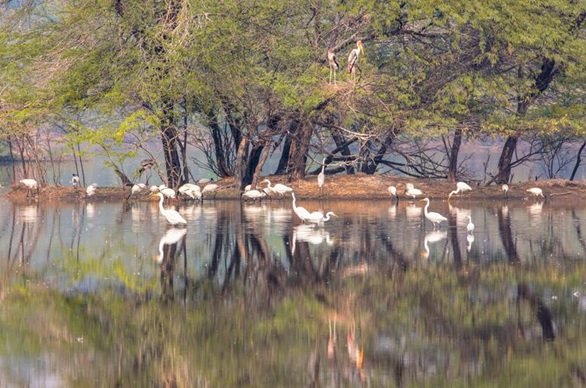
On the occasion of World Environment Day (5 June 2026), the Jai Prakash Narayan Bird Sanctuary (Surha Tal) in Ballia district of Uttar Pradesh was declared India's 100th Ramsar Site. Prime Minister Narendra Modi welcomed the achievement and described it as a major milestone in India's wetland conservation journey.
India Becomes Asia's No. 1 Country

With the designation of Jai Prakash Narayan Bird Sanctuary as India's 100th Ramsar Site, India has become the country with the highest number of Ramsar Sites in Asia and now ranks third globally. The United Kingdom leads the world with 176 Ramsar Sites, followed by Mexico with 144. Reaching the milestone of 100 Ramsar Sites reflects India's strong commitment to wetland conservation, biodiversity protection, and sustainable environmental management.

A Historic Achievement for India

India has achieved an important milestone in environmental conservation with the inclusion of Jai Prakash Narayan Bird Sanctuary in the list of Ramsar Sites of International Importance. Located in Ballia district of Uttar Pradesh, this wetland is popularly known as Surha Tal.

With this recognition, India now has 100 Ramsar Sites, highlighting the country's growing commitment to protecting wetlands, biodiversity, and natural ecosystems.

What is a Ramsar Site ?

A Ramsar Site is a wetland recognized as being of international importance under the Ramsar Convention, an international treaty signed in 1971 in the city of Ramsar, Iran.

The convention aims to conserve and promote the sustainable use of wetlands across the world because they play a vital role in maintaining ecological balance.

Why Are Wetlands Important ?

Wetlands are among the most productive ecosystems on Earth. They :

  • Provide habitat to migratory birds and aquatic species.
  • Help recharge groundwater.
  • Reduce the impact of floods.
  • Improve water quality by filtering pollutants.
  • Support biodiversity and local livelihoods.
  • Contribute to climate change mitigation.

Significance of India's 100th Ramsar Site

The declaration of Jai Prakash Narayan Bird Sanctuary as the 100th Ramsar Site is significant because :

  • It strengthens India's global image in environmental conservation.
  • It promotes scientific research and ecological monitoring.
  • It attracts eco-tourism and sustainable development opportunities.
  • It ensures better protection for migratory birds and wetland ecosystems.
  • It reflects India's commitment to biodiversity conservation and climate resilience.

New Ramsar Sites Added in India in 2026

S. No.

Ramsar Site

State

Year/Date of Declaration

Ramsar Number in India

1

Patna Bird Sanctuary

Uttar Pradesh

January 2026

97th

2

Chhari-Dhand Wetland

Gujarat

January 2026

98th

3

Shekha Jheel Bird Sanctuary

Uttar Pradesh

April 2026

99th

4

Jai Prakash Narayan Bird Sanctuary (Surha Tal)

Uttar Pradesh

5 June 2026

100th

Special Achievement for Uttar Pradesh

Uttar Pradesh has emerged as one of the leading states in wetland conservation. Recently, Shekha Jheel Bird Sanctuary became India's 99th Ramsar Site, and now Jai Prakash Narayan Bird Sanctuary has become the 100th, further enhancing the state's environmental significance.

Conclusion

The recognition of Jai Prakash Narayan Bird Sanctuary as India's 100th Ramsar Site is more than just a numerical achievement. It symbolizes India's dedication to protecting its natural heritage and preserving wetlands for future generations. As environmental challenges continue to grow, such conservation efforts will play a crucial role in ensuring sustainable development and ecological security.

Karnala Fort: Historic Hill Fort in Maharashtra's Sahyadri Range

Why in News ?

  • Illegal deforestation near Karnala Fort in Maharashtra recently drew attention. 

Geographical Importance

  • Karnala Fort is located in Raigad district, Maharashtra. 
  • It lies within the Karnala Bird Sanctuary in the Sahyadri range. 
  • The fort overlooks the historic Bor Pass trade route linking Konkan and inland Maharashtra. 

Historical Legacy

  • The fort is believed to have been built during the Devagiri Yadava and Tughlaq periods. 
  • It was successively controlled by the Gujarat Sultanate, Nizam Shahis, Portuguese, Marathas, Mughals and British. 
  • It served as an important outpost under Chhatrapati Shivaji Maharaj. 

Architectural Features

  • The fort comprises an upper and a lower fortification. 
  • It contains a 125-foot basalt pillar called Pandu’s Tower. 
  • A temple dedicated to Goddess Bhavani is situated at its base.

Eurozone: Composition, Institutions and Maastricht Entry Criteria

Why in News ?

  • Eurozone inflation recently rose to 3.2% due to energy and services price pressures. 

Composition and Membership

  • The Eurozone comprises 21 European Union countries using the Euro (€) as their currency. 
  • Bulgaria became the latest member in 2026. 
  • Countries such as Denmark, Sweden, Poland, Hungary, Romania and Czech Republic have not adopted the euro. 

Institutional Framework

  • The European Central Bank formulates monetary policy for the Eurozone. 
  • The ECB controls euro currency issuance and interest-rate decisions. 
  • The institution is led by a President and the governors of participating central banks. 

Economic Stabilisation Mechanism

  • The European Stability Mechanism provides financial assistance during economic crises. 
  • Support is provided through conditional rescue loans. 

Maastricht Criteria

  • Entry into the Eurozone requires compliance with price stability, sound public finances, exchange-rate stability and durable convergence. 
  • These criteria were established under the Maastricht Treaty (1992).

Prime Minister Research Chair (PMRC) Scheme 2026: Connecting Global Indian Talent with Indian Institutions

Why in News ?

  • The Department of Higher Education, Ministry of Education has invited applications under the PMRC Scheme 2026. 

Objective and Governance Framework

  • The scheme seeks to attract accomplished Indian-origin researchers from leading global institutions. 
  • It aims to connect global talent with Indian higher educational institutions and research laboratories. 
  • The programme is overseen by an Empowered Committee chaired by the Principal Scientific Advisor (PSA). 

Institutional Architecture

  • The scheme operates through Lead Institutions, Host Institutions and PMRC Fellows. 
  • Host institutions include top-ranked institutions under NIRF and national research laboratories. 
  • Lead institutions include IIT Delhi, IIT Bombay, IIT Madras, IIT Kanpur, IIT Hyderabad, IIT (ISM) Dhanbad and IISc Bengaluru.

Priority Research Areas

  • The scheme covers 13 priority sectors, including Artificial Intelligence, Quantum Computing, Semiconductors, Cybersecurity, Biotechnology, Healthcare, Space & Defence, Blue Economy, Climate Change and Atomic Energy. 
  • Research projects are aligned with national development priorities. 

Categories and Eligibility

  • The scheme provides Young Research Fellow, Senior Research Fellow and Research Chair categories. 
  • Eligible candidates include Indian Nationals abroad, OCI Cardholders and Persons of Indian Origin (PIOs).

Yellow-Throated Marten: A Rare Mustelid Recorded in Kaziranga

Why in News ?

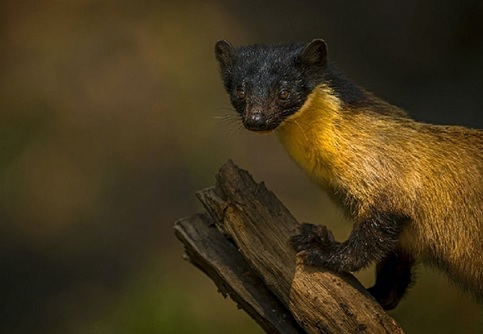
  • Kaziranga National Park recorded its first sighting of the Yellow-Throated Marten. 
Taxonomy and Distribution

  • Scientific Name : Martes flavigula
  • It belongs to the Mustelidae family, which includes otters, badgers and ferrets. 
  • Its range extends from the Himalayas to Indonesia, the Korean Peninsula and the China–Russia border. 

Habitat Diversity

  • It inhabits coniferous, broad-leaved and montane forests. 
  • It is also found in tropical forests, shrublands, swamps and treeless mountains. 

Distinctive Features

  • It is the largest of the Old World martens. 
  • It possesses a bright yellow or golden throat and chest. 
  • It is known for its fearless behaviour and strong body structure. 

Conservation Status

IUCN Red List : Least Concern (LC).

Union Cabinet approves ATF Price Stabilization Fund

Why in the news ?

The Union Cabinet has approved the ATF (Aviation Turbine Fuel) Price Stabilization Fund, aimed at providing relief to the Indian aviation sector from fluctuations in global fuel prices. This initiative aims to control the operating costs of domestic airlines and provide stability to the aviation sector.

What is the ATF Price Stabilization Fund ?

  • The size of this fund, established by the government, has been capped at ₹10,000 crore.
  • Its primary objective is to mitigate the impact of sharp increases in global crude oil and aviation fuel prices, so that Indian airlines do not face excessive financial pressure.

Key Features of the Fund

  • Fund Amount
    • Maximum corpus of ₹10,000 crore.
  • Objectives
    • To maintain stable aviation turbine fuel (ATF) prices.
    • To prevent sudden increases in airline costs.
    • To ensure the financial stability of the aviation sector.
  • Support Mechanism
    • An interest-free advance will be provided to oil marketing companies (OMCs) to compensate for losses caused by rising global fuel prices.
    • This will help control excessive fluctuations in ATF prices.
  • ATF Pricing Mechanism
    • A fixed price regime will remain in effect for domestic and international flights.
    • Oil marketing companies (OMCs) will retain exclusive rights to supply ATF.
  • Duration
    • The scheme will be in effect for 36 months.
    • It will be reviewed annually, based on which necessary amendments can be made.

Importance of ATF

  • Aviation turbine fuel (ATF) accounts for approximately 40 percent of an airline's operating costs. Therefore, an increase in ATF prices directly impacts airline profitability and airfares.

Potential Benefits

  • Airlines' financial position will be strengthened.
  • The likelihood of excessive airfare increases will be reduced.
  • Investment and expansion in the aviation sector will be encouraged.
  • It will help provide stable and improved passenger services.
  • India's rapidly growing civil aviation sector will achieve long-term stability.

Conclusion

The ATF Price Stabilization Fund is considered an important step for the Indian aviation industry. Amidst uncertainties in the global energy market, this initiative can provide relief to airlines and help make the country's civil aviation sector more competitive and sustainable.

Mission Senehjori: Revitalising Assam’s Muga Silk Ecosystem

Why in News

  • The Ministry of Development of North Eastern Region (MDoNER) and the Assam Government recently launched Mission Senehjori for the promotion of Assam’s Muga silk sector. 

Sectoral Transformation

  • Mission Senehjori is a cluster-based initiative to develop the Muga silk industry into a globally competitive luxury textile ecosystem. 
  • It aims to strengthen the entire value chain from host-plant cultivation to branding and exports. 
  • The mission focuses on digital traceability, tourism integration and market expansion. 

Key Facts

  • Muga Silk is produced by Antheraea assamensis. 
  • Muga Silk is endemic to Assam and possesses a Geographical Indication (GI) Tag.

Economic and Institutional Support

  • The project involves an estimated investment of ₹396–411 crore over three years. 
  • It promotes Farmer Producer Organisations (FPOs) and Common Facility Centres (CFCs). 
  • Modern reeling infrastructure and silkworm seed production systems will be strengthened. 

Branding and Market Access

  • The mission promotes GI authentication for Muga silk products. 
  • A unified global brand identity named “Senehjori” will be developed. 
  • Export promotion measures will enhance international market penetration.
« »
  • SUN
  • MON
  • TUE
  • WED
  • THU
  • FRI
  • SAT
Have any Query?

Our support team will be happy to assist you!

OR