New
Hindi Medium: (Delhi) - GS Foundation (P+M) : 8th June 2026, 6:30 AM Hindi Medium: (Prayagraj) - GS Foundation (P+M) : 1st June 2026, 5:30 PM English Medium: (Prayagraj) - GS Foundation (P+M) : 7th June 2026, 8:00 AM Hindi Medium: (Delhi) - GS Foundation (P+M) : 8th June 2026, 6:30 AM Hindi Medium: (Prayagraj) - GS Foundation (P+M) : 1st June 2026, 5:30 PM English Medium: (Prayagraj) - GS Foundation (P+M) : 7th June 2026, 8:00 AM

Current Affairs for 06 May 2026

New rules for approval of Foreign Direct Investment (FDI)

Why in the news?

The Indian government has implemented a new Standard Operating Procedure (SOP) to expedite and make the foreign direct investment (FDI) approval process more transparent. Under this, the target is now to approve FDI proposals within 12 weeks.
What is the new SOP?

  • The new SOP is a time-bound approval process, under which the DPIIT (Department for Promotion of Industry and Internal Trade) will forward FDI proposals to the relevant ministries, RBI, Ministry of Home Affairs, and Ministry of External Affairs within two days.
  • All relevant agencies will then be required to provide their opinion within eight weeks.
  • If the case is complex or requires additional scrutiny, the DPIIT will be given two additional weeks for review.
  • Thus, the entire approval process is targeted to be completed within approximately 12 weeks.

Transparency and Digitalization

  • The entire process will be made digital and transparent, ensuring better coordination between various agencies and improving ease of doing business, while also increasing investor confidence.

Reliance on Foreign Investment

  • Government approval will no longer be required for increasing foreign stake up to ₹5,000 crore, provided the percentage of foreign or NRI stake remains the same. Companies will only need to report this change to the relevant authority within 30 days.

Monitoring Mechanism

  • A separate FDI cell will be established in each ministry to monitor investment proposals and ensure speedy resolution. Furthermore, the DPIIT Secretary will hold regular review meetings every four to six weeks to expedite the resolution of pending cases.

Strictness Continues in Sensitive Sectors

  • Security clearance will remain mandatory in certain strategic sectors, including defense, telecommunications, space, broadcasting, civil aviation, private security agencies, and titanium mining and processing.

Challenges and Way Forward

  • While this reform is an important step toward accelerating the process, security checks and multi-agency coordination may still make the process somewhat complex. Experts believe that India needs to further simplify regulations and reduce business costs to attract investment.

FDI Situation in India

Weak Investment Inflows

  • Net FDI outflows declined for the sixth consecutive month in January 2026
  • Total investment fell to an 11-month low

Impact on the Rupee

  • Indian Rupee under pressure due to weak FDI
  • Impact of global uncertainty and West Asia tensions

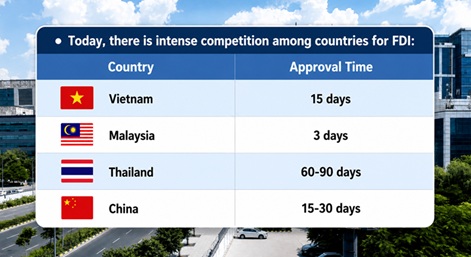
India in Global Competition

Global Trends

  • Global FDI is projected to grow by 14% to approximately $1.6 trillion in 2025.
  • Developed countries saw a 43% increase in FDI flows.
  • Developing countries, meanwhile, saw a 2% decline in FDI.

Conclusion

  • India's new FDI SOP is an important step towards making the investment process faster and more transparent. However, amid global competition, India needs to make further improvements to remain an attractive destination for long-term investment.

12 semiconductor plants approved in India

Why in the news ?

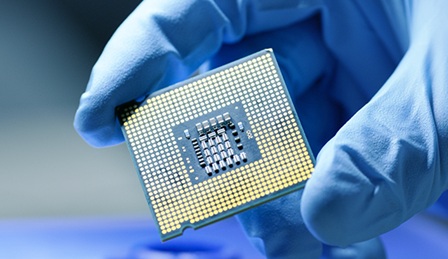
On May 5, the central government approved two new semiconductor plants, one of which could be India's first display fabrication unit. With this, a total of 12 chip plants have been approved so far under the India Semiconductor Mission (ISM), a nearly ₹76,000 crore (approximately $1.7 billion) initiative aimed at promoting chip manufacturing in India.
Why are semiconductors important ?

  • Semiconductors are the foundation of every electronic device today—from mobile phones, cars, computers to fighter jets.
  • Amid rising global tensions and supply chain challenges, India is striving to become self-reliant in this sector and secure a place in the global supply chain.

India Semiconductor Mission (ISM)

  • Launched in 2021, this scheme aims to create a complete chip manufacturing ecosystem in India – fabrication, packaging, design, and display manufacturing – with an investment of approximately ₹1.64 lakh crore.
  • The government is now focusing on further strengthening equipment, raw materials, and design capabilities through ISM 2.0.

Where are chip plants being set up in India ?

  • These 12 plants are being set up in states like Gujarat, Assam, Uttar Pradesh, Odisha, Andhra Pradesh, and Punjab.

Major Projects :

Project/Company

Location

Key Details

Tata Electronics

Gujarat

India’s first commercial chip fab, ₹91,000 crore investment

Micron Technology

Gujarat

Memory chip plant, production started

Tata Electronics

Assam

Capacity to produce 48 million chips per day

HCL-Foxconn

Uttar Pradesh

Display driver chip plant (expected by 2028)

Kaynes Semicon

Gujarat

Production of EV and industrial chips

CG Power

Gujarat

Joint venture with Renesas

SiCSem

Odisha

Silicon carbide-based chips

3D Glass Solutions

Odisha

Advanced chip packaging unit

Crystal Matrix

Gujarat

India’s first display unit

Continental Device

Punjab (Mohali)

Manufacturing high-power semiconductors (MOSFETs, IGBTs, Schottky diodes, transistors) using silicon and silicon carbide

Why is this decision important ?

  • Semiconductors are used in every electronic device, from toasters to fighter jets.
  • Given current geopolitical tensions, reducing dependence on other countries for chips will prove to be a game changer for India's security and economy.

The Way Forward: What's New ?

  • According to sources, under ISM 2.0, the government may slightly reduce the 50% subsidy for assembly and testing plants, but the focus will remain on strengthening India's IP (intellectual property) and design ecosystem.

Conclusion

  • India's semiconductor mission is a major step towards making the country self-reliant in technology manufacturing. However, the real challenge now will be to complete these projects on time and remain globally competitive.
« »
  • SUN
  • MON
  • TUE
  • WED
  • THU
  • FRI
  • SAT
Have any Query?

Our support team will be happy to assist you!

OR