Why in the news ?
On May 5, the central government approved two new semiconductor plants, one of which could be India's first display fabrication unit. With this, a total of 12 chip plants have been approved so far under the India Semiconductor Mission (ISM), a nearly ₹76,000 crore (approximately $1.7 billion) initiative aimed at promoting chip manufacturing in India.
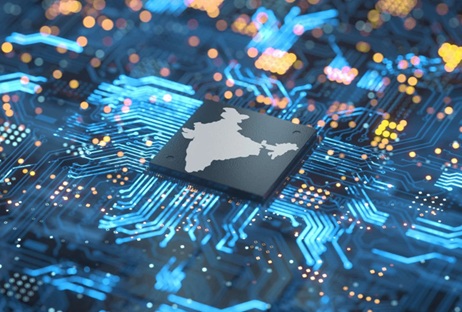
Why are semiconductors important ?
- Semiconductors are the foundation of every electronic device today—from mobile phones, cars, computers to fighter jets.
- Amid rising global tensions and supply chain challenges, India is striving to become self-reliant in this sector and secure a place in the global supply chain.
India Semiconductor Mission (ISM)
- Launched in 2021, this scheme aims to create a complete chip manufacturing ecosystem in India – fabrication, packaging, design, and display manufacturing – with an investment of approximately ₹1.64 lakh crore.
- The government is now focusing on further strengthening equipment, raw materials, and design capabilities through ISM 2.0.
Where are chip plants being set up in India ?
- These 12 plants are being set up in states like Gujarat, Assam, Uttar Pradesh, Odisha, Andhra Pradesh, and Punjab.
Major Projects :
|
Project/Company
|
Location
|
Key Details
|
|
Tata Electronics
|
Gujarat
|
India’s first commercial chip fab, ₹91,000 crore investment
|
|
Micron Technology
|
Gujarat
|
Memory chip plant, production started
|
|
Tata Electronics
|
Assam
|
Capacity to produce 48 million chips per day
|
|
HCL-Foxconn
|
Uttar Pradesh
|
Display driver chip plant (expected by 2028)
|
|
Kaynes Semicon
|
Gujarat
|
Production of EV and industrial chips
|
|
CG Power
|
Gujarat
|
Joint venture with Renesas
|
|
SiCSem
|
Odisha
|
Silicon carbide-based chips
|
|
3D Glass Solutions
|
Odisha
|
Advanced chip packaging unit
|
|
Crystal Matrix
|
Gujarat
|
India’s first display unit
|
|
Continental Device
|
Punjab (Mohali)
|
Manufacturing high-power semiconductors (MOSFETs, IGBTs, Schottky diodes, transistors) using silicon and silicon carbide
|
Why is this decision important ?
- Semiconductors are used in every electronic device, from toasters to fighter jets.
- Given current geopolitical tensions, reducing dependence on other countries for chips will prove to be a game changer for India's security and economy.
The Way Forward: What's New ?
- According to sources, under ISM 2.0, the government may slightly reduce the 50% subsidy for assembly and testing plants, but the focus will remain on strengthening India's IP (intellectual property) and design ecosystem.
Conclusion
- India's semiconductor mission is a major step towards making the country self-reliant in technology manufacturing. However, the real challenge now will be to complete these projects on time and remain globally competitive.