New
GS Foundation (P+M) - Delhi : 05th Jan., 2026 Winter Sale offer UPTO 75% + 10% Off GS Foundation (P+M) - Prayagraj : 15th Dec., 11:00 AM Winter Sale offer UPTO 75% + 10% Off GS Foundation (P+M) - Delhi : 05th Jan., 2026 GS Foundation (P+M) - Prayagraj : 15th Dec., 11:00 AM

Current Affairs for 09 December 2025

UPI Recognized by IMF as the World’s Largest Real-Time Payment System

The International Monetary Fund (IMF), in its June 2025 report “Growing Retail Digital Payments (Value of Interoperability)”, has recognized India’s Unified Payments Interface (UPI) as the world’s largest retail fast payment system.

According to the report, UPI is the largest real-time payment system globally based on transaction volume. Additionally, ACI Worldwide’s “Prime Time for Real-Time 2024” report states that in global real-time payment transactions:

  • UPI accounts for nearly 49%, making it the world’s fastest-growing and largest digital payment network.

Major Initiatives Accelerating Digital Payment Adoption in India

The Government of India, the Reserve Bank of India (RBI), and the National Payments Corporation of India (NPCI) are jointly working to promote digital payments among small merchants and consumers. Key initiatives include:

1. Payment Infrastructure Development Fund (PIDF)

  • Provides subsidy support for enabling digital payments in rural and semi-urban areas (Tier-3 to Tier-6).
  • Banks and fintech companies receive financial assistance to deploy PoS machines, UPI QR codes, and other digital touchpoints.
  • As of 31 October 2025:
  • 5.45 crore (54.5 million) digital touchpoints (PoS + QR) have been deployed.

2. BHIM–UPI Incentive Scheme

  • Offers incentive amounts to merchants and PSPs to promote low-value UPI transactions.
  • Aims to encourage small merchants to adopt cashless payments.
  • BHIM (Bharat Interface for Money)
  • A mobile payment app developed by NPCI.
  • Uses UPI technology to enable simple, secure, and instant bank-to-bank transactions.
  • Allows users to send/receive money using UPI ID or by scanning a QR code, making digital payments easy and accessible.

3. RuPay–UPI Expansion

  • Promotes UPI and RuPay-based transactions across public services, transport, e-commerce, and government platforms.
  • Strengthens India’s integrated digital payment ecosystem.

4. QR Code Deployment

By FY 2024–25:

  • 56.86 crore (568.6 million) QR codes deployed
  • 6.5 crore (65 million) merchants joined the digital payment network

UPI's Position Compared to Global Real-Time Payment Platforms

The table below shows transaction volumes and global market share of major real-time payment systems worldwide:

Country

Transaction Volume (in billions)

Global Share (%)

India (UPI)

129.3

49%

Brazil

37.4

14%

Thailand

20.4

8%

China

17.2

6%

South Korea

9.1

3%

Other Countries

52.8

20%

Total

266.2

100%

Source: ACI Worldwide – Prime Time for Real-Time 2024 Report

UPI Payments in 8 Countries

UPI (Unified Payments Interface) can now be used in 8 countries. The latest addition is Qatar. The countries where UPI is accepted are:-
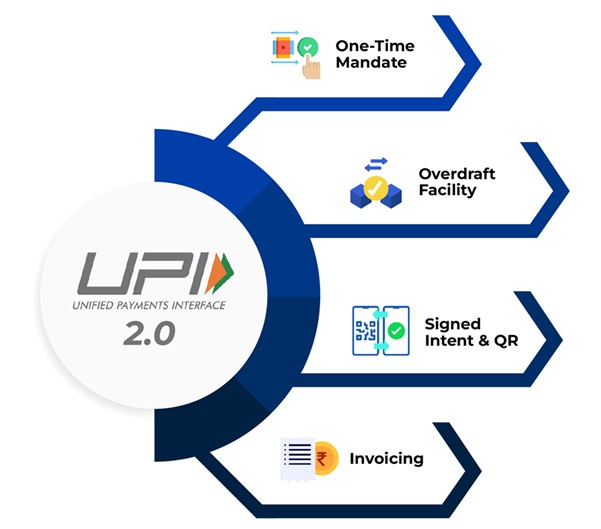
  1. Bhutan Since 2021, QR-based payments are possible via BHIM.
  2. FranceUPI was launched in 2024; available in selected cities.
  3. MauritiusDirect UPI payments at partner stores; started in 2024.
  4. Nepal Payments via PhonePe started in 2024; accepted at hotels and restaurants.
  5. SingaporeLinked with PayNow; supports retail and P2P transactions.
  6. Sri LankaUPI accepted at selected merchants; reduces the need for cash.
  7. UAE Popular at many outlets, including Dubai and Abu Dhabi.
  8. QatarThe newest member; UPI accepted at tourist spots and duty-free outlets.

Unified Payments Interface (UPI)

UPI is a real-time payment system in India, developed by NPCI. It enables instant bank-to-bank money transfers using a simple UPI ID, mobile number, or QR code through a smartphone. Multiple bank accounts can be linked in a single app, and the service is available 24×7. UPI has transformed digital payments in India by offering a secure, fast, and easy payment method.

Development & Launch

  • Developed by: National Payments Corporation of India (NPCI)
  • Regulated by: Reserve Bank of India (RBI)
  • Launched in: April 2016

Key Features

  • Instant Payments: Real-time fund transfer between bank accounts.
  • 24×7 Availability: Works anytime, including holidays.
  • One App – Multiple Accounts: Multiple bank accounts can be linked to a single UPI app (Google Pay, PhonePe, etc.).
  • Simple Payment Method: No need to write bank details; a UPI ID, mobile number, or QR code is enough.
  • Secure: Uses two-factor authentication (2FA) and UPI PIN for protection.
  • Wide Usage: Supports P2P (person-to-person), P2M (person-to-merchant), bill payments, collect requests, and more.

How UPI Works ?

  1. Link Bank Accounts: Download a UPI app and link your bank account(s).
  2. Select the Recipient: Enter their UPI ID, use their mobile number, or scan their QR code.
  3. Make Payment: Enter the amount and authenticate using your UPI PIN.
  4. Instant Settlement: The money is transferred instantly from your bank to the recipient’s bank.

UN Environment Assembly

Prelims: (Global Environmental Governance + CA)
Mains: (GS 2 – International Institutions; GS 3 – Environment)

Why in the News ?

The seventh UN Environment Assembly (UNEA-7) is currently taking place in Nairobi, Kenya, bringing together all UN member states to deliberate on global environmental priorities. The session has opened amid concerns over funding cuts, disagreements on UNEP’s five-year strategy, and widening geopolitical divides—all setting a tense backdrop for UNEA-7.

Background & Context

  • Environmental challenges such as climate change, biodiversity loss, plastic pollution, and land degradation have intensified at an unprecedented pace.
  • Recognising the need for a stronger global environmental governance system, UNEA was created in 2012 at the Rio+20 Conference.
  • UNEA serves as the apex global platform for environmental policymaking, steering the work of the UN Environment Programme (UNEP).
  • With universal membership and multi-stakeholder participation, UNEA has become the central space for negotiating environmental norms, mobilising finance, and coordinating global action.
  • UNEA-7 is particularly significant as countries remain divided over responsibility-sharing, funding commitments, and implementation of environmental agreements.

About the UN Environment Assembly (UNEA)

1. Highest Environmental Decision-Making Body

  • UNEA is the top global forum for environment-related decisions within the UN.
  • It involves all 193 UN member states and major groups—NGOs, youth, scientists, indigenous peoples, and businesses.

2. Biennial Sessions

  • UNEA convenes every two years at UNEP headquarters in Nairobi.

3. Origin at Rio+20 (2012)

  • Established to strengthen global environmental governance and upgrade UNEP’s authoritative role.

Functions of the UN Environment Assembly

1. Sets the Global Environmental Agenda

  • Prioritises emerging challenges like pollution, climate change, resource depletion, and ecosystem collapse.

2. Provides Policy Guidance to UNEP

Aligns UNEP with global goals including:

  • SDGs
  • Paris Agreement
  • Kunming-Montreal Biodiversity Framework

3. Facilitates Dialogue & Knowledge Sharing

  • Strengthens cooperation among nations and stakeholders.
  • Encourages evidence-based decisions and best practice sharing.

4. Reviews Environmental Policies

  • Tracks progress and ensures accountability.

5. Builds Global Partnerships

  • Mobilises finance and supports technological cooperation, especially for developing nations.

UNEA-7 (2025): Key Highlights

Theme: “Advancing sustainable solutions for a resilient planet.”

Session Context

  • UNEA-7 has opened amid:
    • A global rift over UNEP’s new five-year plan
    • Funding constraints
    • Disagreements on implementation responsibilities

These tensions reflect deeper divides in global environmental politics.

Significance for India

  • UNEA-7 offers India a platform to highlight:
    • Mission LiFE
    • Clean energy commitments
    • Plastic waste reduction
    • Biodiversity and ecosystem initiatives
  • India can push for:
    • Climate justice
    • Enhanced financial support
    • Technology transfer
    • Greater consideration of developing countries’ priorities
  • Reinforces India’s international leadership in environmental diplomacy.

FAQs

1. What is UNEA ?

The UN’s highest decision-making body on global environmental matters.

2. Why is UNEA held in Nairobi ?

Because UNEP—UN’s environmental agency—is headquartered there.

3. How often does UNEA meet ?

Every two years.

4. What is the theme of UNEA-7 ?

“Advancing sustainable solutions for a resilient planet.”

5. Why is UNEA-7 important this year ?

It comes amid funding cuts and geopolitical disagreements that could affect global environmental action.

Karnataka Introduces Hate Speech Bill

Prelims: (Polity + CA)
Mains: (GS 2 – Governance; GS 1 – Society)

Why in News?

Karnataka has introduced the Karnataka Hate Speech and Hate Crimes (Prevention) Bill, 2025, proposing 1–10 years’ imprisonment, enhanced fines, and collective liability for organisations involved in hate speech or hate-related offences.

The state government argues that India lacks a clear statutory definition of hate speech, despite its frequent use in public debate — creating gaps in enforcement and leaving police dependent on scattered provisions.
Background & Context

India’s Long-Standing Gap in Hate Speech Legislation

For decades, India has struggled with hate speech regulation because:

  • The IPC (now replaced by BNS) never defined “hate speech.”
  • Existing provisions were drafted primarily to maintain public order, not address hate as a rights-based offence.
  • Online speech expanded rapidly, outpacing legal provisions.
  • Police rely heavily on their discretion, leading to inconsistent enforcement.

Judicial and Committee Observations

  • The Supreme Court has repeatedly flagged rising hate speech incidents and inconsistent enforcement.
  • The 267th Law Commission Report (2017) recommended creating specific offences for hate speech.
  • The Tehseen Poonawalla judgment (2018) required nodal officers to monitor mob violence and hate crimes.
  • A 2022 Private Member’s Bill attempted to define hate speech but did not pass.

Global Context

Many democracies, including the U.K., Canada, and Germany, have enacted explicit hate speech statutes. India, meanwhile, continues to use general public-order provisions, leaving much ambiguity. Karnataka is now the first Indian state to attempt filling this legal vacuum.

How Hate Speech Is Currently Regulated in India

India has no standalone hate speech law. Police rely on various sections of the Bharatiya Nyaya Sanhita (BNS):

Section 196 BNS (Former IPC 153A)

Penalises:

  • Promoting enmity
  • Acts harmful to group harmony

Conviction rate is low — only 20.2% in 2020 (NCRB).

Section 299 BNS (Former IPC 295A)

Punishes:

  • Deliberate, malicious acts intended to outrage religious feelings.

Often invoked in cases involving desecration, insults to religious groups, or provocative speech.

Section 353 BNS

Penalises:

  • Statements inciting public disorder
  • Dissemination of misinformation targeting communities

These are cognisable offences with penalties up to three years.

Online Hate Speech & Section 66A IT Act

  • Section 66A of the IT Act was once widely used against online content.
  • The Supreme Court struck it down in Shreya Singhal (2015) for being vague, arbitrary, and unconstitutional.
  • This left a regulatory gap for digital hate speech, which Karnataka now seeks to address.

Supreme Court’s Evolving Stance

2022 — Court Flags “Climate of Hate”

SC directed Delhi, Uttar Pradesh, and Uttarakhand to act suo motu against hate speech.

2023 — Directive Extended Nationwide

Police across India were told to take action even without complaints.

2023 — Court Admits Definitional Complexity

Justices observed that defining hate speech is inherently difficult and that the real problem is enforcement failure, not the absence of law.

2025 — Court Steps Back

In November 2025, a bench clarified the SC cannot supervise every incident, saying police and High Courts are capable of handling such cases and must follow the Tehseen Poonawalla protocol.

Past Efforts to Define Hate Speech Formally

  • Law Commission (2017): Proposed Sections 153C & 505A for incitement to hatred.
  • Private Member’s Bill (2022): Sought to define hate speech and hate crimes, but lapsed.
  • No national consensus has emerged.

Karnataka’s Proposed Hate Speech Bill (2025)

Karnataka becomes the first state to propose a law specifically addressing hate speech and hate crimes.

Key Definitions

Hate speech is defined as expressions causing:

  • Injury
  • Disharmony
  • Hostility
  • Discrimination based on:
    • Religion
    • Race
    • Caste
    • Gender
    • Sexual orientation
    • Place of birth
    • Disability

Notably, gender & sexual orientation are included — expanding beyond BNS protections.

Key Provisions of the Bill

1. Collective Liability for Organisations

If hate speech is committed through an organisation:

  • Individuals in leadership positions may also be held criminally liable.
  • This is similar to corporate liability models used in financial offences.

2. Regulation of Online Content

The state can:

  • Block content
  • Remove posts
  • Issue takedown orders

This gives Karnataka explicit regulatory power over digital hate content — something not directly provided under national law.

3. Penalties

  • 1–7 years + ₹50,000 fine for first offence
  • 2–10 years + ₹1 lakh fine for repeat offences

Offences are:

  • Cognisable
  • Non-bailable
  • Triable by a Judicial Magistrate First Class

4. Victim Compensation

Mandatory compensation must be provided to victims of hate speech or hate crimes.

5. Public Good Exemption

Books, artworks, academic work, and publications will be exempt if proven to serve public interest.

FAQs

1. Why does Karnataka need a separate hate speech law ?

Because India lacks a clear statutory definition of hate speech, causing inconsistent enforcement and legal ambiguity.

2. Does the Bill apply to online platforms ?

Yes. It empowers the state government to block or remove hate content posted online.

3. What is “collective liability” ?

If hate speech is committed via an organisation, responsible office bearers can also be held guilty.

4. How severe are the penalties ?

Up to 10 years’ imprisonment for repeat offences, with significant fines.

5. Does the Bill restrict freedom of speech ?

The Bill includes a public good exemption, but concerns about overreach may arise during implementation.

South Asia’s Push for Regional Climate Cooperation

Prelims: (Geography + CA)
Mains: (GS 3 – Environment)

Why in the News ?

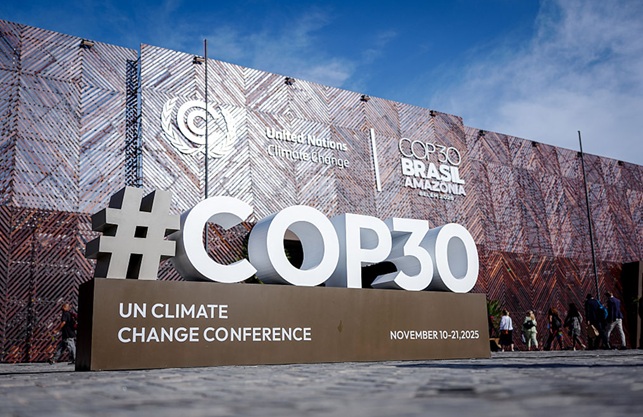
The outcomes of COP30 in Belém, Brazil, have underscored a stark reality, the 1.5°C global warming threshold has effectively been breached, and the world is running out of time to avert deepening climate crises. Amid this urgency, experts are calling for stronger South-led regional climate multilateralism, with South Asia emerging as a critical geography for coordinated climate action.
Background & Context

South Asia is one of the most climate-vulnerable regions in the world, with rising temperatures, recurrent floods, accelerated glacial melt in the Himalayas, sea-level rise, and extreme heat waves threatening lives and economies. At COP30, negotiators highlighted that the Paris Agreement’s voluntary and nationally driven approach has not delivered adequate ambition, especially for developing countries bearing disproportionate climate risks.

With geopolitical rivalries blocking progress through traditional platforms like SAARC, experts argue that climate action could become a fresh pathway for rebuilding regional cooperation, similar to how crises in the past (tsunamis, earthquakes, water shortages) triggered collaborative responses. In this context, a proposal is gaining traction for a South Asian Climate Cooperation Council (SACCC), a new regional climate institution tailored to the region’s ecological and developmental needs.

Why South Asia Needs a Regional Climate Approach ?

  • By 2050, climate impacts could cost the region almost 1.8% of its annual GDP.
  • Threats include heat stress, flooding, droughts, coastal erosion, and loss of biodiversity.
  • Shared ecosystems — Himalayas, monsoonal systems, river basins, and coastal zones — make unilateral policies ineffective.
  • Collective action enhances efficiency, resilience, and resource pooling.

Proposal: South Asian Climate Cooperation Council (SACCC)

A new institutional mechanism is being proposed to coordinate mutually reinforcing climate action in South Asia.
It draws lessons from past examples of regional cooperation:

  • Quad collaboration after the 2004 tsunami
  • Joint response to the Nepal earthquake
  • Regional help during the Maldives water crisis

This framework emphasizes that while SAARC has struggled, functional cooperation—especially around climate risks—remains both possible and necessary.

Existing Foundation: Cross-Border Energy Cooperation

Regional energy collaboration already offers a working template:

  • 2014 SAARC Framework Agreement for Energy Cooperation established the foundation for electricity trade.
  • Successful Nepal–India–Bangladesh trilateral power transactions reflect its implementation.
  • India’s One Sun One World One Grid (OSOWOG) vision offers opportunities for shared renewable energy networks.

Three Pillars of the Proposed SACCC

1. Regional Knowledge & Innovation Hub

A network of climate research and innovation centres, leveraging country strengths:

  • Maldives: Coastal adaptation, coral restoration
  • Sri Lanka: 30×30 conservation and mangrove restoration
  • Bhutan: Gelephu Mindful City for sustainable urbanisation
  • India: Mission LiFE, renewable energy expertise, grid integration

Focus areas include:

  • Adaptation 
  • Mitigation 
  • Nature-based solutions 
  • Urban resilience

2. South Asia Green Climate Finance Facility

A dedicated financial mechanism to:

  • Pool regional and international resources
  • Access global climate funds more effectively
  • Build bankable climate project pipelines

In collaboration with ADB, World Bank, GCF, the facility could:

  • Issue green bonds
  • Offer risk-mitigation instruments
  • Mobilise private capital for regional priorities

3. Scientific Commission for South Asia

A regional, independent climate-science body that would:

  • Define required scale and speed of climate action
  • Recommend low-cost, high-impact interventions
  • Enhance regional data-sharing & research
  • Operate like a region-specific IPCC, focused on action

Key Challenges & Way Forward

  • Political Distrust: Build confidence through pilot projects.
  • Unequal Capacities: Align with SDGs, NDCs, and Loss & Damage mechanisms.
  • Fragmented Data Systems: Promote transparent scientific coordination.
  • Risk of Duplication: Start with practical projects — energy, adaptation, disaster management.

FAQs

1. What is the core idea behind the South Asian Climate Cooperation Council (SACCC) ?

It aims to create a regional institutional framework for joint climate mitigation, adaptation, finance, and research across South Asian countries.

2. Why is regional climate action important for South Asia ?

Because ecosystems like the Himalayas, monsoons, rivers, and coasts are interconnected, making climate impacts and solutions inherently cross-border.

3. What existing cooperation supports this proposal ?

The SAARC energy agreement and successful cross-border electricity trade show that functional regionalism is achievable.

4. How would the proposed climate finance facility help ?

By pooling funds, issuing green bonds, and strengthening access to global climate finance, especially for climate-vulnerable nations.

5. Is SACCC meant to replace SAARC ?

No. It is meant to function as a focused climate cooperation platform, independent of SAARC’s broader political constraints.

Rupee’s Fall Driven by Capital Account Stress

Prelims: (Economy + CA)
Mains: (GS 3 – Economy)

Why in the News ?

India’s persistent current account deficit (CAD) remains a structural challenge, yet the recent sharp weakening of the rupee is being driven not by the CAD but by severe stress in capital inflows. This shift highlights that India’s external vulnerability now lies in the capital account rather than the current account.
Background & Context

  • In the past 25+ years, India has recorded a current account surplus only four times: 2001–02, 2002–03, 2003–04, and 2020–21.
  • CAD peaked at $78.2 bn (2011–12) and $88.2 bn (2012–13); stabilised below $50 bn afterward, except in 2018–19 ($57.3 bn) and 2022–23 ($67.1 bn).
  • Despite large merchandise trade deficits, India has avoided crises due to strong surpluses in invisibles—services, remittances, professional exports.

India’s Current Account: The Role of the Invisible Hand

1. Two Components of the Current Account

  • Merchandise Trade: Exports & imports of physical goods
  • Invisibles: Services, remittances, intellectual property, professional services, data flows

2. Merchandise Trade Deficit Keeps Widening

  • $91.5 bn (2007–08)
  • Peak: $195.7 bn (2012–13)
  • Narrowed: $102.2 bn (2020–21)
  • Jumped: $286.9 bn (2024–25)
  • Likely to cross $300 bn in 2025–26

3. Invisibles Surplus: India’s Cushion

Drivers of large surpluses:

  • Private remittances
  • IT and ITeS exports
  • Consulting, design, finance & medical services

Payments offset by this surplus include:

  • Interest/dividends to foreign investors
  • Royalties
  • Foreign education spending

Surplus growth:

  • $75.7 bn (2007–08)
  • $150.7 bn (2021–22)
  • $263.9 bn (2024–25)
  • Expected: $280+ bn this year

4. Why CAD Remains Manageable

The invisibles surplus cushions the merchandise deficit, keeping the CAD from exploding despite weak goods exports.

5. India as the “Office of the World”

  • China = “factory of the world”
  • India = “office of the world”
  • Exporting: IT, finance, accounting, medicine, design, auditing, and professional services → Acts as a stabiliser against goods import pressures.

CAD Is Not the Problem — Capital Flows Are

1. CAD Has Actually Reduced

  • $25.3 bn (Apr–Sep 2024) → $15.1 bn (Apr–Sep 2025)
  • Yet the rupee has fallen sharply against major currencies.

2. Rupee Depreciation Across Currencies

  • USD: 84.73 → 89.92
  • Euro: 89.20 → 104.82
  • Pound: 107.76 → 120
  • Yen: 0.5658 → 0.5815
  • Yuan: 11.66 → 12.72

This drop is linked to weakening capital inflows, not import-heavy trade.

Collapse in Capital Inflows: The Core Pressure Point

1. Capital Inflows at Multi-Year Lows

Earlier: capital inflows comfortably exceeded CAD and boosted forex reserves.

Now:

  • $18 bn (2024–25) — below CAD
  • $8.6 bn (Apr–Sep 2025) — again below CAD

This imbalance directly weakens the rupee.

Sharp Decline in FDI and Portfolio Flows

Foreign Investment (Overall)

  • $80.1 bn (2020–21)
  • $21.8 bn (2021–22)
  • $22.8 bn (2022–23)
  • $54.2 bn (2023–24)
  • $4.5 bn (2024–25)
  • $3.6 bn (Apr–Sep 2025)

FDI Decline

  • $44 bn (2020–21)
  • $38.6 bn (2021–22)
  • $28 bn (2022–23)
  • $10.2 bn (2023–24)
  • $959 mn (2024–25)
  • Slight recovery: $7.7 bn (Apr–Sep 2025)

FPI Trends

  • Net outflows: –$18.5 bn (2021–22)
    • –$5.1 bn (2022–23)
  • Only 2023–24 saw net inflows
    • –$14.6 bn (2024–25)
    • –$4.3 bn (2025–26 so far)

Why This Is Surprising

India has maintained 8.2% average GDP growth since 2021–22 and 8% growth in the first half of 2025–26. Ordinarily, such growth attracts foreign capital — yet investors have been exiting, creating a capital account deficit.

Capital Dry-Up: The Real Reason Behind Rupee Weakness

  • The rupee’s fall is not due to CAD or rising imports.
  • It stems from shrinking capital inflows, reducing dollar supply.
  • The capital account is now India’s main external vulnerability.

FAQs

1. If CAD has improved, why is the rupee still falling ?

Because foreign capital inflows have sharply declined, reducing dollar supply and weakening the rupee.

2. What allows India to sustain a large merchandise deficit ?

A rapidly growing invisibles surplus from IT services, remittances, and skilled professional exports.

3. Why are foreign investments falling despite strong GDP growth ?

Global financial tightening, investor risk aversion, and reduced appetite for emerging markets.

4. Does a widening merchandise deficit threaten stability ?

Not immediately—because invisibles substantially offset it.

5. What is India’s biggest external risk today ?

capital account deficit caused by low FDI/FPI inflows, not the CAD.

Revised Flight Duty Time Limits and the Director General of Civil Aviation

(Prelims: Current Events of National and International Importance)
(Mains, General Studies Paper 3: Infrastructure: Energy, Ports, Roads, Airports, Railways, etc.)

Context

Recently, the Directorate General of Civil Aviation (DGCA) granted IndiGo Airlines a one-time temporary exemption from certain Flight Duty Time Limit (FDTL) norms for pilots.

Civil-Aviation

About the Director General of Civil Aviation (DGCA)

  • It is India's highest regulatory body in the field of civil aviation security, primarily dealing with safety issues. It is an attached office of the Ministry of Civil Aviation.
  • It is responsible for the regulation of air transport services to/from/in India and the enforcement of civil air regulations, air safety, and airworthiness standards.
  • It coordinates all regulatory functions with the International Civil Aviation Organization (ICAO). It is headquartered in New Delhi.

Functions and Responsibilities of the Director General of Civil Aviation

  • One of the main functions of the DGCA is to ensure the safety of passengers and crew members on all flights operating in India.
  • ​​It conducts regular safety inspections of all airlines and aircraft to ensure they meet required safety standards.
  • It also investigates any incidents or accidents that occur in Indian airspace.
  • It plays a key role in the development of new airports and the modernization of existing facilities to ensure they can meet the growing demands of the aviation industry.
  • It is responsible for the regulation of air traffic in India. It works closely with the Airports Authority of India (AAI) to ensure safe and efficient air traffic management.
  • The DGCA also plays a key role in developing new air traffic control systems and technologies to improve the overall efficiency of Indian airspace.
  • It is also responsible for issuing licenses and certificates to pilots, aircraft maintenance engineers, and other aviation personnel. It monitors aircraft noise and engine emissions in accordance with ICAO Annex 16.

About the Revised Flight Duty Time Limit (FDTL) Rules

Background

  • FDTL norms are safety regulations issued by the Directorate General of Civil Aviation that determine how long pilots can be on duty, how many hours they can fly, how many night landings are permitted, and the minimum rest period they should receive.
  • These norms are designed to prevent pilot fatigue, reduce human error, and enhance aviation safety and are in line with international aviation standards.

New FDTL Rules

  • Increased weekly rest period: Pilots must now receive 48 consecutive hours of rest, up from 36 previously.
  • Night landing limit: Pilots can only perform two night landings, up from six previously.
    • Night duty is not permitted more than twice in a row.
  • Mandatory roster adjustment: Airlines must redesign crew rosters to accommodate the new limits.
  • Quarterly fatigue reporting: Airlines must regularly submit fatigue risk reports to the Directorate General of Civil Aviation (DGCA).

Objective

  • Fatigue is a major operational risk in the aviation sector, especially during morning departures and night landings.
  • The new FDTL rules aim to improve pilot alertness, reduce human error, and align India's aviation safety standards with global standards.

Status of India's Aviation Sector

  • Global ranking: India is the third-largest domestic aviation market after the United States and China. Urbanization, tourism, and the expanding middle class are driving increasing passenger numbers.
  • Passenger Traffic Growth: Passenger traffic is expected to increase sixfold to approximately 1.1 billion by 2040.
  • Economic Contribution: By 2025, the aviation sector supports over 7.7 million jobs (direct and indirect) and contributes 1.5% to India's GDP.
  • Fleet Strength: The Indian fleet accounts for approximately 2.4% of the global fleet. The fleet size has grown rapidly due to airline expansion and new aircraft orders.
  • Airport Infrastructure Expansion: The number of operational airports increased from 74 in 2014 to 163 in 2025. India aims to have 350-400 airports by 2047.
    • Special attention is being given to greenfield airports and PPP-based development.

Indian Civil Aviation Regulation

  • Air Corporations Act, 1953: Nine airline companies were nationalized. State-owned airlines dominated the sector until the mid-1990s.
  • Open Skies Policy (1990-94): Private air taxi operators were permitted. The monopoly of Indian Airlines (IA) and Air India (AI) was ended.
  • Indian Aircraft Act, 2024: It replaces the colonial-era Aircraft Act, 1934 and aligns India's aviation laws with ICAO standards and the Chicago Convention.
  • It promotes Make in India and Atmanirbhar Bharat in aviation manufacturing, introduces simplified licensing and regulatory procedures, and modernizes India's overall aviation governance structure by providing a structured appeals mechanism.

Key Challenges in India's Aviation Sector

  • Pilot and Crew Shortage: Rapid growth in air traffic has created a mismatch between the demand and availability of trained pilots, cabin crew, and maintenance staff.
    • New safety norms such as FDTL have further increased manpower requirements, leading to frequent flight cancellations, delays, and operational disruptions because airlines have not previously recruited and trained enough pilots to meet the new staffing requirements.
  • Airport Infrastructure Constraints: Major airports such as Delhi, Mumbai, and Bengaluru operate at near-full capacity, leading to runway congestion, parking shortages, and airspace congestion, especially during peak hours.
  • High Operating Costs: Airlines face significant financial pressure due to high aviation turbine fuel (ATF) prices, dollar-denominated aircraft leasing costs, and rising maintenance costs.
  • Aggressive capacity and scheduling practices: Airlines often announce ambitious flight schedules without adequate backup crews or additional aircraft, increasing the risk of widespread flight cancellations during disruptions.
  • Passenger protection and grievance redressal: During large-scale disruptions, passengers face communication problems, weak compensation mechanisms, and limited legal remedies.
  • Dependence on foreign aircraft and supply chains: Due to its heavy reliance on imported aircraft, engines, and spare parts, the sector faces disruptions in global supply chains and currency fluctuations.
  • Exchange rate volatility: The decline in the value of the Indian rupee against the US dollar increases airline costs, as major expenses such as aircraft leasing and fuel imports are denominated in dollars.
  • Aviation safety risks: Recent accidents and increased traffic in 2025 highlight concerns about safety oversight and emergency response.

Measures to Strengthen India's Aviation Sector

  • Temporary Regulatory Relief for Stabilization: The Directorate General of Civil Aviation (DGCA) has granted IndiGo a one-time temporary exemption from certain night operations. This short-term relief should be used only for operational stabilization, not for long-term dependence.
    • FDTL norms should not be weakened as fatigue management is critical to aviation safety.
  • Building Operational Buffer: Standby pilots, reserve cabin crew, and additional aircraft should be maintained to address disruptions during peak seasons and technical failures.
  • Improving Passenger Communication and Compensation: Real-time updates, automatic refunds, and compensation should be strengthened to restore public confidence.
  • Promoting Sustainable Aviation: Promoting Sustainable Aviation Fuel (SAF), energy-efficient airports, and compliance with ICAO's Carbon Offsetting and Reduction Scheme for International Aviation (CORSIA) should be encouraged for carbon reduction.
  • Airspace Modernisation: There is a need to accelerate the proposed civil air traffic management system with advanced-surface movement and control systems to optimise airspace utilisation and reduce delays.

Tensor Processing Unit (TPU)

Meta is in ongoing discussions with Google to use its Tensor Processing Units (TPUs).

About Tensor Processing Units

  • A TPU is a specialized chip designed to accelerate AI and machine learning (ML) tasks.
  • Unlike traditional computer processors (CPUs) or graphics processing units (GPUs), TPUs are specifically designed to handle the complex calculations required for deep learning models.
  • TPUs were developed by Google in 2016 to improve the performance of its AI applications, such as Google Search, Google Translate, and Google Photos.
  • Since then, TPUs have become a critical component in AI infrastructure and are widely used in data centers and cloud computing.

Tensor-Processing-Unit

TPUs Working of

  • AI models rely on a type of mathematical operation called tensor computation.
  • A tensor is a multidimensional array of numbers that resembles a table of data.
  • Deep learning models use these tensors to process large amounts of information and make predictions.
  • TPUs are optimized for tensor computations, allowing them to process large datasets much faster than CPUs or GPUs.

Means of faster processing

  • Massive parallelism: TPUs can perform multiple calculations simultaneously, making them highly efficient.
  • Low power consumption: TPUs use less energy while delivering higher performance than GPUs.
  • Specialized circuits: AI in TPUs There are circuits specifically designed for the workload, reducing the need for unnecessary calculations.

While CPUs are great for general tasks and GPUs are an excellent choice for gaming and AI, TPUs are specifically designed to make AI models work faster and more efficiently.

India’s Aviation Safety Under Strain After IndiGo Crisis

Prelims: (Security + CA)
Mains: (GS 2 – Governance; GS 3 – Infrastructure)

Why in the News ?

IndiGo’s large-scale flight cancellations and the government’s subsequent suspension of the DGCA’s newly notified Flight Duty Time Limitation (FDTL) norms have raised serious concerns about India’s aviation safety framework.
Despite the rules being mandated under a High Court order to address crew fatigue, the Ministry placed them under abeyance, prioritising operational continuity over safety considerations. Critics argue that the response reflects a deeper erosion of regulatory integrity, with commercial interests being placed above passenger and crew safety.
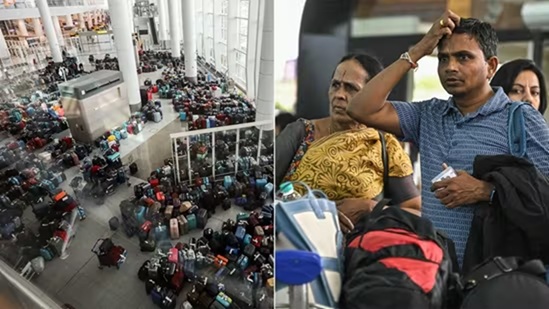
Background & Context

India’s aviation sector has experienced repeated tensions between safety norms and airline operational demands. Attempts to strengthen pilot rest regulations have been diluted several times due to industry pushback. The recent IndiGo disruptions have exposed structural weaknesses: chronic under-staffing, inconsistent enforcement of Civil Aviation Requirements (CAR), and regulatory decisions that appear reactive rather than safety-driven.

A Pattern of Diluting Safety Measures

  • In 2007, DGCA introduced a robust CAR to address pilot fatigue.
  • Airline owners opposed it, leading the Ministry to place the regulation in abeyance; DGCA formally suspended it in May 2008.
  • This created a long-standing precedent where commercial pressures outweighed scientifically backed fatigue-management requirements.

Judicial Intervention and Its Reversal

Pilot unions challenged the 2008 dilution in the Bombay High Court. The Court initially criticised DGCA and the Ministry for:

  • Endangering pilot and passenger safety
  • Arbitrarily extending duty hours
  • Prioritising airline profitability over safety

It even advised airlines to reduce flights instead of overworking pilots. However, in an unexpected reversal, the same Court later upheld the Ministry’s decision, weakening the push for stricter fatigue norms.

IndiGo and DGCA Missed a Long-Known Deadline

  • The new FDTL rules had a clear implementation date of November 1, 2025, known more than a year in advance.
  • Both IndiGo and DGCA failed to prepare, resulting in severe nationwide disruptions.
  • While refunds may be provided, passengers remain uncompensated for hotel expenses, missed events, and other losses.

Structural Root: Chronic Understaffing

DGCA’s own CAR (Series C, Part II, Section 3, April 2022) mandates:

  • Minimum three sets of crew per aircraft
  • All crew with valid DGCA licences and endorsements

However, enforcement has been weak. Airlines, especially IndiGo, operate with lean crew levels, making them extremely vulnerable to any regulatory change.

Even earlier requirements were stricter:

  • Six pilot sets per domestic aircraft
  • Twelve sets for long-haul widebody aircraft

Yet airlines appeared to deliberately understaff, taking advantage of lax oversight.

ICAO’s Long-Standing Warning on Oversight

In 2006, the International Civil Aviation Organization (ICAO) advised India to establish an independent aviation regulator, free from government control. Eighteen years later, the warning seems validated: oversight has weakened, and airlines operate with considerable confidence that violations will attract minimal consequences.

December 2025: A Case of Collapsed Oversight

Two contradictory actions within hours revealed regulatory breakdown:

  1. DGCA urged pilots to follow the High Court–mandated FDTL rules.
  2. The Ministry suspended those very rules, enabling IndiGo to continue operations without adequate crew numbers.

This amounted to state-sanctioned dilution of safety norms. Moreover, IndiGo—non-compliant for over a year—has now been granted time until February 10, 2026, a deadline critics expect will be extended again.

Aviation Safety Ignored Despite Past Crashes

Despite three major air disasters since 2010 (Mangaluru, Kozhikode, Ahmedabad), regulatory reform has remained slow. The Air India AI 171 crash report is still pending without explanation.

IndiGo claims operations will stabilise in 10–15 days, but safety concerns remain acute. The decisions taken on December 5, 2025, especially suspending FDTL norms, suggest that in India’s aviation sector, “safety first” remains more rhetoric than reality.

FAQs

1. What triggered the suspension of FDTL rules ?

IndiGo’s large-scale cancellations and operational instability prompted the Ministry to temporarily halt the new norms.

2. Why are FDTL norms important ?

They regulate pilot duty hours and rest periods to prevent fatigue, a major factor in aviation safety.

3. What is the main structural issue behind the crisis ?

Chronic understaffing—airlines often operate with fewer pilot sets than mandated, leaving no buffer for disruptions.

4. Why is ICAO’s warning relevant today ?

It highlighted the need for an independent regulator. The present crisis shows how regulatory decisions may be influenced by commercial pressures.

5. Are passengers adequately compensated ?

Refunds cover tickets, but secondary losses—hotels, transport, meetings—are usually uncompensated.

« »
  • SUN
  • MON
  • TUE
  • WED
  • THU
  • FRI
  • SAT
Have any Query?

Our support team will be happy to assist you!

OR