
- UPSC Exam
- State PCS
- One Day Exam
- Current Affairs
- PT Quiz
- Downlaods
- About Coaching
- Blog
- Videos

| Prelims: (Geography + CA) Mains: (GS 3 – Environment) |
The outcomes of COP30 in Belém, Brazil, have underscored a stark reality, the 1.5°C global warming threshold has effectively been breached, and the world is running out of time to avert deepening climate crises. Amid this urgency, experts are calling for stronger South-led regional climate multilateralism, with South Asia emerging as a critical geography for coordinated climate action.
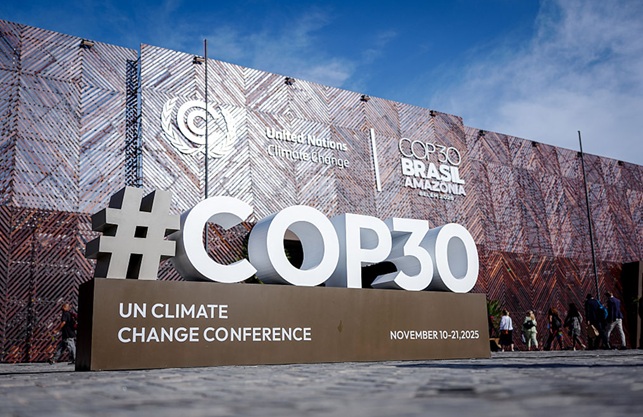
South Asia is one of the most climate-vulnerable regions in the world, with rising temperatures, recurrent floods, accelerated glacial melt in the Himalayas, sea-level rise, and extreme heat waves threatening lives and economies. At COP30, negotiators highlighted that the Paris Agreement’s voluntary and nationally driven approach has not delivered adequate ambition, especially for developing countries bearing disproportionate climate risks.
With geopolitical rivalries blocking progress through traditional platforms like SAARC, experts argue that climate action could become a fresh pathway for rebuilding regional cooperation, similar to how crises in the past (tsunamis, earthquakes, water shortages) triggered collaborative responses. In this context, a proposal is gaining traction for a South Asian Climate Cooperation Council (SACCC), a new regional climate institution tailored to the region’s ecological and developmental needs.
A new institutional mechanism is being proposed to coordinate mutually reinforcing climate action in South Asia.
It draws lessons from past examples of regional cooperation:
This framework emphasizes that while SAARC has struggled, functional cooperation—especially around climate risks—remains both possible and necessary.
Regional energy collaboration already offers a working template:
A network of climate research and innovation centres, leveraging country strengths:
Focus areas include:
A dedicated financial mechanism to:
In collaboration with ADB, World Bank, GCF, the facility could:
A regional, independent climate-science body that would:
FAQs1. What is the core idea behind the South Asian Climate Cooperation Council (SACCC) ? It aims to create a regional institutional framework for joint climate mitigation, adaptation, finance, and research across South Asian countries. 2. Why is regional climate action important for South Asia ? Because ecosystems like the Himalayas, monsoons, rivers, and coasts are interconnected, making climate impacts and solutions inherently cross-border. 3. What existing cooperation supports this proposal ? The SAARC energy agreement and successful cross-border electricity trade show that functional regionalism is achievable. 4. How would the proposed climate finance facility help ? By pooling funds, issuing green bonds, and strengthening access to global climate finance, especially for climate-vulnerable nations. 5. Is SACCC meant to replace SAARC ? No. It is meant to function as a focused climate cooperation platform, independent of SAARC’s broader political constraints. |



Our support team will be happy to assist you!

 Contact Us
  New Batch : 9555124124/ 7428085757
  Tech Support : 9555124124/ 7428085757