
- UPSC Exam
- State PCS
- One Day Exam
- Current Affairs
- PT Quiz
- Downlaods
- About Coaching
- Blog
- Videos

| Prelims : (Environment & Ecology + CA) Mains : (GS 3 – Biodiversity Conservation, Environmental Governance, River Ecosystems) |
The Supreme Court of India recently took suo motu cognisance of media reports highlighting the ecological threats posed by illegal sand mining in the eco-sensitive zone of the National Chambal Sanctuary.
The Court expressed concern over the damage caused to the sanctuary’s fragile river ecosystem and the habitat of several endangered aquatic species, particularly the Gharial and the Ganges River Dolphin.
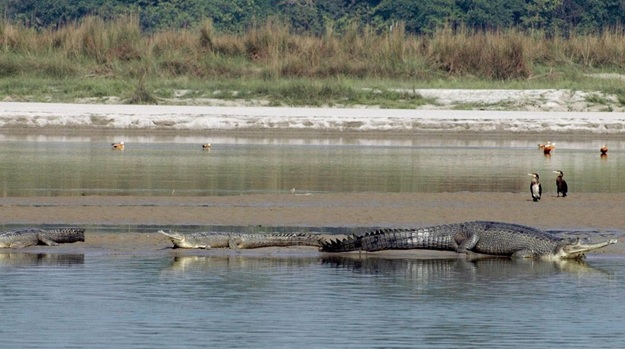
Illegal sand mining has emerged as a major environmental challenge in many river systems across India. River sand is widely used in the construction industry, leading to intense extraction pressure.
In ecologically sensitive river habitats like the National Chambal Sanctuary, sand mining can cause :
Recognising the ecological importance of the Chambal River ecosystem, the Supreme Court intervened to examine the issue and ensure stronger protection of the sanctuary.
The National Chambal Sanctuary is a unique riverine protected area established to conserve endangered aquatic wildlife.
It is also popularly known as the National Chambal Gharial Wildlife Sanctuary due to its importance in conserving the Gharial, one of the most endangered crocodilian species in the world.
The sanctuary lies at the tri-junction of three Indian states :
It stretches along the Chambal River, forming a long protected corridor along the river and its surrounding ravines.
The sanctuary was created primarily to protect rare and endangered aquatic species inhabiting the Chambal River ecosystem.
The sanctuary supports the largest population of wild gharials in the world, making it globally significant for crocodilian conservation.
The sanctuary has also been recognised as an Important Bird Area (IBA) due to its importance for bird conservation.
The riverine habitat provides nesting and feeding grounds for several migratory and resident bird species.
The landscape of the sanctuary is characterised by a distinctive ravine ecosystem.
Major Features
These landforms are created through long-term erosion by the Chambal River and its tributaries.
The region falls within the Kathiar-Gir Dry Deciduous Forest.
Vegetation mainly includes :
These habitats support diverse wildlife adapted to semi-arid conditions.
Apart from gharials and dolphins, the sanctuary hosts a rich diversity of aquatic and terrestrial fauna.
These species depend on the riverine and ravine ecosystems for survival.
Sand mining in and around the National Chambal Sanctuary poses several ecological risks.
Habitat Destruction : Sand extraction destroys nesting beaches used by gharials and turtles.
Disturbance to Breeding Sites : Mining activities disturb breeding and egg-laying areas.
River Morphology Changes : Excessive sand removal alters river flow patterns and increases erosion.
Threat to Aquatic Biodiversity : Noise and pollution from mining operations disrupt aquatic species.
The involvement of the Supreme Court of India highlights the seriousness of environmental degradation in protected areas.
Key Implications
1. Strengthening Environmental Governance
Judicial oversight ensures stricter enforcement of environmental laws.
2. Protection of Endangered Species
The sanctuary is critical for species like the gharial and river dolphin.
3. Conservation of River Ecosystems
Protecting riverine habitats helps maintain ecological balance.
4. Sustainable Resource Use
The case highlights the need to regulate sand mining while balancing economic demands.
To ensure long-term protection of the sanctuary, experts recommend :
Such measures can help safeguard the fragile ecosystem of the Chambal River.
FAQs1. Where is the National Chambal Sanctuary located ? It lies at the tri-junction of Madhya Pradesh, Uttar Pradesh, and Rajasthan along the Chambal River. 2. Which species is the sanctuary primarily known for protecting ? It is especially known for conserving the Gharial, a critically endangered crocodilian. 3. Why is the Chambal River ecosystem important ? It supports rare aquatic species such as the Ganges River Dolphin and several endangered turtles. 4. What is the main environmental threat to the sanctuary ? Illegal sand mining threatens the habitat of aquatic wildlife and disrupts the river ecosystem. 5. Why did the Supreme Court take cognisance of the issue ? The Court acted on media reports highlighting the ecological damage caused by sand mining in the sanctuary’s eco-sensitive zone. |


Our support team will be happy to assist you!

 Contact Us
  New Batch : 9555124124/ 7428085757
  Tech Support : 9555124124/ 7428085757