
- UPSC Exam
- State PCS
- One Day Exam
- Current Affairs
- PT Quiz
- Downlaods
- About Coaching
- Blog
- Videos

| Prelims : (Economics + CA) Mains : (GS 3 – Energy Security, Renewable Energy Integration, Power Sector Reforms) |
India’s rapid growth in renewable energy capacity—now exceeding 262 GW and accounting for over 51% of total installed power capacity—is creating operational challenges for the national power grid.
According to the Central Electricity Authority (CEA), the operational inflexibility of coal-fired power plants is making it difficult to integrate variable renewable energy sources like solar and wind efficiently.
To address this issue, the CEA has proposed incentives to encourage thermal power plants to operate more flexibly. However, power producers—including NTPC Limited—have raised concerns that running coal plants at lower loads may increase equipment wear, maintenance costs, and reduce plant lifespan.
India is rapidly expanding renewable energy capacity as part of its climate and energy security goals. The country has set an ambitious target of achieving 500 GW of non-fossil fuel electricity capacity by 2030.
However, renewable energy sources such as solar and wind are intermittent and variable, meaning their output changes depending on weather conditions and time of day.
This variability requires flexible backup generation sources that can quickly ramp up or reduce electricity production to maintain grid stability.
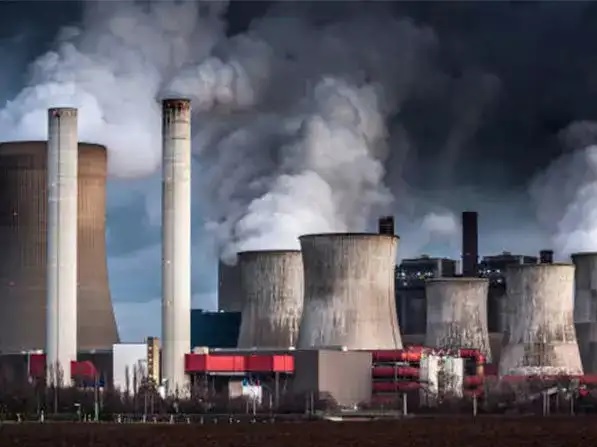
Coal-fired thermal plants, which currently provide a large share of India’s electricity, were originally designed to operate at steady output levels rather than fluctuating loads. This design limitation has created integration challenges as renewable energy capacity expands.
Coal-fired power plants are expected to reduce generation during peak solar hours and increase output after sunset when renewable generation declines.
However, many thermal plants in India lack the flexibility required to adjust output rapidly.
Due to the operational limitations of coal plants, renewable electricity—especially solar power—is increasingly curtailed (reduced or stopped) during periods of peak generation.
Curtailment occurs when the grid cannot absorb additional electricity due to system constraints.
Between May and December 2025, India reportedly lost about 2.3 terawatt-hours (TWh) of solar energy due to curtailment.
This amount of electricity could have powered approximately 14 lakh households for an entire year, highlighting the scale of inefficiency.
Renewable energy developers are compensated when their generation is curtailed due to grid management requirements.
These compensation payments amounted to ₹5.75–6.9 billion, adding financial costs to the power system.
A major reason behind coal plant inflexibility is the Minimum Technical Load (MTL) requirement.
MTL refers to the lowest stable generation level at which a thermal plant can operate safely without shutting down.
Most coal-fired plants in India cannot operate below 55% of their capacity without risking technical problems.
Power producers are hesitant to reduce MTL from 55% to around 40%, as this can lead to :
These concerns make plant operators reluctant to adopt flexible operation models.
India’s power system operates through a unified national grid, which connects power generators, transmission networks, and distribution utilities.
Maintaining the grid frequency within the safe band of 49.9–50.05 Hz is essential for stable electricity supply.
According to the Central Electricity Authority, system frequency exceeded the permissible range for nearly 20% of the time during May 2025, mainly during periods of high solar generation.
On May 25, 2025 :
Despite these measures, grid frequency rose to 50.48 Hz, raising concerns about grid safety and stability.
This situation occurred because many thermal plants could not reduce output below the 55% MTL threshold.
Power companies have raised technical and economic concerns about operating coal plants at lower loads.
Operating plants below optimal capacity can create thermal and mechanical stress on critical components such as :
Repeated ramping up and down of power generation accelerates equipment degradation.
NTPC Limited has expressed reservations regarding two-shift operations and lowering load levels to 40%.
The company noted that :
The operational rigidity of coal plants has significant implications for India’s energy transition.
Coal plant inflexibility makes it harder to integrate renewable energy into the grid, slowing progress toward the 500 GW non-fossil capacity target by 2030.
Under the Tertiary Reserve Ancillary Services (TRAS) mechanism, renewable energy producers are compensated when their generation is curtailed.
These compensation costs are ultimately passed on to electricity consumers through tariffs, meaning consumers pay for electricity that was generated but not used.
Curtailing renewable power prevents the grid from replacing fossil-fuel generation with clean energy, leading to higher carbon emissions and reduced environmental benefits.
1. Need for Flexible Power Systems
As renewable capacity grows, power systems must adapt to more flexible generation and storage solutions.
2. Grid Modernisation
Upgrading transmission networks and improving grid management technologies can help integrate variable renewable energy more effectively.
3. Role of Energy Storage
Technologies such as battery storage, pumped hydro, and green hydrogen could help balance supply and demand.
4. Policy and Market Reforms
New incentives and market mechanisms may be required to encourage thermal plants to operate flexibly without compromising financial viability.
To successfully integrate large-scale renewable energy, India needs to :
These measures will help ensure a reliable and sustainable energy transition.
FAQs1. What is renewable energy curtailment ? Curtailment occurs when renewable electricity generation is reduced or stopped because the power grid cannot absorb additional energy. 2. What is Minimum Technical Load (MTL) ? MTL is the lowest level at which a thermal power plant can safely operate without shutting down. 3. Why are coal plants inflexible ? Coal plants are designed for steady base-load generation, making it difficult to rapidly increase or decrease output. 4. What role does the Central Electricity Authority play ? The Central Electricity Authority is responsible for planning, regulating, and ensuring the stability of India’s power sector. 5. How does renewable curtailment affect consumers ? Consumers may indirectly pay higher tariffs because renewable energy generators receive compensation for curtailed electricity. |



Our support team will be happy to assist you!

 Contact Us
  New Batch : 9555124124/ 7428085757
  Tech Support : 9555124124/ 7428085757