
- UPSC Exam
- State PCS
- One Day Exam
- Current Affairs
- PT Quiz
- Downlaods
- About Coaching
- Blog
- Videos

| Prelims : (Economy + CA) Mains : (GS 2 – Governance, Digital India, Rural Development) |
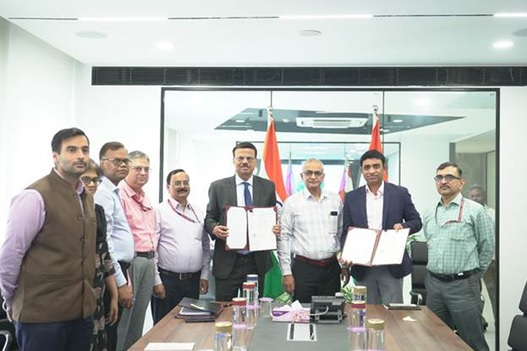
The Jyotiraditya Scindia recently inaugurated a Samriddhi Kendra in Umri Village under the Samriddh Gram Phygital Services Pilot Initiative.
The initiative aims to transform rural service delivery by combining physical infrastructure with digital platforms, creating a “phygital” model that enhances access to education, healthcare, agriculture services, governance, and financial inclusion in villages.
India’s digital transformation has accelerated under programmes like Digital India and BharatNet.
Despite improvements in connectivity, rural areas often face challenges such as :
To address these gaps, the government has proposed phygital service models that integrate on-ground service delivery with digital platforms, ensuring inclusive access to essential services in rural areas.
The Samriddh Gram Phygital Services Pilot Initiative is designed as a pioneering “phygital” model, combining physical service centres with digital infrastructure.
The initiative seeks to empower rural citizens by providing integrated access to multiple public and private services through a single digital hub in villages.
It also leverages high-speed broadband connectivity through BharatNet to ensure reliable service delivery.
The programme aims to :
Through this model, the government seeks to build self-reliant and digitally empowered villages.
Under the pilot phase, three villages across different states have been selected :
Each of these villages will host a Samriddhi Kendra, serving as an integrated digital service hub.
The Samriddhi Kendra acts as the central physical facility for delivering digital services to rural communities.
These centres will enable citizens to access multiple services without travelling to urban centres.
1. Education and Skilling
Samriddhi Kendras will support :
This will help improve education quality and employability in rural areas.
Farmers will receive access to advanced technologies such as :
These tools can improve farm productivity and sustainable agriculture practices.
3. Healthcare Services
The initiative will provide digital healthcare services including :
Such services can significantly improve healthcare access in remote villages.
4. e-Governance Services
The centres will provide assisted access to government services such as :
This will simplify citizens’ interaction with the government.
5. E-Commerce Opportunities
The initiative will integrate rural producers with digital marketplaces such as Open Network for Digital Commerce (ONDC).
This can enable :
6. Financial Inclusion
Samriddhi Kendras will support :
These measures aim to expand formal financial access in rural communities.
The digital services under the initiative rely on strong connectivity through BharatNet.
Key connectivity features include :
This ensures reliable internet access for rural citizens.
The initiative is implemented by the Department of Telecommunications (DoT) under the Ministry of Communications.
1. Digital Inclusion
The initiative bridges the urban-rural digital divide by bringing advanced digital services to villages.
2. Rural Empowerment
Integrated service hubs can empower citizens by improving access to education, healthcare, financial services, and government schemes.
3. Economic Opportunities
Linking rural entrepreneurs with digital commerce platforms can boost income generation and local employment.
4. Strengthening Digital India
The initiative complements broader government programmes aimed at building a digitally empowered society and knowledge economy.
If the pilot project proves successful, the government may consider expanding Samriddhi Kendras across thousands of villages, creating a nationwide network of phygital service centres.
Such initiatives could significantly accelerate rural digital transformation and inclusive development.
FAQs1. What is the Samriddh Gram Phygital Services Pilot Initiative ? It is a government initiative designed to integrate physical service centres with digital platforms to provide multiple services in rural areas. 2. What is a Samriddhi Kendra ? A Samriddhi Kendra is a village-level digital service hub that provides education, healthcare, agricultural support, e-governance, and financial services. 3. Which technology backbone supports the initiative ? The initiative relies on BharatNet broadband connectivity along with public Wi-Fi and village area networks. 4. Which ministry is implementing the programme ? The initiative is implemented by the Department of Telecommunications under the Ministry of Communications. 5. How does the initiative benefit rural communities ? It improves access to digital services, government schemes, healthcare, education, and financial services, helping promote rural development and digital inclusion. |



Our support team will be happy to assist you!

 Contact Us
  New Batch : 9555124124/ 7428085757
  Tech Support : 9555124124/ 7428085757