Why in News?
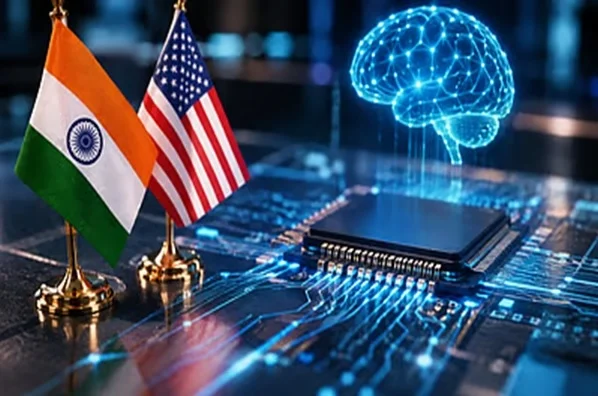
- India, along with nine other countries, has signed the US-led San Francisco Declaration on November 15, 2026, to strengthen the security of artificial intelligence (AI) supply chains, semiconductors and critical technological infrastructure.
- The declaration builds upon the Pax Silica Initiative and comes amid growing technological competition between the United States and China.
About the San Francisco Declaration
- Full Name: San Francisco Declaration on the Secure Foundations of Enduring Prosperity.
- Signed on: November 15, 2026.
- Place: San Francisco, United States.
- Participating Countries: 10.
- Objective: To protect critical technologies and infrastructure supporting artificial intelligence.
- Core Principle: Economic security is fundamental to national security.
- Indian Representation: The Indian delegation was led by S. Krishnan, Secretary, Ministry of Electronics and Information Technology (MeitY).
Key Provisions of the Declaration
- Supply Chain Security: Developing reliable and diversified supply chains for advanced technologies.
- Protection of Critical Infrastructure: Safeguarding data centres, energy systems and digital networks supporting AI.
- Semiconductor Cooperation: Promoting collaboration in chip design, manufacturing and advanced computing.
- Critical Minerals: Reducing excessive dependence on individual countries for essential raw materials.
- Working Groups: Establishing mechanisms for cooperation on AI policies, adoption, security and supply chain resilience.
- Export Controls: Strengthening coordination to prevent the misuse of sensitive technologies.
- Economic Security: Addressing economic coercion and disruptions in global technology markets.
Countries Participating in the Declaration
|
S. No.
|
Country
|
|
1
|
United States
|
|
2
|
India
|
|
3
|
Australia
|
|
4
|
Japan
|
|
5
|
Israel
|
|
6
|
South Korea
|
|
7
|
Singapore
|
|
8
|
United Kingdom
|
|
9
|
Qatar
|
|
10
|
United Arab Emirates
|
What is the Pax Silica Initiative?
- Pax Silica is a US-led strategic technology coalition that aims to establish secure, resilient and trusted supply chains for artificial intelligence, semiconductors and critical minerals.
- The initiative seeks to reduce technological vulnerabilities arising from excessive dependence on a limited number of countries.
Major Areas of Cooperation
- Critical mineral extraction and processing.
- Semiconductor design and manufacturing.
- Artificial intelligence models and applications.
- Data centres and computing infrastructure.
- Advanced manufacturing technologies.
- Energy and digital infrastructure.
- Research and technological innovation.
What is an AI Supply Chain?
An AI supply chain refers to the entire network of resources, industries, technologies and infrastructure required to develop and operate artificial intelligence systems.
|
Component
|
Role
|
|
Critical Minerals
|
Raw materials for electronic components
|
|
Semiconductors
|
Processing and computing capabilities
|
|
GPUs
|
Training and operating AI models
|
|
Data Centres
|
Computing and data storage infrastructure
|
|
Energy Infrastructure
|
Continuous electricity supply
|
|
AI Models
|
Development of intelligent applications
|
|
Digital Networks
|
Data transfer and connectivity
|
Significance of the Declaration
- Technological Security: It can reduce vulnerabilities associated with foreign technological dependence.
- Supply Chain Resilience: Diversified sources of raw materials and components can minimise disruptions.
- Economic Growth: Cooperation can encourage investment in high-technology industries.
- Innovation: Joint research can accelerate the development of advanced technologies.
- National Security: Secure technological infrastructure can protect sensitive defence and government systems.
- Global Technology Governance: Participating countries can contribute to shaping international technology standards.
Why is the Initiative Significant for India?
- Semiconductor Manufacturing: The partnership can help India attract investment, acquire technological expertise and strengthen domestic semiconductor manufacturing.
- Access to Critical Minerals: Cooperation with resource-rich countries such as Australia can help India diversify its sources of critical minerals.
- Artificial Intelligence Development: India can benefit from international cooperation in advanced computing, AI research and digital infrastructure.
- Reduction in Dependence on China: The initiative provides India with opportunities to diversify imports of electronic components, critical minerals and technological equipment.
- Employment Generation: Expansion of semiconductor manufacturing, AI infrastructure and research facilities can create high-skilled employment opportunities.
- Strengthening India-US Relations: The declaration deepens strategic cooperation between India and the United States in emerging and critical technologies.
- Strategic Autonomy: Developing domestic technological capabilities can strengthen India's ability to make independent economic and strategic decisions.
India's Initiatives for Technological Self-Reliance
|
Initiative
|
Objective
|
|
IndiaAI Mission
|
Development of a domestic AI ecosystem
|
|
India Semiconductor Mission
|
Promotion of semiconductor manufacturing
|
|
Semicon India 2.0
|
Development of the complete semiconductor ecosystem
|
|
National Critical Mineral Mission
|
Ensuring critical mineral security
|
|
Design Linked Incentive Scheme
|
Encouraging indigenous semiconductor design
|
|
Production Linked Incentive Scheme
|
Promoting domestic electronics manufacturing
|
India's Progress in AI and Semiconductors
- ₹10,371.92 crore: Approved outlay for the IndiaAI Mission.
- ₹76,000 crore: Outlay for Semicon India 1.0.
- ₹1,27,500 crore: Approved outlay for Semicon India 2.0.
- 12 semiconductor units: Approved under Semicon 1.0, as of September 2026.
- Nearly 20%: India's share in the global semiconductor chip-design workforce.
US-China Technological Rivalry
The San Francisco Declaration comes amid increasing competition between the United States and China for leadership in artificial intelligence and other advanced technologies.
- China has a dominant position in the processing of several critical minerals and manufacturing of electronic components.
- The United States seeks to maintain its leadership in advanced chip design, AI systems and computing technologies.
- Washington has adopted export restrictions to limit China's access to certain advanced semiconductor technologies.
- Technology partnerships such as Pax Silica aim to develop alternative and reliable supply chains.
- However, growing technological competition may also lead to fragmentation of global technology markets.
Major Challenges for India
- Import Dependence: India continues to depend on foreign suppliers for advanced chips and computing hardware.
- High Investment Costs: Semiconductor manufacturing requires substantial capital and sophisticated infrastructure.
- Technology Gap: Domestic capabilities in advanced chip fabrication remain limited.
- Critical Mineral Processing: India needs to expand its mineral refining and processing capacity.
- Skilled Workforce: Advanced technology industries require specialised technical expertise.
- Geopolitical Challenges: India must balance international technology partnerships with its strategic autonomy.
- Infrastructure Requirements: AI data centres require reliable electricity, water and advanced digital connectivity.
Way Forward
- Accelerate the implementation of the India Semiconductor Mission and IndiaAI Mission.
- Strengthen domestic research and development in advanced computing and semiconductor technologies.
- Diversify critical mineral imports through international partnerships.
- Promote technology transfer and joint manufacturing with trusted countries.
- Encourage collaboration between industries, universities and research institutions.
- Develop indigenous AI models and semiconductor intellectual property.
- Maintain strategic autonomy while participating in global technology partnerships.
Conclusion
India's participation in the San Francisco Declaration reflects the growing importance of technology in international relations and national security. The initiative offers India an opportunity to strengthen its semiconductor ecosystem, secure critical resources and emerge as a reliable partner in global AI supply chains. However, its long-term success will depend on India's ability to convert international cooperation into domestic technological capabilities.
Prelims Practice Question
Q. With reference to the Pax Silica Initiative, consider the following statements:
- It is a US-led initiative aimed at securing critical technology supply chains.
- It covers semiconductors, artificial intelligence and critical minerals.
- India formally joined the initiative during the India AI Impact Summit 2026.
- China is a signatory to the San Francisco Declaration.
Which of the statements given above are correct?
(a) 1 and 2 only
(b) 2 and 3 only
(c) 1, 2 and 3 only
(d) 1, 2, 3 and 4
Mains Practice Question
Q. Discuss the significance of India's participation in the Pax Silica Initiative in ensuring technological self-reliance and economic security amid the growing US-China technological rivalry.
|
FAQs
Q1. What is the Pax Silica Initiative?
A US-led coalition for securing critical technology supply chains.
Q2. When did India join the Pax Silica Initiative?
India formally joined it on February 20, 2026.
Q3. What is the San Francisco Declaration?
An international declaration to secure artificial intelligence supply chains.
Q4. How many countries signed the San Francisco Declaration?
Ten countries signed the declaration, including India and America.
Q5. Is China part of the San Francisco Declaration?
No, China is not a signatory to it.
|