Why in News?
Two major hydroelectric projects, the 1,000 MW Pakal Dul Project and the 624 MW Kiru Project, in the Kishtwar district of Jammu and Kashmir are nearing completion.
- Both projects have a revised completion target of December 2026.
- As of September 30, 2026, Pakal Dul and Kiru had achieved 89% and 92.10% physical progress, respectively.
- Their completion will strengthen India's hydropower infrastructure in the strategically important Chenab River basin.
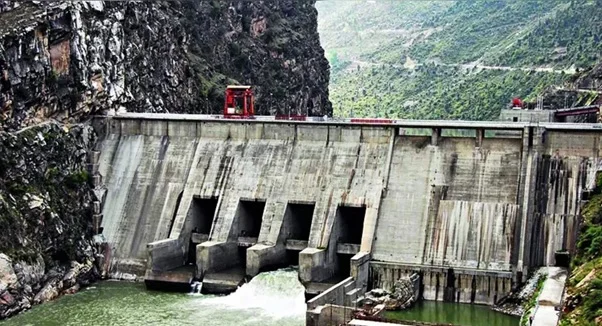
About Pakal Dul and Kiru Hydroelectric Projects
|
Parameters
|
Pakal Dul Project
|
Kiru Project
|
|
Location
|
Kishtwar, J&K
|
Kishtwar, J&K
|
|
River
|
Marusudar
|
Chenab
|
|
Installed capacity
|
1,000 MW
|
624 MW
|
|
Generating units
|
4 × 250 MW
|
4 × 156 MW
|
|
Dam height
|
167 metres
|
135 metres
|
|
Original cost
|
₹8,112.12 crore
|
₹4,287.59 crore
|
|
Revised cost
|
₹12,728 crore
|
₹5,409 crore
|
|
Physical progress
|
89%
|
92.10%
|
|
Completion target
|
December 2026
|
December 2026
|
Pakal Dul Hydroelectric Project
- It is located on the Marusudar River, a major tributary of the Chenab River.
- It is also known as the Drangdhuran Hydroelectric Project.
- The project includes a high dam, water storage facilities and an underground powerhouse.
- It is being developed by Chenab Valley Power Projects Limited (CVPPL).
Kiru Hydroelectric Project
- It is a run-of-the-river hydroelectric project located on the Chenab River.
- It consists of a concrete dam and an underground powerhouse.
- The project will utilise the natural flow and elevation difference of river water to generate electricity.
- It is also being implemented by CVPPL.
Other Major Hydropower Projects in the Chenab Basin
|
Project
|
Capacity
|
Physical progress
|
Completion target
|
|
Ratle
|
850 MW
|
33.14%
|
November 2028
|
|
Kwar
|
540 MW
|
41.55%
|
March 2028
|
|
Pakal Dul
|
1,000 MW
|
89%
|
December 2026
|
|
Kiru
|
624 MW
|
92.10%
|
December 2026
|
|
Total
|
3,014 MW
|
—
|
—
|
About the Chenab River
- Origin: Formed by the confluence of the Chandra and Bhaga rivers at Tandi in Himachal Pradesh.
- Upper course: Known as Chandrabhaga.
- River system: Indus River system.
- Flow: Himachal Pradesh, Jammu and Kashmir, and Pakistan.
- Major tributaries: Marusudar, Miyar Nallah and Neeru.
- Major hydropower projects: Salal, Baglihar, Dulhasti, Ratle, Pakal Dul, Kiru and Kwar.
- Ancient name: Asikni.
About the Indus Waters Treaty (IWT)
- The treaty was signed between India and Pakistan on September 19, 1960, with the assistance of the World Bank.
- It divided the utilisation of the six major rivers of the Indus River system between the two countries.
- Eastern rivers: Ravi, Beas and Sutlej were allocated for India's unrestricted use.
- Western rivers: Indus, Jhelum and Chenab were primarily allocated to Pakistan, with specified usage rights for India.
- India was permitted to undertake certain agricultural, domestic and hydroelectric activities on the western rivers, subject to treaty provisions.
- On April 23, 2025, India announced its decision to hold the treaty in abeyance following the Pahalgam terrorist attack.
Strategic Significance of the Hydropower Projects
- Energy Security: Increases domestic electricity generation and reduces dependence on fossil fuels.
- Water Resource Utilisation: Enables India to better utilise the hydropower potential of the Chenab basin.
- Strategic Interests: Strengthens India's infrastructure and capacity to manage water resources in a transboundary river basin.
- Regional Development: Promotes economic activities and infrastructure development in Jammu and Kashmir.
- Climate Commitments: Supports India's target of achieving 500 GW of non-fossil electricity capacity by 2030.
- Grid Stability: Hydropower can complement variable renewable energy sources such as solar and wind.
Economic and Social Significance
- Generates direct and indirect employment opportunities for local communities.
- Promotes the development of roads, bridges and transmission infrastructure.
- Improves electricity availability for households, industries and commercial establishments.
- Creates opportunities for industrial investment in Jammu and Kashmir.
- Contributes to the long-term economic development of remote Himalayan regions.
Major Challenges
- Cost Overruns: Rising construction expenditure increases the financial burden.
- Geological Challenges: Difficult Himalayan terrain and unstable rock formations complicate construction.
- Environmental Concerns: Large dams may affect river ecosystems, biodiversity and natural water flow.
- Natural Disasters: The Himalayan region is vulnerable to earthquakes, landslides and flash floods.
- Transboundary Disputes: Hydropower development on the western rivers remains a sensitive issue in India-Pakistan relations.
- Transmission Infrastructure: Adequate transmission networks are essential to distribute the generated electricity.
Way Forward
- Ensure timely completion through regular monitoring and effective project management.
- Strengthen environmental impact assessments and dam safety mechanisms.
- Develop climate-resilient hydropower infrastructure.
- Ensure adequate rehabilitation and compensation for affected communities.
- Adopt an integrated river basin management approach.
- Expand electricity transmission infrastructure alongside power generation capacity.
Conclusion
The Pakal Dul and Kiru hydropower projects represent an important step towards strengthening India's energy security and utilising the hydropower potential of Jammu and Kashmir. Their successful commissioning will contribute to regional development, renewable energy generation and India's long-term strategic interests in the Indus River basin.
Prelims Practice Question
Q. Consider the following pairs:
|
Hydroelectric Project
|
River
|
|
1. Pakal Dul
|
Marusudar
|
|
2. Kiru
|
Chenab
|
|
3. Ratle
|
Jhelum
|
|
4. Kwar
|
Chenab
|
How many of the above pairs are correctly matched?
(a) Only one
(b) Only two
(c) Only three
(d) All four
Mains Practice Question
Q. Discuss the economic and strategic significance of hydropower development in the Chenab River basin in the context of India's energy security and the Indus Waters Treaty.
|
FAQs
1. Where is the Pakal Dul Hydroelectric Project located?
It is located in Jammu and Kashmir's Kishtwar district.
2. Which river is associated with the Pakal Dul Project?
It is constructed on the Marusudar River.
3. What is the capacity of the Kiru Project?
Its installed electricity generation capacity is 624 MW.
4. What is the combined capacity of both projects?
Both projects have a combined capacity of 1,624 MW.
5. Which organisation is developing these hydropower projects?
Chenab Valley Power Projects Limited implements both projects.
|