Prelims: Tropical Cyclones, Cyclone Akvan, Coriolis Force, IMD, Bay of Bengal, Madden-Julian Oscillation.
Mains: GS Paper I – Physical Geography; GS Paper III – Disaster Management and Climate Change.
Keywords: Cyclone Akvan 2026, IMD Cyclone Warning, Bay of Bengal Cyclone, Tropical Cyclone Formation, Cyclone Naming, Storm Surge, Cyclone Management in India. |
Why in News?
The India Meteorological Department (IMD) has issued a warning regarding a developing cyclonic system over the Bay of Bengal, which is expected to intensify into Cyclone Akvan.
- It is expected to develop into a severe cyclonic storm by November 17, 2026.
- Andhra Pradesh and Odisha have been placed on high alert due to anticipated heavy rainfall and strong winds.
- It is the third potential cyclone developing over the Bay of Bengal within three weeks.
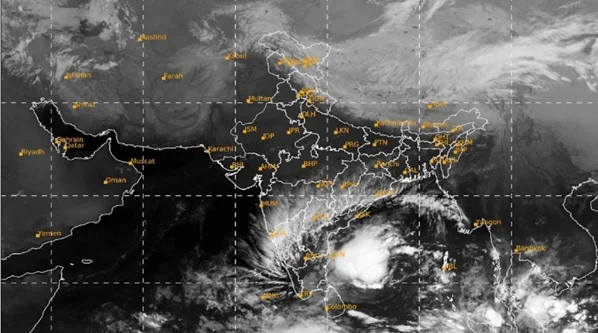
Key Highlights of Cyclone Akvan
|
Parameter
|
Details
|
|
Cyclone Name
|
Akvan (proposed)
|
|
Naming Country
|
Iran
|
|
Origin
|
Bay of Bengal
|
|
Direction
|
North-northwestwards, followed by northwestwards
|
|
Expected Category
|
Very Severe Cyclonic Storm
|
|
Maximum Sustained Wind Speed
|
120–130 kmph
|
|
Maximum Wind Gusts
|
145 kmph
|
|
Major Affected States
|
Andhra Pradesh and Odisha
|
|
Monitoring Agency
|
India Meteorological Department
|
Expected Rainfall Across States
|
State/Region
|
Expected Rainfall
|
Duration
|
|
Coastal Andhra Pradesh
|
Heavy to extremely heavy
|
November 19–20
|
|
Odisha
|
Heavy to very heavy
|
November 19–21
|
|
Tamil Nadu and Puducherry
|
Heavy to very heavy
|
November 18–19
|
|
Gangetic West Bengal
|
Heavy rainfall
|
November 19–20
|
|
Telangana
|
Isolated heavy rainfall
|
November 20
|
|
Chhattisgarh and Jharkhand
|
Isolated heavy rainfall
|
November 20–21
|
The IMD has also advised fishermen against venturing into affected parts of the Bay of Bengal due to dangerous sea conditions.
What is a Tropical Cyclone?
A tropical cyclone is an intense low-pressure weather system that develops over warm tropical oceans and is characterised by strong rotating winds, thunderstorms and heavy rainfall.
- It derives energy from warm ocean water.
- Winds rotate anticlockwise in the Northern Hemisphere and clockwise in the Southern Hemisphere.
- Its central region, known as the eye, generally experiences relatively calm conditions.
- Tropical cyclones generally weaken after entering land due to reduced moisture and energy supply.
Conditions Required for Cyclone Formation
- Warm Ocean Water: Sea surface temperature of approximately 26.5°C or above.
- Atmospheric Moisture: Adequate moisture in the lower and middle atmosphere.
- Coriolis Force: Sufficient rotational force to initiate cyclonic circulation.
- Low Vertical Wind Shear: Limited variation in wind speed and direction with altitude.
- Pre-existing Disturbance: An initial low-pressure system.
- Upper-Level Divergence: Favourable conditions for air to move outward at higher altitudes.
Classification of Cyclones by IMD
|
Category
|
Sustained Wind Speed
|
|
Depression
|
31–49 kmph
|
|
Deep Depression
|
50–61 kmph
|
|
Cyclonic Storm
|
62–88 kmph
|
|
Severe Cyclonic Storm
|
89–117 kmph
|
|
Very Severe Cyclonic Storm
|
118–165 kmph
|
|
Extremely Severe Cyclonic Storm
|
166–221 kmph
|
|
Super Cyclonic Storm
|
222 kmph and above
|
How are Cyclones Named?
The naming of tropical cyclones in the North Indian Ocean began in 2004 under the framework of the World Meteorological Organization (WMO) and the United Nations Economic and Social Commission for Asia and the Pacific (UNESCAP).
- The Regional Specialised Meteorological Centre (RSMC), New Delhi, is responsible for naming cyclones over the Arabian Sea and Bay of Bengal.
- In 2020, a new list of 169 cyclone names was introduced.
- Each of the 13 participating countries contributed 13 names.
- A weather system receives a name when its maximum sustained surface wind speed reaches approximately 62 kmph.
Countries Participating in Cyclone Naming
Bangladesh, India, Iran, Maldives, Myanmar, Oman, Pakistan, Qatar, Saudi Arabia, Sri Lanka, Thailand, the United Arab Emirates and Yemen.
Guidelines for Naming Cyclones
- Names should be short and easy to pronounce.
- A name should not exceed eight letters.
- Names must remain neutral regarding religion, politics, culture and gender.
- Names should not hurt the sentiments of any community.
- Once used in the North Indian Ocean, a cyclone name is not repeated.
Recent and Upcoming Cyclone Names
|
Cyclone
|
Naming Country
|
|
Arnab
|
Bangladesh
|
|
Murasu
|
India
|
|
Akvan
|
Iran
|
|
Kaani
|
Maldives
|
|
Ngamann
|
Myanmar
|
|
Sail
|
Oman
|
|
Sahab
|
Pakistan
|
Kaani is the next name after Akvan in the predetermined list.
Why is the Bay of Bengal More Prone to Cyclones?
- Higher Ocean Temperature: Warm ocean waters provide favourable conditions for cyclone development.
- Freshwater Inflow: Rivers such as the Ganga and Brahmaputra create a low-salinity surface layer that can reduce vertical ocean mixing.
- Atmospheric Disturbances: Weather systems originating over the western Pacific can contribute to cyclone formation.
- Favourable Wind Conditions: Relatively low vertical wind shear during the post-monsoon season supports cyclone development.
- Geographical Shape: The funnel-shaped northern Bay of Bengal increases vulnerability to storm surges.
Historically, the Bay of Bengal has experienced substantially more cyclones than the Arabian Sea.
Why are Multiple Cyclones Developing in Quick Succession?
- Post-Monsoon Conditions: Warm ocean temperatures and favourable atmospheric circulation support repeated cyclone formation.
- Madden-Julian Oscillation (MJO): Its active phase can enhance cloud formation, rainfall and cyclonic activity.
- Ocean Heat Content: Heat stored beneath the ocean surface can sustain cyclone intensification.
- Atmospheric Waves: Equatorial Rossby and Kelvin waves can contribute to the development of low-pressure systems.
What is Madden-Julian Oscillation?
The Madden-Julian Oscillation is an eastward-moving atmospheric disturbance involving tropical rainfall, clouds and winds. It generally operates over a period of 30–60 days and influences monsoon activity and tropical cyclone formation.
Climate Change and Tropical Cyclones
Climate change can influence the intensity and destructive potential of tropical cyclones through:
- Rising sea surface temperatures and ocean heat content.
- Increased atmospheric moisture leading to heavier rainfall.
- Rising sea levels increasing coastal flooding and storm surge risks.
- Greater potential for rapid intensification of cyclonic systems.
However, the formation of an individual cyclone cannot be directly attributed to climate change without a specific scientific attribution study.
Significance of Cyclone Monitoring
- Enables timely evacuation of vulnerable coastal populations.
- Reduces casualties and economic losses.
- Protects agriculture, fisheries and coastal infrastructure.
- Supports disaster preparedness and resource mobilisation.
- Strengthens maritime safety and port management.
Potential Impact of Cyclone Akvan on India
- Agricultural Impact: Heavy rainfall, flooding and strong winds may damage standing crops, particularly paddy and horticultural crops.
- Economic Impact: Disruptions in fisheries, maritime trade, transportation and electricity supply could cause significant economic losses.
- Infrastructure Damage: Strong winds may damage roads, electrical infrastructure, communication networks and vulnerable houses.
- Environmental Impact: Coastal flooding, soil salinisation, beach erosion and damage to coastal ecosystems may occur.
- Humanitarian Impact: Displacement, loss of livelihoods and disruption of essential services may increase the vulnerability of coastal communities.
Cyclone Warning System in India
The IMD issues cyclone warnings in four stages:
|
Stage
|
Warning Period
|
|
Pre-Cyclone Watch
|
At least 72 hours before adverse weather
|
|
Cyclone Alert
|
At least 48 hours before adverse weather
|
|
Cyclone Warning
|
At least 24 hours before adverse weather
|
|
Post-Landfall Outlook
|
12 hours before landfall
|
These warnings help government agencies undertake evacuation, preparedness and disaster response measures.
India's Initiatives for Cyclone Management
- National Cyclone Risk Mitigation Project (NCRMP): Strengthens cyclone shelters, evacuation infrastructure and early warning systems.
- National Disaster Management Authority (NDMA): Develops policies and guidelines for cyclone disaster management.
- National Disaster Response Force (NDRF): Conducts specialised rescue and relief operations.
- INSAT Satellite System: Provides continuous monitoring of atmospheric and weather conditions.
- Doppler Weather Radars: Monitor cyclone movement, rainfall and wind patterns.
- Indian National Centre for Ocean Information Services (INCOIS): Provides ocean forecasts and marine hazard advisories.
Challenges
- Increasing vulnerability of densely populated coastal regions.
- Unplanned urbanisation and inadequate drainage infrastructure.
- Destruction of mangroves and natural coastal barriers.
- Difficulty in accurately predicting rapid cyclone intensification.
- Limited financial and insurance protection for farmers and fishermen.
- Cumulative economic losses due to successive cyclones.
Way Forward
- Strengthen satellite-based monitoring and early warning systems.
- Develop climate-resilient coastal infrastructure.
- Restore mangrove forests and other natural coastal barriers.
- Expand cyclone shelters and community-based disaster preparedness.
- Improve crop insurance and financial protection for coastal communities.
- Promote regional cooperation among Indian Ocean countries for weather monitoring and disaster response.
Conclusion
The developing Cyclone Akvan highlights India's growing vulnerability to extreme weather events, particularly along its eastern coastline. Scientific forecasting, climate-resilient infrastructure, ecosystem conservation and effective disaster preparedness are essential for minimising cyclone-related human and economic losses.
Prelims Practice Question
Q. With reference to tropical cyclones, consider the following statements:
- Tropical cyclones derive their energy from warm ocean waters.
- Tropical cyclones in the Northern Hemisphere rotate clockwise.
- The Regional Specialised Meteorological Centre, New Delhi, is responsible for naming cyclones in the North Indian Ocean.
Which of the statements given above are correct?
(a) 1 and 2 only
(b) 2 and 3 only
(c) 1 and 3 only
(d) 1, 2 and 3
Mains Practice Question
Q. Examine the geographical and atmospheric factors responsible for frequent cyclone formation in the Bay of Bengal. Discuss India's preparedness in addressing cyclone-related disasters in the context of climate change.
|
FAQs
Q1. Which country suggested the name Cyclone Akvan?
Iran suggested the name Akvan for this cyclone.
Q2. Where is Cyclone Akvan expected to develop?
It is expected to develop over Bay waters.
Q3. Who names tropical cyclones in the North Indian Ocean?
RSMC New Delhi officially names North Indian Ocean cyclones.
Q4. How many countries participate in regional cyclone naming?
Thirteen countries participate in North Indian Ocean cyclone naming.
Q5. Which states are most vulnerable to Cyclone Akvan?
Andhra Pradesh and Odisha are particularly vulnerable regions.
|