Why in News?
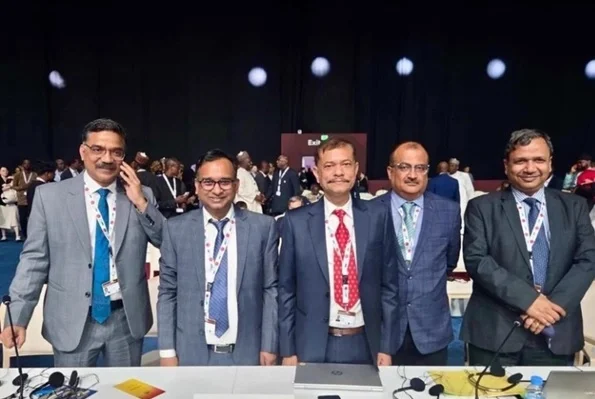
India was re-elected to the International Telecommunication Union (ITU) Council for the 2027–2030 term on 16 November 2026 at the ITU Plenipotentiary Conference (PP-26) in Doha, Qatar. India received 151 votes, ranking third after Qatar and Saudi Arabia among the 15 candidates competing for 13 seats in Region E (Asia and Australasia).
Background
The International Telecommunication Union is the United Nations specialised agency for information and communication technologies. Founded in 1865, it is headquartered in Geneva, Switzerland. Its work includes coordinating the international use of radio frequencies and satellite orbits, developing technical standards, and expanding access to digital technologies.
|
ITU sector
|
Main function
|
|
ITU-R : Radiocommunication
|
Coordinates the use of radio-frequency spectrum and satellite-orbit resources.
|
|
ITU-T : Telecommunication Standardization
|
Develops technical standards that help equipment and networks work together.
|
|
ITU-D : Telecommunication Development
|
Supports connectivity and provides technical assistance, particularly in developing countries.
|
Key Points About the ITU Council
- The Plenipotentiary Conference is the ITU’s highest decision-making body and convenes once every four years. It elects the Council’s member states.
- The 48-member Council governs the ITU between conferences. It oversees the organisation’s activities and policies, steers its working groups, and prepares draft strategic and financial plans for the next conference.
- The Radio Regulations Board is a separate, 12-member body within ITU-R. It approves procedures for applying the Radio Regulations and considers appeals in disputes.
Why Is the Re-election Significant?
As a Council member, India can help shape the ITU’s work programme and raise priorities such as affordable connectivity and support for underserved regions. India can take those priorities into the ITU’s technical forums, where work on spectrum coordination and equipment standards affects how new technologies are deployed across countries.
Relevance for India
- 6G and telecom manufacturing: Indian researchers and firms can contribute technical proposals as international standards evolve. Common standards help Indian-made equipment work with networks in other markets.
- Satellite broadband: International spectrum and orbit coordination helps prevent harmful interference. This matters as India expands satellite-based connectivity, especially in areas where terrestrial networks are difficult to build.
- Global South priorities: India can work with other developing countries to prioritise affordable access, technical assistance and skills development in the ITU’s work programme.
Challenges
- Competing demands on spectrum: Mobile networks, satellite operators and broadcasters need access to radio frequencies. Coordinating their use becomes harder as demand grows.
- Technical capacity: Turning policy priorities into international standards requires engineers, test data and sustained participation in technical study groups.
- Last-mile connectivity: Wider network coverage must be accompanied by affordable devices and services for households to benefit.
Way Forward
- India can bring government, industry and academic experts together to develop joint technical submissions on 6G and satellite communications.
- It can also coordinate with developing countries on shared proposals and use its domestic connectivity experience to show which approaches work in remote and low-income communities.
Conclusion
- India’s second opportunity to shape the ITU’s agenda in consecutive Council terms comes as countries prepare for next-generation mobile networks and wider satellite broadband use.
- Submitting tested technical proposals and building support among member states can help India turn its Council role into progress on standards and affordable connectivity.
UPSC Prelims MCQ
Which of the following serves as the governing body of the International Telecommunication Union between sessions of its Plenipotentiary Conference?
A. Radio Regulations Board
B. ITU Council
C. World Radiocommunication Conference
D. Telecommunication Standardization Bureau
UPSC Mains Question
How can India use its membership of the ITU Council to advance its telecom interests while promoting affordable digital connectivity in the Global South?
|
FAQs
When was India re-elected to the ITU Council?
India was re-elected on 16 November 2026.
How many votes did India receive?
India secured 151 votes in the Council election.
Which region does India represent on the Council?
India represents Region E, covering Asia and Australasia.
Where is the ITU headquartered?
The ITU’s headquarters is in Geneva, Switzerland.
What does the ITU Council do?
It governs the ITU between its Plenipotentiary Conferences.
|