
- UPSC Exam
- State PCS
- One Day Exam
- Current Affairs
- PT Quiz
- Downlaods
- About Coaching
- Blog
- Videos

| Prelims: (Security + CA) Mains: (GS 2 – Governance; GS 3 – Infrastructure) |
IndiGo’s large-scale flight cancellations and the government’s subsequent suspension of the DGCA’s newly notified Flight Duty Time Limitation (FDTL) norms have raised serious concerns about India’s aviation safety framework.
Despite the rules being mandated under a High Court order to address crew fatigue, the Ministry placed them under abeyance, prioritising operational continuity over safety considerations. Critics argue that the response reflects a deeper erosion of regulatory integrity, with commercial interests being placed above passenger and crew safety.
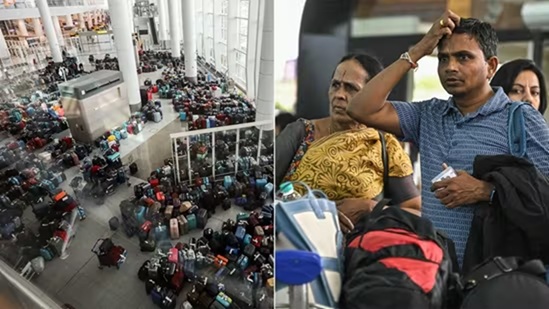
India’s aviation sector has experienced repeated tensions between safety norms and airline operational demands. Attempts to strengthen pilot rest regulations have been diluted several times due to industry pushback. The recent IndiGo disruptions have exposed structural weaknesses: chronic under-staffing, inconsistent enforcement of Civil Aviation Requirements (CAR), and regulatory decisions that appear reactive rather than safety-driven.
Pilot unions challenged the 2008 dilution in the Bombay High Court. The Court initially criticised DGCA and the Ministry for:
It even advised airlines to reduce flights instead of overworking pilots. However, in an unexpected reversal, the same Court later upheld the Ministry’s decision, weakening the push for stricter fatigue norms.
DGCA’s own CAR (Series C, Part II, Section 3, April 2022) mandates:
However, enforcement has been weak. Airlines, especially IndiGo, operate with lean crew levels, making them extremely vulnerable to any regulatory change.
Even earlier requirements were stricter:
Yet airlines appeared to deliberately understaff, taking advantage of lax oversight.
In 2006, the International Civil Aviation Organization (ICAO) advised India to establish an independent aviation regulator, free from government control. Eighteen years later, the warning seems validated: oversight has weakened, and airlines operate with considerable confidence that violations will attract minimal consequences.
Two contradictory actions within hours revealed regulatory breakdown:
This amounted to state-sanctioned dilution of safety norms. Moreover, IndiGo—non-compliant for over a year—has now been granted time until February 10, 2026, a deadline critics expect will be extended again.
Despite three major air disasters since 2010 (Mangaluru, Kozhikode, Ahmedabad), regulatory reform has remained slow. The Air India AI 171 crash report is still pending without explanation.
IndiGo claims operations will stabilise in 10–15 days, but safety concerns remain acute. The decisions taken on December 5, 2025, especially suspending FDTL norms, suggest that in India’s aviation sector, “safety first” remains more rhetoric than reality.
FAQs1. What triggered the suspension of FDTL rules ? IndiGo’s large-scale cancellations and operational instability prompted the Ministry to temporarily halt the new norms. 2. Why are FDTL norms important ? They regulate pilot duty hours and rest periods to prevent fatigue, a major factor in aviation safety. 3. What is the main structural issue behind the crisis ? Chronic understaffing—airlines often operate with fewer pilot sets than mandated, leaving no buffer for disruptions. 4. Why is ICAO’s warning relevant today ? It highlighted the need for an independent regulator. The present crisis shows how regulatory decisions may be influenced by commercial pressures. 5. Are passengers adequately compensated ? Refunds cover tickets, but secondary losses—hotels, transport, meetings—are usually uncompensated. |



Our support team will be happy to assist you!

 Contact Us
  New Batch : 9555124124/ 7428085757
  Tech Support : 9555124124/ 7428085757