
- UPSC Exam
- State PCS
- One Day Exam
- Current Affairs
- PT Quiz
- Downlaods
- About Coaching
- Blog
- Videos

| Prelims : (Polity + Governance + CA) Mains : (GS 2 – Judiciary, Health Policy, Fundamental Rights; GS 3 – Disaster Management & Public Health Governance) |
The Supreme Court of India directed the Union government to formulate a “no-fault compensation” policy for individuals who suffered severe side-effects or died after receiving Covid-19 vaccines.
The Court observed that families of vaccine-injury victims should not be compelled to prove negligence in lengthy legal proceedings. Instead, the State must establish a structured compensation mechanism as part of its public health responsibility during the nationwide vaccination drive.
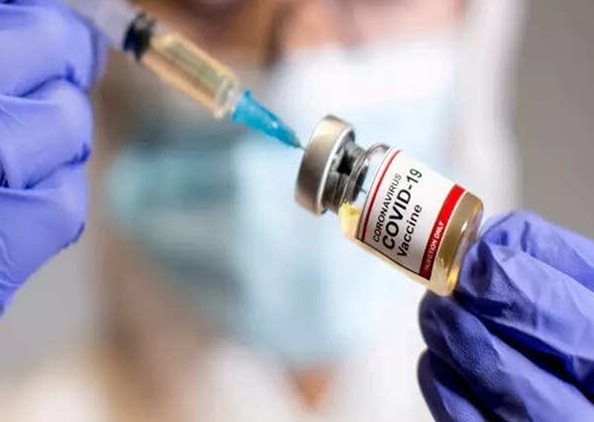
The case arose from petitions filed by families who lost young relatives aged between 18 and 40 years due to rare complications reported after vaccination with Covishield and Covaxin during 2021.
Some petitioners alleged that deaths were linked to rare blood clotting disorders, which were reported globally as extremely uncommon adverse reactions following certain vaccines.
Petitioners argued that vaccine recipients were not sufficiently informed about potential risks associated with Covid-19 vaccines. They claimed that the vaccination programme did not adequately highlight rare adverse events.
Although vaccination was officially voluntary, several administrative restrictions — such as travel rules, workplace policies, and entry restrictions in public places — allegedly made vaccination practically compulsory.
According to the petitioners, this indirectly infringed fundamental rights and placed citizens in a position where they had little practical choice but to vaccinate.
The Union government defended the vaccination programme, highlighting the following points:
1. Rigorous Safety and Regulatory Approval
Authorities emphasised that vaccines were approved after scientific trials and regulatory scrutiny, following emergency use authorisation procedures during the pandemic.
2. Rare Incidence of Vaccine-Related Deaths
The government stated that serious adverse reactions were extremely rare. Data presented suggested a reporting rate of approximately 0.001 cases per one lakh doses for specific clotting disorders.
3. Existing Legal Remedies
The government argued that affected families could approach civil courts or consumer courts to seek compensation from vaccine manufacturers if negligence could be proven.
The Court rejected the suggestion that families should pursue individual civil lawsuits.
It noted that vaccine injury cases involve complex medical and scientific evidence, making it extremely difficult for ordinary citizens to establish negligence.
The Bench also warned that forcing families into multiple individual court battles could result in:
Such outcomes, the Court said, could undermine the principle of equality under Article 14 of the Constitution.
The Court grounded its reasoning in Article 21 of the Constitution, which guarantees the right to life and personal liberty, including the right to health and bodily integrity.
It emphasised that the State cannot remain passive in the face of human suffering arising from a government-led public health programme.
Because the Covid vaccination drive was organised and promoted by the State, the government has a duty to support individuals who suffer serious adverse outcomes — even if those cases are rare.
The Court clarified that its order does not question the scientific validity of Covid vaccines.
It referred to its earlier judgment in Jacob Puliyel vs Union of India, where the Court upheld:
At the same time, the Court had recognised that bodily autonomy under Article 21 prevents forced vaccination, even though vaccination remains an important public health measure.
The Court stated that India’s existing Adverse Events Following Immunisation (AEFI) mechanism remains the appropriate framework for investigating vaccine-related complications.
Therefore, it declined the petitioners’ request to create a new expert medical board for vaccine injury investigations.
Instead, the Court emphasised that AEFI committees already possess the expertise and institutional capacity required to assess adverse events.
The Court directed the Ministry of Health and Family Welfare to design and notify a no-fault compensation scheme for serious vaccine-related adverse events.
Key features expected in the framework include:
Importantly, the Court clarified that the creation of such a scheme should not be interpreted as an admission of negligence or liability by the government.
Instead, it represents a welfare-based approach to public health governance.
Global Practice: Vaccine Injury Compensation Programmes
Many countries operate no-fault vaccine compensation schemes to maintain public trust in immunisation programmes.
Examples include:
Such programmes balance public health objectives with individual welfare, ensuring that rare adverse events do not leave affected families without support.
The Court’s approach mirrors its earlier intervention during the pandemic in Gaurav Kumar Bansal vs Union of India.
In that case, the Court directed the National Disaster Management Authority to frame guidelines for compensating families of Covid-19 victims.
Following the Court’s direction, the NDMA issued guidelines in September 2021 providing ₹50,000 ex-gratia compensation for each Covid-19 death.
Key features included:
Deaths occurring within 30 days of a positive Covid-19 test were treated as Covid deaths for compensation purposes.
1. Strengthening Public Health Accountability
The decision reinforces the principle that large-scale public health programmes must include safety nets for rare adverse outcomes.
2. Protecting Citizens’ Right to Health
By linking vaccine injury compensation to Article 21, the Court expands the constitutional interpretation of the right to health and welfare.
3. Reducing Litigation Burden
A structured compensation scheme will avoid prolonged court battles, ensuring faster relief for affected families.
4. Maintaining Public Trust in Vaccination
Providing support to rare victims of vaccine injuries can increase transparency and public confidence in immunisation programmes.
5. Aligning India with Global Best Practices
The directive moves India closer to international standards for vaccine injury compensation frameworks.
FAQs1. What did the Supreme Court direct regarding Covid-19 vaccine injuries ? The Court directed the Union government to formulate a no-fault compensation policy for individuals who suffered serious side effects or deaths linked to Covid-19 vaccines. 2. What is meant by “no-fault compensation ”? It is a system where victims receive compensation without needing to prove negligence or wrongdoing by the government or vaccine manufacturers. 3. Which constitutional provision did the Court rely on ? The judgment relied primarily on Article 21 of the Constitution, which guarantees the right to life and health. 4. Does the order question the safety of Covid vaccines ? No. The Court clarified that it does not challenge the scientific validity of vaccines, which had already been upheld in earlier rulings. 5. How does this decision relate to earlier Covid-19 compensation orders ? The decision follows the Court’s earlier direction in 2021, which required the government to provide ₹50,000 ex-gratia compensation to families of Covid-19 victims. |

Our support team will be happy to assist you!

 Contact Us
  New Batch : 9555124124/ 7428085757
  Tech Support : 9555124124/ 7428085757