New
Hindi Medium: (Delhi) - GS Foundation (P+M) : 8th June 2026, 6:30 PM Hindi Medium: (Prayagraj) - GS Foundation (P+M) : 1st June 2026, 5:30 PM English Medium: (Prayagraj) - GS Foundation (P+M) : 7th June 2026, 8:00 AM Hindi Medium: (Delhi) - GS Foundation (P+M) : 8th June 2026, 6:30 PM Hindi Medium: (Prayagraj) - GS Foundation (P+M) : 1st June 2026, 5:30 PM English Medium: (Prayagraj) - GS Foundation (P+M) : 7th June 2026, 8:00 AM

Current Affairs for 12 June 2026

Oilseeds Kisaan Mitra: India’s First Nationwide WhatsApp AI Advisory Service for Oilseed Farmers

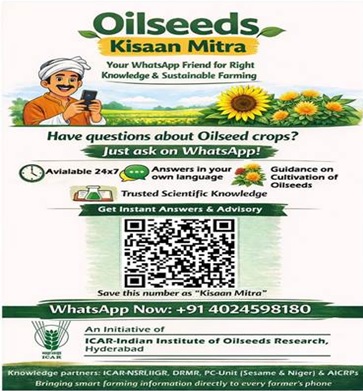
In a major step towards strengthening oilseed cultivation and improving farmers’ access to scientific knowledge, the Indian Council of Agricultural Research (ICAR) has launched ‘Oilseeds Kisaan Mitra’, a WhatsApp-based Artificial Intelligence (AI) powered advisory service. The initiative aims to provide oilseed farmers across India with instant, reliable, and research-based agricultural guidance in their own language.
What is Oilseeds Kisaan Mitra ?

Oilseeds Kisaan Mitra is a WhatsApp-based AI-powered chatbot developed by the ICAR-Indian Institute of Oilseeds Research (ICAR-IIOR), Hyderabad. It is designed to deliver scientific recommendations and crop-specific advisories directly to farmers through a platform they already use and are familiar with.

The service was launched by the Secretary, Department of Agricultural Research and Education (DARE) and Director General, ICAR, during the National Oilseeds Conference held in New Delhi on February 6, 2026.

Objective of the Initiative

The initiative has been introduced at a time when India is focusing on increasing domestic oilseed production and reducing dependence on edible oil imports. By providing farmers with timely and research-backed information, Oilseeds Kisaan Mitra seeks to improve productivity, enhance crop management practices, and support sustainable oilseed cultivation.

The platform caters to farmers growing groundnut, mustard, sesame, sunflower, soybean, niger, and other oilseed crops.

Key Features of Oilseeds Kisaan Mitra

  1. 24×7 Advisory Support :-The AI-powered chatbot provides round-the-clock assistance to farmers, ensuring that they can access expert guidance anytime, anywhere.
  2. Multilingual Access :-Farmers can ask questions in any Indian language and receive responses in the same language, making scientific information accessible to a wider audience.
  3. Research-Based Recommendations :-All advisories are based on the latest scientific research and expertise generated by ICAR institutions.
  4. Free of Cost :- The service is completely free and can be accessed through WhatsApp without downloading any additional application.
  5. Instant Responses :-The AI chatbot delivers immediate answers to farmers’ queries, helping them make timely decisions regarding crop management.

How Does It Work ?

Oilseeds Kisaan Mitra uses advanced Artificial Intelligence and a comprehensive knowledge base developed from the collective scientific expertise of multiple ICAR institutes. The chatbot understands questions typed or sent in regional languages and provides precise, crop-specific recommendations.

The platform covers the entire crop cycle, including :

  • Variety selection 
  • Agronomic practices 
  • Crop management 
  • Pest and disease control 
  • Irrigation scheduling 
  • Nutrient management 
  • Post-harvest practices 
  • Seed availability information 

Farmers only need WhatsApp to access the service, making it highly user-friendly and accessible.

Collaborative Knowledge Base

The knowledge base of Oilseeds Kisaan Mitra has been developed through collaboration among several premier ICAR institutions, including:

  • ICAR-Indian Institute of Oilseeds Research (ICAR-IIOR), Hyderabad 
  • ICAR-National Soybean Research Institute (ICAR-NSRI), Indore 
  • ICAR-Indian Institute of Groundnut Research (ICAR-IIGR), Junagadh 
  • ICAR-Indian Institute of Rapeseed and Mustard Research (ICAR-IIRMR), Bharatpur 
  • PC-Unit (Sesame & Niger) 

This collaborative effort ensures comprehensive coverage of major oilseed crops across different agro-climatic regions of India.

Expert Views

According to Dr. R.K. Mathur, Director of ICAR-IIOR, Oilseeds Kisaan Mitra represents the first time that ICAR’s collective oilseed research has been made available to every farmer in the country in their own language through a platform they already use.

He stated that by combining the scientific knowledge of ICAR-IIOR, NSRI, IIGR, IIRMR, and the PC-Unit (Sesame & Niger) with a multilingual AI agent on WhatsApp, the initiative has removed long-standing barriers of distance, language, and cost between research laboratories and farmers’ fields.

Technology Behind the Platform

The initiative was developed under the overall coordination of Dr. Ravi Kumar Mathur, Director of ICAR-IIOR. The scientific knowledge base was conceptualized and led by Dr. Chunduri Sarada, while the design and development of the real-time multilingual AI agent and knowledge retrieval platform were led by Mr. Cheedella Nimesh (M.S., IIT Madras) and Mr. Katipally Sriman (M.S.).

How Farmers Can Access the Service

Farmers can save the number +91 4024598180 on their mobile phones as “Oilseeds Kisaan Mitra” and send their queries through WhatsApp. The chatbot will instantly provide research-based guidance related to oilseed cultivation.

Conclusion

Oilseeds Kisaan Mitra is a significant digital agriculture initiative that leverages Artificial Intelligence to bridge the gap between scientific research and farmers. By providing free, multilingual, and research-based advisory services through WhatsApp, the platform has the potential to improve oilseed productivity, support informed decision-making, and contribute to India’s goal of achieving greater self-reliance in edible oil production.

CAER Report 2025: Digital Access Expands, but Inequality in Opportunities Persists

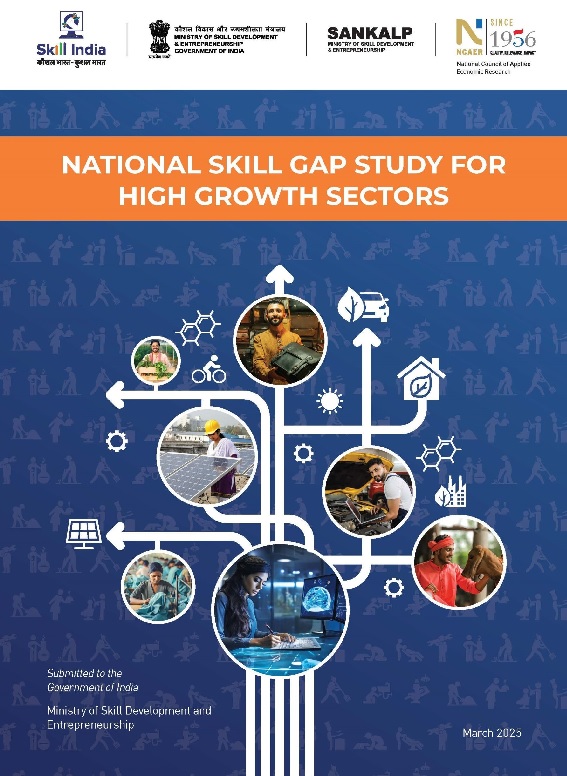
India is expected to have more than one billion internet users by 2025. However, the recent report, “The Evolving Landscape of Digital Inclusion in India”, released by the National Council of Applied Economic Research (NCAER), highlights that despite the country's digital revolution, the journey toward true digital inclusion remains incomplete.

According to the report, India has achieved near-universal access to mobile phones. Nevertheless, significant challenges remain in ensuring equal digital access to education, employment opportunities, financial services, and government schemes.
Mobile Access Has Increased, but Computers Remain Rare

The report reveals that:95.1% of Indian households own a mobile phone. 74.8% of households use a smartphone or internet-enabled phone. 

In contrast :

  • Only 8% of households own a computer or laptop. 
  • Just 2.3% of households have a tablet. 

As a result, the internet experience for most Indians remains limited to mobile devices, which are often insufficient for quality education, online work, and advanced skill development.

Rural-Urban and Economic Gaps in Internet Access Continue

The report notes that :

  • 27.5% of Indian households still have no internet access. 
  • In rural India, 32.2% of households remain offline. 
  • In urban areas, the figure stands at 17.2%. 

The divide is even more pronounced among poorer households :

  • 52.1% of households in the lowest consumption group lack internet connectivity. 

These figures underline the persistence of deep digital inequalities across regions and income groups.

Internet Usage Remains Largely Entertainment-Oriented

According to the study :

  • About 66% of users access the internet for watching movies, television programs, and news. 
  • 53.8% use social media platforms. 

By comparison :

  • Only 16.1% of households use the internet for online education. 
  • Merely 11.4% access government services online. 

This suggests that the benefits of digital connectivity have not yet fully translated into productive and developmental uses.

The Challenge of the “Hidden Digital Divide”

The report identifies a new concern termed the “Hidden Digital Divide.”

  • Around 20.4% of households depend on someone else to use digital services. 
  • This dependence is significantly higher among households with limited formal education. 

The findings indicate that internet access alone is not enough; digital literacy and technological skills are equally important for meaningful participation in the digital economy.

Women and Elderly Citizens Are Most Affected

Gender inequality in digital access remains substantial :

  • 57.6% of working-age men use the internet. 
  • Only 35.6% of working-age women do so. 

Similarly-Just 9.4% of individuals aged 60 years and above use the internet. 

These statistics show that the benefits of India's digital transformation have not reached all sections of society equally.

India’s Next Digital Challenge

The report concludes that India's first digital challenge was to provide mobile connectivity to the population, a goal that has largely been achieved.

The next and more critical challenge is to ensure that citizens can effectively use digital technologies for :

  • Education 
  • Employment 
  • Financial inclusion 
  • Government services 
  • Social and economic opportunities 

Without addressing these issues, digital transformation could deepen existing social and economic inequalities rather than reduce them.

Key Recommendations of the Report

The report recommends :

  • Expanding affordable broadband services and public Wi-Fi networks. 
  • Increasing access to computers and shared digital devices. 
  • Strengthening digital literacy at the school level. 
  • Launching targeted digital inclusion programs for women and rural communities. 
  • Establishing assisted digital service centers for elderly citizens. 

Conclusion

  • The NCAER report makes it clear that the next phase of India's digital revolution is not merely about expanding internet access but about ensuring meaningful digital participation.
  • Mobile phones have opened the door to the digital world, but genuine digital empowerment will only be achieved when every citizen can use digital resources equally for education, employment, governance, and economic advancement.

About NCAER (National Council of Applied Economic Research)

The National Council of Applied Economic Research (NCAER) is India's oldest and largest independent, non-profit economic policy research institution.

Key Facts

  • Established in 1956 in New Delhi. 
  • Functions as an independent economic policy think tank. 
  • Assists central and state governments, civil society organizations, and the private sector in policymaking and decision-making. 
  • Conducts data-driven research and analysis on India's socio-economic development. 
  • Produces evidence-based reports to support informed public policy and economic planning.

Writ Petition for Constitutional Remedies and the Doctrine of Forum Non-Convenience

The Supreme Court recently held that where the question of pursuing a constitutional remedy is involved, and invocation of writ jurisdiction is traceable to clause (1) of Article 226 of the Constitution, the doctrine of forum non conveniens may rarely apply. The Court made this observation while allowing the appeal of a dismissed Border Security Force (BSF) officer and reviving his writ petition before the Delhi High Court.


What is the Doctrine of Forum Non Conveniens?

  • The Doctrine of Forum Non Conveniens is a common law legal principle that allows a court to dismiss or stay a case when it believes that another forum is more appropriate for hearing the matter, even if the court itself has jurisdiction over the case and the parties involved.
  • The term “Forum Non Conveniens” is a Latin expression meaning “inconvenient forum.” The doctrine is widely recognized in legal systems based on English common law and plays a significant role in private international law, particularly in disputes involving multiple jurisdictions.

Key Features of the Doctrine

  • It allows courts to decline jurisdiction in favor of a more suitable forum. 
  • The doctrine is discretionary in nature, giving courts considerable flexibility in its application. 
  • Courts assess both private and public interest factors before invoking the doctrine. 
  • Relevant considerations include the convenience of the parties, the location of evidence and witnesses, the applicable law, and the possibility of a fair trial in the alternative forum. 
  • The primary objective is to determine whether the interests of justice would be better served in another jurisdiction. 
  • The doctrine is generally invoked by defendants who argue that the existing forum is inappropriate. 
  • The defendant must establish the existence of an alternative forum that has jurisdiction over the parties and subject matter and is capable of providing an adequate remedy. 

Background of the Case

Case Title:-Baksish Ahmad v. Union of India Neutral Citation:2026 INSC 630

  • The appellant, Baksish Ahmad, was enrolled in the Border Security Force on December 31, 2010, and was posted in the 44th Battalion. While serving at Narayanpur in Malda district of West Bengal, a missing person report concerning a woman was received by the Company Commander. The appellant and another constable came under suspicion in connection with the alleged abduction.
  • Subsequently, the appellant’s wife lodged a complaint alleging that he had contracted a second marriage against her wishes while his first marriage was still subsisting. She also accused him of subjecting her to criminal force.
  • The Sector Headquarters of the BSF at Malda ordered a Staff Court of Inquiry to investigate the allegations. Following the inquiry, the appellant was issued a show-cause notice under the Border Security Force Rules, 1969, alleging violation of the relevant BSF Rules and the Central Civil Services (Conduct) Rules, 1964, on the ground that he had entered into a second marriage without obtaining the requisite permission.
  • As the appellant failed to respond to the notice, the Commandant dismissed him from service without pensionary benefits. His name was struck off the strength of the BSF. Thereafter, the appellant filed a statutory petition under Rule 28A of the BSF Rules seeking reinstatement, but the petition was rejected.
  • Aggrieved by the dismissal order and rejection of his statutory petition, the appellant approached the Delhi High Court by invoking its writ jurisdiction. However, the High Court dismissed the writ petition on the ground of forum non conveniens.

Supreme Court’s Observations

  • A Division Bench comprising Justice Dipankar Datta and Justice Satish Chandra Sharma held that the doctrine of forum non conveniens had been misapplied by the Delhi High Court.
  • The Court observed:
  • “In our considered opinion, the doctrine of forum non conveniens has been misapplied by the Division Bench in the context of writ jurisdiction referable to Article 226 of the Constitution. Such article permits filing of a writ petition as per situs of office of the respondent(s) [clause (1)] and cause of action [clause (2)] which gives the right of action. 
  • Where the question of pursuing a constitutional remedy is involved and invocation of writ jurisdiction is traceable to clause (1) of Article 226, the doctrine of forum non conveniens may rarely apply.”
  • The Bench emphasized that Article 226 allows a writ petition to be filed either based on the location of the respondents’ offices or on the place where the cause of action arises. 
  • Therefore, where jurisdiction is properly invoked under Article 226(1), the doctrine should not ordinarily be used to deny access to constitutional remedies.

Why the Delhi High Court Had Jurisdiction

  • The Supreme Court relied on the decision in Shri Ranjeet Mal v. General Manager, Northern Railway, Baroda House, New Delhi, which held that liability arising from the quashing of a dismissal order rests with the Union of India rather than merely with the officer who passed the order.
  • The Court noted that the Union of India and the Director General, BSF, whose offices are situated in New Delhi, were necessary parties to the writ proceedings and had been duly impleaded by the appellant.
  • Further, under Rule 22(4) of the BSF Rules, every order of dismissal or removal is required to be reported to the Director General. Considering these factors, the Supreme Court concluded that the Delhi High Court was fully competent to entertain and adjudicate the appellant’s writ petition.

Interpretation of the Doctrine

  • The Supreme Court clarified that the doctrine of forum non conveniens applies only when multiple forums are available to a litigant for obtaining the same relief. In such circumstances, the court may examine whether another forum is more convenient or better suited to decide the matter.
  • However, the Court pointed out that the precedent relied upon by the High Court did not arise from writ proceedings. In constitutional cases involving writ jurisdiction, different considerations apply.
  • The Bench further observed that when a writ of certiorari is sought, the relevant records are ordinarily available with the respondent authorities and can easily be produced before the court. Therefore, a litigant who has already chosen a forum where the respondents are situated cannot be denied access to justice merely on the basis of convenience.
  • The Court remarked that excessive reliance on the doctrine in such cases may become self-defeating and may hinder, rather than promote, access to justice.

Significance of the Judgment

  • The judgment reinforces the constitutional right to seek judicial review under Article 226 and limits the scope for rejecting writ petitions solely on the basis of forum non conveniens.
  • It establishes that where jurisdiction is validly invoked under Article 226(1) due to the location of the respondent authorities, courts should be cautious in applying the doctrine. The ruling strengthens access to constitutional remedies and ensures that technical procedural considerations do not undermine substantive justice.
« »
  • SUN
  • MON
  • TUE
  • WED
  • THU
  • FRI
  • SAT
Have any Query?

Our support team will be happy to assist you!

OR