
- UPSC Exam
- State PCS
- One Day Exam
- Current Affairs
- PT Quiz
- Downlaods
- About Coaching
- Blog
- Videos

India is expected to have more than one billion internet users by 2025. However, the recent report, “The Evolving Landscape of Digital Inclusion in India”, released by the National Council of Applied Economic Research (NCAER), highlights that despite the country's digital revolution, the journey toward true digital inclusion remains incomplete.
According to the report, India has achieved near-universal access to mobile phones. Nevertheless, significant challenges remain in ensuring equal digital access to education, employment opportunities, financial services, and government schemes.
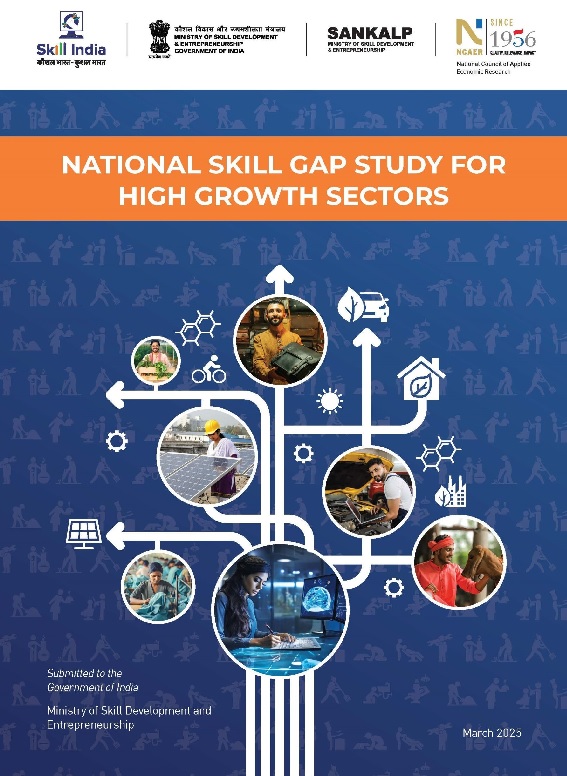
The report reveals that:95.1% of Indian households own a mobile phone. 74.8% of households use a smartphone or internet-enabled phone.
In contrast :
As a result, the internet experience for most Indians remains limited to mobile devices, which are often insufficient for quality education, online work, and advanced skill development.
The report notes that :
The divide is even more pronounced among poorer households :
52.1% of households in the lowest consumption group lack internet connectivity.
These figures underline the persistence of deep digital inequalities across regions and income groups.
According to the study :
By comparison :
This suggests that the benefits of digital connectivity have not yet fully translated into productive and developmental uses.
The report identifies a new concern termed the “Hidden Digital Divide.”
The findings indicate that internet access alone is not enough; digital literacy and technological skills are equally important for meaningful participation in the digital economy.
Gender inequality in digital access remains substantial :
Similarly-Just 9.4% of individuals aged 60 years and above use the internet.
These statistics show that the benefits of India's digital transformation have not reached all sections of society equally.
The report concludes that India's first digital challenge was to provide mobile connectivity to the population, a goal that has largely been achieved.
The next and more critical challenge is to ensure that citizens can effectively use digital technologies for :
Without addressing these issues, digital transformation could deepen existing social and economic inequalities rather than reduce them.
The report recommends :
About NCAER (National Council of Applied Economic Research)The National Council of Applied Economic Research (NCAER) is India's oldest and largest independent, non-profit economic policy research institution. Key Facts
|

Our support team will be happy to assist you!

 Contact Us
  New Batch : 9555124124/ 7428085757
  Tech Support : 9555124124/ 7428085757