Why in news?
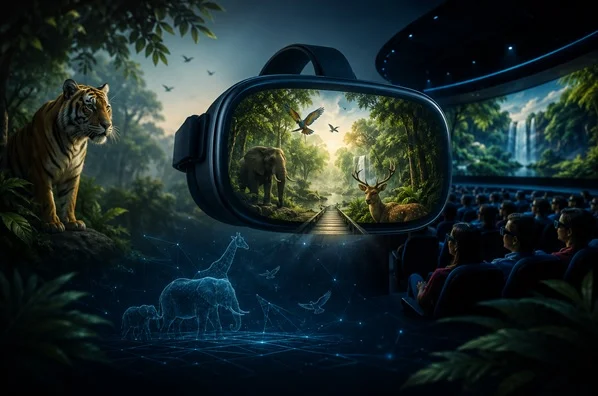
Indore, Madhya Pradesh, has introduced a new technology-driven attraction at the Kamla Nehru Prani Sangrahalaya (Indore Zoo) a virtual zoo featuring a 14-D cinema and virtual jungle safari.
Key Highlights
|
Feature
|
Details
|
|
Location
|
Indore, Madhya Pradesh
|
|
Venue
|
Kamla Nehru Prani Sangrahalaya (Indore Zoo)
|
|
Major attraction
|
Virtual/Digital Zoo
|
|
Special facilities
|
14-D Cinema & Virtual Jungle Safari
|
|
Inauguration
|
16 August 2026
|
|
Inaugurated by
|
CM Dr. Mohan Yadav
|
|
Development model
|
Public-Private Partnership (PPP)
|
|
Reported investment
|
Around ₹4.5 crore
|
What is a Virtual Zoo?
- A virtual zoo uses technologies such as Virtual Reality (VR), 3D visuals, digital projections and interactive simulations to recreate wildlife habitats and animal experiences.
- Unlike a conventional zoo, visitors do not necessarily observe live animals. Instead, they experience digitally created environments that can demonstrate:
- Wildlife habitats
- Animal behaviour
- Forest ecosystems
- Biodiversity
- Conservation challenges
- Human-wildlife interactions
14-D Cinema: An Immersive Experience
- One of the major attractions is the 14-D cinema, which goes beyond conventional 2D and 3D viewing. The experience can combine visual content with physical and environmental effects such as:
- Moving seats
- Vibrations
- Wind
- Water or rain effects
- Motion simulation
- VR glasses
- For example, while watching a virtual jungle journey, visitors may simultaneously experience movement, wind or other effects corresponding to what is happening on screen. This makes the experience more immersive and experiential than traditional cinema.
Virtual Jungle Safari
- Visitors can digitally experience a wildlife environment and observe animals and their habitats through immersive technology.
- This can be particularly useful for children, school students, families, tourists, and people who cannot access actual wildlife reserves. The virtual format also provides an opportunity to showcase wildlife and ecosystems that may be difficult to experience directly.
Other Digital Attractions
- The project is not limited to the virtual zoo and safari. Reported facilities include:
- Hologram Zoo
- Digital Garden
- Digital Maze
- Digital Experience Zone
- Waterfall-themed attractions
- Cafeteria
- These features aim to transform the zoo into a more interactive and technology-oriented recreational space.
Technology behind the experience
- Virtual Reality (VR): This technology creates a simulated environment in which visitors can feel as though they are actually present inside a forest or wildlife habitat.
- 3D and Holographic Technology: Three-dimensional and holographic displays can create realistic representations of animals and natural environments.
- Motion Simulation: Motion-enabled seats can reproduce movements corresponding to scenes shown on the screen.
- Environmental Effects: Wind, water, vibration and other sensory effects can make the experience more realistic.
- Digital Interpretation: Interactive digital content can provide information about animals, habitats, biodiversity and conservation.
Why is the Virtual Zoo Important?
- Wildlife Education: Traditional wildlife education often depends on books, photographs or direct observation. Virtual experiences can make concepts more visual and engaging. Students can learn about:
- Food chains
- Ecosystems
- Endangered species
- Animal behaviour
- Biodiversity
- Conservation
- Conservation Awareness: A virtual environment can communicate the importance of protecting forests and wildlife through immersive storytelling. It can explain issues such as:
- Habitat destruction
- Poaching
- Climate change
- Human-wildlife conflict
- Species extinction
- Tourism Promotion: Indore is already an important tourism and commercial centre of Madhya Pradesh. A technology-based attraction can provide visitors with another reason to visit the city. Increased tourism can also benefit:
- Local transport
- Hospitality
- Food businesses
- Retail
- Local employment
- Public-Private Partnership Model: The project has been developed under the Public-Private Partnership (PPP) model. Under a PPP arrangement, government authorities and private entities work together to develop or operate infrastructure and services. For such a project, the model can combine:
Government support + Private technology/expertise + Public access
The reported investment in the project is around ₹4.5 crore.
Virtual Zoo vs Traditional Zoo
|
Traditional Zoo
|
Virtual Zoo
|
|
Mainly involves live animals
|
Mainly uses digital simulations
|
|
Physical enclosures required
|
Digital environments
|
|
Animal welfare and enclosure management are central
|
Technology and content management are central
|
|
Direct observation of animals
|
Simulated/immersive observation
|
|
Limited by animal behaviour and location
|
Can recreate different habitats
|
|
Conservation education through live exhibits
|
Conservation education through immersive technology
|
Benefits
The project can provide several benefits:
- Makes wildlife education more engaging.
- Encourages environmental awareness.
- Provides experiential learning for students.
- Adds a new tourism attraction to Indore.
- Allows visitors to explore difficult-to-access ecosystems.
- Uses technology for public education.
- Can reduce dependence on physical wildlife experiences for certain educational purposes.
Challenges
- Maintenance: VR equipment, motion systems and digital displays require regular maintenance and upgrades.
- Accuracy of Content: The digital representation of animals and ecosystems should be scientifically accurate. Entertainment should not come at the cost of factual wildlife education.
- Accessibility: The facility should be designed to accommodate children, elderly visitors and people who may experience discomfort from motion-based or VR experiences.
- Technology Costs: Continuous technological upgrades may increase operational expenses.
Way Forward
- India should promote virtual zoos as complementary tools for wildlife education, rather than substitutes for conventional zoos and natural habitats.
- Regular technological upgrades, scientifically accurate content and accessibility for diverse users should be ensured. Partnerships among governments, technology firms, schools and conservation organisations can expand such facilities.
- Virtual experiences should also highlight biodiversity conservation, climate change and human-wildlife conflict, helping create informed citizens while promoting responsible tourism and experiential learning.
Prelims MCQ
Q. With reference to India’s first virtual zoo in Indore, consider the following statements:
- It includes a 14-D cinema and virtual jungle safari.
- It has been developed under the Public-Private Partnership model.
- It is located in the Kamla Nehru Prani Sangrahalaya.
Which of the statements given above is/are correct?
A. 1 and 2 only
B. 2 and 3 only
C. 1 and 3 only
D. 1, 2 and 3
Mains Question
Q. “Virtual zoos can complement traditional wildlife conservation and environmental education.” Discuss in the context of India’s first virtual zoo in Indore.
|
FAQs
1. Where is India’s first virtual zoo located?
It is located at the Kamla Nehru Prani Sangrahalaya (Indore Zoo), Madhya Pradesh.
2. What are its major attractions?
The major attractions include a virtual zoo, 14-D cinema and virtual jungle safari.
3. What is a virtual zoo?
A virtual zoo uses technologies such as VR, 3D visuals and digital simulations to recreate wildlife and natural habitats.
4. What is special about the 14-D cinema?
It combines visual content with effects such as motion, vibration, wind and water to create an immersive experience.
5. Why is the Indore project important?
It demonstrates how technology can be integrated with wildlife education, tourism and conservation awareness.
|






 Contact Us
  New Batch : 9555124124/ 7428085757
  Tech Support : 9555124124/ 7428085757