| Prelims: (Economics + CA) Mains: (GS-3 – Energy Security, Infrastructure, Indian Economy) |
India may face a potential Liquefied Petroleum Gas (LPG) supply shortage due to rapidly rising consumption and heavy reliance on imports without adequate strategic storage capacity.
A significant portion of India’s LPG imports passes through the Strait of Hormuz, making supply chains vulnerable to geopolitical disruptions in West Asia.
Energy analysts and the International Energy Agency have highlighted that India’s LPG system is designed mainly for continuous operational flow rather than long-term stockpiling, exposing the country to supply risks during disruptions.
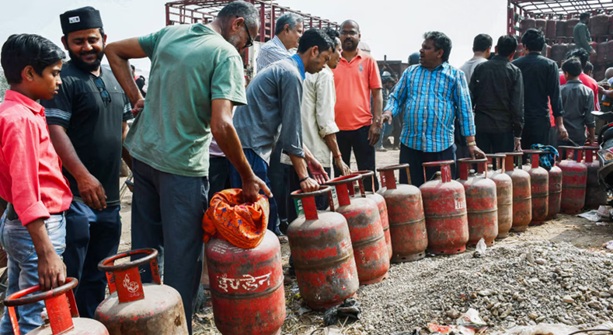
Liquefied Petroleum Gas has become one of the most important household fuels in India, replacing traditional fuels such as firewood, dung cakes, and kerosene.
Government initiatives aimed at clean cooking and improved public health have significantly expanded LPG access across the country.
The most notable initiative has been the Pradhan Mantri Ujjwala Yojana, which provided deposit-free LPG connections to poor households.
While these efforts improved energy access and environmental outcomes, they also rapidly increased LPG demand and import dependence.
India’s LPG imports have increased sharply over the past decade.
India consumes roughly 3 million tonnes of LPG every month, making it the second-largest LPG consumer globally.
However, the country’s existing storage facilities can meet less than half of the monthly requirement, leaving the system vulnerable to supply disruptions.
Most storage is located at import terminal tanks, such as those at Ennore Port, which are designed mainly for short-term operational storage rather than long-term reserves.
Unlike crude oil, where India maintains strategic reserves covering about two months of consumption, LPG storage capacity is extremely limited.
India currently has only two underground LPG storage caverns:
Together, these caverns can store around 1.4 lakh tonnes of LPG, which is equivalent to less than two days of national consumption.
The Mangaluru cavern, with a capacity of 80,000 tonnes, alone equals approximately one day’s consumption.
This limited reserve makes the LPG supply system highly vulnerable to disruptions in global supply routes.
India’s daily LPG consumption is estimated at around 80,000 tonnes.
More than 85% of LPG is used by households for cooking purposes.
Currently, the country has about 33 crore domestic LPG connections, including around 10 crore connections added since 2017.
This rapid expansion reflects the government’s push for clean cooking energy and improved living standards.
The Pradhan Mantri Ujjwala Yojana has been one of the most transformative social welfare schemes in India’s energy sector.
Key Objectives
While the scheme has significantly improved energy access and environmental outcomes, it has also contributed to the rapid increase in LPG demand and import dependence.
Several countries have developed extensive underground gas storage infrastructure.
In Europe, underground storage facilities play a crucial role in maintaining energy security.
Key features include:
After the Russia–Ukraine War began in 2022, the European Union mandated that gas storage facilities must be filled to at least 90% capacity before winter to prevent shortages.
Expanding underground storage in India requires suitable geological formations.
The Peninsular Shield is considered the most suitable region for underground LPG storage.
It consists mainly of stable granite and gneiss rock formations, which are ideal for constructing storage caverns.
Existing LPG caverns at Visakhapatnam and Mangaluru demonstrate the feasibility of such infrastructure.
The Deccan Traps, a vast basalt plateau across western and central India, also offers potential for storage.
However, basalt formations present greater engineering challenges for cavern construction.
Some projects designed by Engineers India Limited have faced difficulties due to geological complexities.
Salt formations in the Bikaner–Barmer Basin in Rajasthan present another promising option.
Salt caverns have several advantages:
To develop this technology, Engineers India Limited has partnered with the German firm DEEP.KBB GmbH.
Another potential option involves using depleted natural gas reservoirs for LPG storage.
Possible locations include:
These reservoirs can store large volumes of gas once extraction activities end.
India’s growing LPG demand highlights the need for stronger energy infrastructure and supply resilience.
Developing large-scale underground storage facilities could:
Given the country’s expanding LPG consumption, strengthening storage capacity will be essential for maintaining reliable and affordable energy access.
FAQs1. Why is India facing a potential LPG supply shortage ? India’s LPG consumption has increased rapidly while import dependence and limited storage capacity have made supply chains vulnerable to disruptions. 2. How much LPG does India import ? India imports around 60% of its LPG requirements, amounting to roughly 20 million tonnes annually. 3. What role does the Strait of Hormuz play in LPG supply ? More than 85% of India’s LPG imports pass through the Strait of Hormuz, making it a critical energy chokepoint. 4. What is the Pradhan Mantri Ujjwala Yojana ? It is a government scheme that provides deposit-free LPG connections to poor households, promoting clean cooking energy. 5. What is the solution to India’s LPG storage problem ? Experts suggest expanding underground storage caverns and using depleted gas reservoirs to build strategic LPG reserves and improve energy security. |
| Prelims: (Social Issues + CA) Mains: (GS-2 – Judiciary, Fundamental Rights, Ethics in Medical Law) |
The Supreme Court of India has permitted the withdrawal of life-sustaining treatment for Harish Rana, a 32-year-old man who has remained in a vegetative state since 2013 after a severe head injury.
A bench comprising J. B. Pardiwala and K. V. Vishwanathan allowed the withdrawal of medical support, including clinically assisted nutrition.
The Court directed All India Institute of Medical Sciences to implement a palliative end-of-life care plan, ensuring that the patient’s final stage is managed with comfort and dignity.
The ruling is considered the first instance in India where a court has approved passive euthanasia in such a case, applying the legal framework developed through earlier judicial decisions.

Harish Rana suffered severe head injuries in 2013 following a fall, leaving him in a persistent vegetative state.
To evaluate the case, the Supreme Court constituted primary and secondary medical boards in 2025.
Both medical boards concluded that:
Based on these medical findings, the Court allowed the withdrawal of treatment.
India distinguishes between active euthanasia (assisted dying) and passive euthanasia (withdrawal of life support).
These two practices have different legal implications.
Active euthanasia involves deliberately causing death, for example through a lethal injection.
In India, this remains illegal and may attract criminal liability under the Bharatiya Nyaya Sanhita.
Key legal implications include:
Although attempted suicide is treated more compassionately today, the law still emphasises medical care and rehabilitation rather than punishment.
Passive euthanasia refers to withholding or withdrawing life-sustaining treatment, allowing the illness or injury to follow its natural course.
Unlike active euthanasia, it does not directly cause death but stops medical intervention that artificially prolongs life.
The Supreme Court has recognised passive euthanasia as permissible under limited conditions, particularly for patients in:
The legal foundation for passive euthanasia arises from Article 21 of the Constitution of India, which guarantees the right to life and personal liberty.
The Supreme Court has interpreted this right to include:
For patients suffering from irreversible conditions, the Court has recognised their right to refuse invasive or futile medical treatment.
India’s legal framework on euthanasia has evolved primarily through judicial decisions.
In Aruna Ramchandra Shanbaug v. Union of India (2011), the Supreme Court first addressed the issue of passive euthanasia.
The case involved Aruna Shanbaug, a nurse who remained in a vegetative state for decades after a violent assault.
Key observations of the Court included:
Guidelines Introduced
Because there was no legislation on euthanasia, the Court introduced interim guidelines:
Despite laying down guidelines, the Court did not permit withdrawal of treatment in Shanbaug’s case.
In Common Cause v. Union of India (2018), a Constitution Bench significantly expanded the framework.
Key rulings included:
The Supreme Court further simplified the process for passive euthanasia in 2023.
Key reforms included:
The earlier requirements involving district collectors and magistrate visits were removed, although hospitals must still inform the magistrate before withdrawing treatment.
1. First Practical Application of Passive Euthanasia Framework
The decision represents the first practical implementation of India’s passive euthanasia guidelines.
2. Strengthening the Right to Die with Dignity
The ruling reinforces the interpretation of Article 21 as including dignity in end-of-life decisions.
3. Ethical Guidance for Medical Practice
Doctors now have clearer judicial guidance on withdrawing futile medical treatment in irreversible cases.
4. Recognition of Compassionate End-of-Life Care
The emphasis on palliative care and dignity highlights a humane approach to medical ethics.
5. Need for Comprehensive Legislation
India still lacks a dedicated law governing euthanasia and end-of-life care.
The judgment may renew calls for Parliament to enact clear statutory guidelines on these issues.
FAQs1. What is passive euthanasia ? Passive euthanasia refers to withdrawing or withholding life-sustaining treatment, allowing a patient to die naturally from their illness or injury. 2. Is euthanasia legal in India ? Active euthanasia is illegal, but passive euthanasia is permitted under strict conditions as recognised by the Supreme Court. 3. What is the right to die with dignity ? The Supreme Court has interpreted Article 21 to include the right to die with dignity in certain medical circumstances, particularly when recovery is impossible. 4. What is an Advance Medical Directive or living will ? It is a document through which individuals state their wishes regarding medical treatment if they become incapable of making decisions in the future. 5. Why is the Harish Rana case significant ? It is considered the first instance where an Indian court approved passive euthanasia under the legal framework established by previous Supreme Court judgments. |
| Prelims: (Economy + CA) Mains: (GS-3 – Infrastructure, Transport Systems, Engineering Innovations) |
The Government of India has approved a ₹117.54 crore renovation project for the bascule bridge at the Syama Prasad Mookerjee Port in Kolkata.
The project aims to restore and modernise the historic movable bridge mechanism, ensuring smooth navigation for vessels while maintaining efficient road connectivity within the port area.
The initiative highlights the importance of modernising critical maritime infrastructure in India’s major ports.
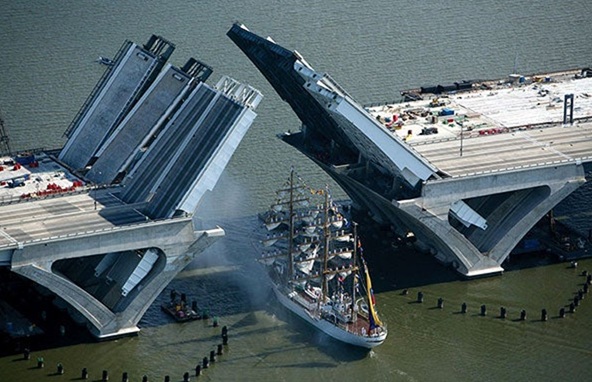
Bascule bridges are believed to have originated during the mediaeval period in Europe.
Initially, they were used as defensive drawbridges in castles and fortified towns, allowing residents to block entry during attacks.
Over time, the design evolved into a modern engineering structure widely used in ports and canal systems.
The leaf is the movable section of the bridge that lifts upward to create space for vessels to pass.
The span may be:
A counterweight balances the bridge span during lifting.
In most bascule bridges:
The weight balance may also be adjusted depending on the frequency of waterway traffic.
Bascule bridges can be classified based on the number of lifting spans.
In rare cases, bridges may have three or four leaves, depending on the width of the waterway.
One of the most notable examples is the Broadway Bridge in Portland, United States.
It is known as the longest double-leaf bascule bridge in the world.
1. Ensuring Navigational Clearance
Bascule bridges allow large vessels to pass through waterways without permanent obstruction.
2. Maintaining Road Connectivity
The bridges provide dual functionality, supporting both road traffic and water transport.
3. Efficient Mechanical Operation
The counterweight system reduces energy requirements, making the bridge easier and more efficient to operate.
4. Critical for Port Infrastructure
In port cities like Kolkata, bascule bridges are essential for cargo transportation and maritime logistics.
5. Heritage and Engineering Value
Many bascule bridges are considered historic engineering structures, reflecting advances in mechanical engineering and infrastructure design.
The renovation project at Syama Prasad Mookerjee Port is important because:
Upgrading the bridge will help:
As maritime trade continues to expand, India must invest in:
Such investments will strengthen India’s logistics network and maritime economy.
FAQs1. What is a bascule bridge ? A bascule bridge is a movable bridge that can be raised using a counterweight system to allow ships to pass through a waterway. 2. Why is it called a bascule bridge ? The term “bascule” comes from French, meaning a seesaw or balancing mechanism, referring to the bridge’s counterweight design. 3. Where are bascule bridges commonly used ? They are commonly used in ports, canals, and navigable rivers where ship movement requires adjustable bridge clearance. 4. What is the role of the counterweight in a bascule bridge ? The counterweight balances the weight of the bridge span, reducing the force required to lift the bridge. 5. Which is the longest double-leaf bascule bridge in the world ? The Broadway Bridge in Portland, United States, is considered the longest double-leaf bascule bridge in the world. |
| Prelims: (Science & Technology) Mains: (GS-2 – Health, Government Policies and Interventions) |
The Union Minister of State for Health and Family Welfare recently informed the Rajya Sabha about the implementation and progress of the National Leprosy Eradication Programme (NLEP), India’s flagship initiative aimed at eliminating leprosy through early detection, treatment, and rehabilitation.
The programme functions under the broader framework of the National Health Mission (NHM) and plays a crucial role in India’s efforts to eliminate the disease and its associated social stigma.
The National Leprosy Eradication Programme (NLEP) is a centrally sponsored scheme implemented across India to control and eliminate leprosy as a public health problem.
Aim
The primary aim is to control leprosy through early detection and prompt treatment, thereby preventing disability and reducing transmission.
Goal
The long-term goal is to make India leprosy-free by:
The programme provides free-of-cost services for:
These services are delivered through all public health facilities across India, ensuring accessibility even in remote areas.
The programme offers technical and financial support to all states and Union Territories for:
This cooperative approach ensures uniform implementation across the country.
To improve disease monitoring and reporting, the programme uses digital platforms such as Nikusth 2.0.
Nikusth 2.0 enables:
The NLEP encourages convergence with other national health programmes, ensuring integrated delivery of services such as:
The programme aligns with the World Health Organization’s WHO Global Leprosy Strategy, which seeks to achieve:
by 2027.
It also supports the broader objectives of the United Nations Sustainable Development Goals.
Leprosy has been declared a notifiable disease in India.
This means that:
Mandatory reporting strengthens early detection and helps prevent community transmission.
The National Leprosy Eradication Programme has several measurable targets:
1. Reduce Disease Prevalence
Achieve a prevalence rate below 1 case per 10,000 population at sub-national and district levels.
2. Reduce Severe Disabilities
Ensure Grade II disability among new cases is below 1% at the national level.
3. Lower Disability Incidence
Reduce Grade II disability cases to fewer than 1 per million population.
4. Protect Children
Achieve zero disability among new child cases, indicating early diagnosis.
5. Eliminate Stigma
Promote zero discrimination against persons affected by leprosy through awareness and social inclusion.
Leprosy, also known as Hansen’s disease, is a chronic infectious disease caused by the bacterium Mycobacterium leprae.
It mainly affects:
If untreated, the disease can cause permanent nerve damage and disabilities.
India has historically accounted for the largest share of global leprosy cases, making elimination a major public health priority.
India officially eliminated leprosy as a public health problem in 2005 at the national level, defined as less than one case per 10,000 population.
However, new cases continue to be detected, particularly in certain districts, requiring sustained public health interventions.
1. Strengthening Early Detection
Early diagnosis ensures timely treatment, which prevents disabilities and reduces the risk of transmission.
2. Reducing Social Stigma
Leprosy has historically been associated with social discrimination and exclusion. The programme promotes community awareness and dignity for affected persons.
3. Preventing Disabilities
Prompt treatment with multidrug therapy (MDT) can cure the disease and prevent nerve damage.
4. Strengthening Public Health Surveillance
Digital platforms like Nikusth 2.0 improve monitoring, enabling better policy decisions.
5. Achieving Global Health Commitments
The programme contributes to India’s commitment to the WHO Global Leprosy Strategy and Sustainable Development Goals.
FAQs1. What is the National Leprosy Eradication Programme ? It is a centrally sponsored health programme under the National Health Mission aimed at detecting, treating, and eliminating leprosy in India. 2. What causes leprosy ? Leprosy is caused by the bacterium Mycobacterium leprae, which primarily affects the skin and nerves. 3. What is the WHO Global Leprosy Strategy ? It is a global plan aimed at achieving zero transmission, zero disability, and zero discrimination related to leprosy by 2027. 4. What is Nikusth 2.0 ? Nikusth 2.0 is a digital platform used for surveillance, reporting, and monitoring of leprosy cases across India. 5. Why is early detection important in leprosy ? Early diagnosis allows timely treatment with multidrug therapy, which can cure the disease and prevent permanent disabilities. |
| Prelims: (Economy + CA) Mains: (GS-3 – Indian Economy, Growth Measurement, Economic Data and Statistics) |
India has released a revised Gross Domestic Product (GDP) series with 2022–23 as the new base year, replacing the earlier base year of 2011–12.
The revised estimates prepared by the National Statistical Office indicate a modest reduction in the estimated size of the economy and notable changes in sectoral contributions, although the overall growth trend remains broadly similar.
The revision is part of a periodic process aimed at improving the accuracy, reliability, and relevance of economic statistics.
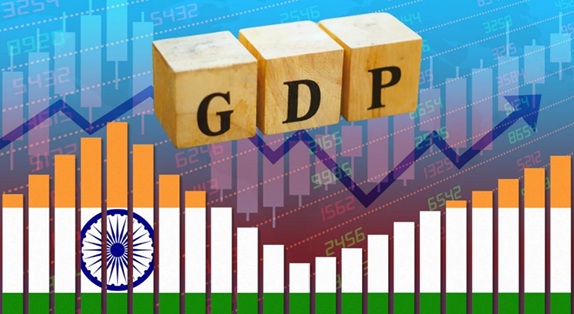
Gross Domestic Product (GDP) is the most widely used indicator to measure the size and performance of an economy.
It represents the total value of all final goods and services produced within a country during a specific period, typically one year.
Key features of GDP estimation include:
In India, GDP estimates and other macroeconomic indicators are compiled by the National Statistical Office, which publishes the National Accounts Statistics.
These statistics include:
The base year serves as the reference year for measuring economic growth and price changes.
Because economies evolve over time, the base year must be revised periodically to ensure that economic statistics reflect current realities and structural changes.
Reasons for Revising the Base Year
Most countries revise their GDP base year every 5–10 years.
In India:
The earlier GDP series with 2011–12 as the base year generated significant debate among economists and policymakers.
Several analysts argued that growth rates appeared unusually high and inconsistent with other economic indicators.
Key Concerns Raised
The issue gained international attention when the International Monetary Fund assessed the quality of economic statistics across countries and gave India a “C” rating for national accounts data quality.
Against this background, the new GDP series was widely awaited.
The revised GDP series introduces several important changes in the measurement of India’s economy.
The revised estimates show that the absolute size of India’s GDP is around 3–4% smaller than estimates derived from the previous series.
This is unusual because base-year revisions typically increase GDP by capturing previously unrecorded economic activities.
Economists suggest that the decline may represent a correction of earlier overestimations in the 2011–12 series.
Despite the reduction in the overall GDP level, the annual GDP growth rates remain broadly similar to earlier estimates.
Differences between the two series are around one percentage point.
This indicates that while the level of GDP has changed, the overall growth trajectory of the Indian economy remains largely unchanged.
The revised estimates reveal changes in the relative contributions of different sectors.
Agriculture and Industry
The share of agriculture and industry in GDP has increased compared with the earlier series.
This may reflect:
Services Sector
The services sector’s share has declined slightly, although it continues to dominate the Indian economy.
The revision suggests a more balanced sectoral structure than previously estimated.
Manufacturing Sector
The manufacturing sector’s share has increased slightly:
However, the absolute size of manufacturing output has declined by about 1.5–1.6% compared with earlier estimates.
Manufacturing performance remains a key focus area in India’s economic policy.
The revised GDP estimates also modify the contribution of different institutional sectors.
Private Corporate Sector
The share of the non-financial private corporate sector in GDP has declined:
This reduction is significant because the earlier GDP revision had sharply increased the estimated contribution of this sector.
Household and Informal Sector
The household sector, which includes informal economic activities, shows a slight increase in its share.
This change may reflect improved measurement of agriculture and informal production activities.
1. Impact on Economic Targets
Since the overall GDP level is slightly smaller, ambitious economic targets such as becoming a $5 trillion economy may take longer to achieve.
2. More Accurate Economic Assessment
If the revision corrects earlier overestimations, policymakers will have a more realistic picture of India’s economic performance.
Accurate data is essential for designing effective economic policies.
3. Improved Sectoral Policy Formulation
Changes in sectoral shares can influence policy priorities for agriculture, manufacturing, and services.
4. Importance for Global Economic Comparisons
GDP estimates are widely used for international comparisons, investment decisions, and credit ratings.
Reliable data strengthens India’s economic credibility globally.
5. Need for Transparency in Methodology
Economists stress that the government must provide detailed explanations of data sources and statistical methods used in the revision.
Greater transparency will help reduce controversies regarding GDP estimation.
The revised GDP series represents an important step toward improving the quality of India’s economic statistics.
By updating the base year and refining data sources, the revision aims to ensure that GDP estimates reflect current economic realities, sectoral changes, and evolving production patterns.
Accurate national accounts are essential for effective policymaking, economic planning, and maintaining investor confidence in the Indian economy.
FAQs1. What is GDP ? Gross Domestic Product measures the total value of final goods and services produced within a country during a specific period, usually one year. 2. Why is the GDP base year revised ? The base year is revised to incorporate new economic activities, improve data sources, and reflect structural changes in the economy. 3. What is the new GDP base year in India ? India has introduced 2022–23 as the new base year, replacing the earlier 2011–12 base year. 4. What major change did the new GDP series reveal ? The revised series shows that the size of India’s GDP is about 3–4% smaller than previously estimated, although growth rates remain largely similar. 5. Why is GDP revision important for policymaking ? Accurate GDP estimates help governments design better economic policies, track sectoral performance, and make reliable international comparisons. |

Our support team will be happy to assist you!


 Contact Us
  New Batch : 9555124124/ 7428085757
  Tech Support : 9555124124/ 7428085757