New
Hindi Medium: (Delhi) - GS Foundation (P+M) : 21st Sept. 2026, 11:30 AM Hindi Medium: (Prayagraj) - GS Foundation (P+M) : 22nd Sept. 2026, 8:00 AM English Medium: (Delhi) - GS Foundation (P+M) : 6th Aug 2026 English Medium: (Prayagraj) - GS Foundation (P+M) : 19th Aug 2026, 11:00 AM Hindi Medium: (Delhi) - GS Foundation (P+M) : 21st Sept. 2026, 11:30 AM Hindi Medium: (Prayagraj) - GS Foundation (P+M) : 22nd Sept. 2026, 8:00 AM English Medium: (Delhi) - GS Foundation (P+M) : 6th Aug 2026 English Medium: (Prayagraj) - GS Foundation (P+M) : 19th Aug 2026, 11:00 AM

Current Affairs for 12 September 2026

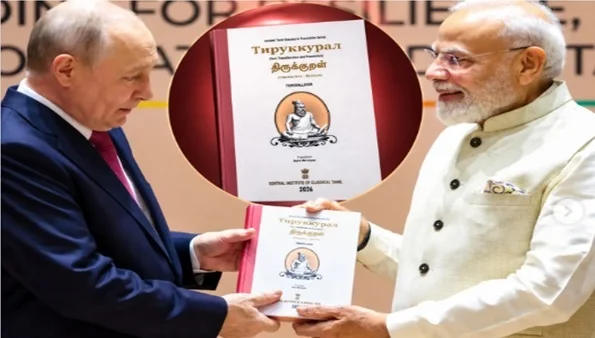
Thirukkural: The Ancient Tamil Text Modi Gifted to Putin

Why in News?

  • Prime Minister Narendra Modi gifted Russian President Vladimir Putin a Russian translation of the ancient Tamil text Thirukkural during their bilateral meeting in New Delhi on September 11, 2026, ahead of the BRICS Summit.
  • The book highlights India’s rich Tamil literary and cultural heritage and carries universal teachings on morality, governance, education, love and human values.

What Is Thirukkural?

  • The word Thirukkural means “sacred couplets” or “sacred verses.”
  • The text contains 1,330 couplets, known as Kurals. Each couplet consists of seven words. These couplets are organised into 133 chapters, with 10 couplets in each chapter.
  • Thirukkural is widely regarded as an important work on ethics and human values.

What Is the Age of Thirukkural?

  • Thirukkural is more than 2,000 years old. It is generally dated to the period between 300 BCE and 500 BCE
  • Written by the Tamil poet-philosopher Thiruvalluvar, it is considered one of the oldest and most influential works of Tamil literature.

Three Major Sections of Thirukkural

Thirukkural is divided into three main sections:

1. The Book of Virtue – Aram

This section focuses on morality, ethical conduct, and personal values. It contains 38 chapters and explains how individuals should lead a righteous and meaningful life.

2. The Book of Polity – Porul

This section deals with governance, society, economic values, leadership, and public life. It contains 70 chapters and provides guidance on the responsibilities of rulers and citizens.

3. The Book of Love – Inbam

This section focuses on love and human relationships. It contains 25 chapters and explores different emotions and experiences associated with love.

Key Themes of Thirukkural

  • Thirukkural places strong emphasis on moral conduct and human values. Thiruvalluvar highlighted the importance of kindness, wisdom, education, charity, love, and compassion.
  • The text does not support divisions based on religion, caste, creed, or race. Instead, it gives importance to ethical behaviour and humanity.
  • Thiruvalluvar also warned that a life without morality can lead to jealousy, greed, anger, and suffering. According to his teachings, virtues such as love, charity, wisdom, and spirituality can improve both individual life and society.

Thirukkural and the Concept of God

  • The first chapter of Thirukkural is titled Kadavul Vazhthu, meaning “The Praise of God.”
  • Thiruvalluvar presents God as a symbol of wisdom, compassion, morality, love, and pure intelligence
  • His approach to spirituality is closely connected with ethical living and human values.

Thirukkural on Love

  • The section on love, known as Inbam, is broadly divided into two parts:
  • Kalaviyal deals with love before marriage, while Karpiyal deals with love within married life.
  • Thiruvalluvar uses poetry and imagery to describe different emotions associated with love. Love is presented not merely as passion but also as a source of joy, emotional connection, and inner peace.

Importance of Education

  • Education is another important theme in Thirukkural. Thiruvalluvar considered education, wisdom, and virtue closely connected.
  • According to his teachings, true education should help a person develop good character and lead a virtuous life. His ideas on education have often been compared with the thoughts of ancient Greek philosopher Plato.

Thirukkural’s Global Reach

  • Thirukkural was first translated into English in 1840. Since then, it has been translated into more than 60 languages, making it one of the most widely translated works of Tamil literature.
  • The Russian edition gifted by Prime Minister Narendra Modi to President Vladimir Putin was translated by Naira Mkrtchyan. It was published in 2026 by the Central Institute of Classical Tamil as part of its Thirukkural translation series.

Why Is Thirukkural Relevant Today?

  • Although Thirukkural was composed more than two thousand years ago, its teachings remain relevant in modern society.
  • Its focus on ethical leadership, compassion, education, social harmony, responsible governance, and human values makes it significant even today.
  • The work offers universal lessons on how individuals and societies can promote a more ethical and harmonious way of life.

Thirukkural and Its Global Recognition

  • French scholar E. S. Ariel, who translated Thirukkural into French in the 19th century, famously described it as a “book without a name by an author without a name.”
  • Tamil scholar and missionary George Uglow Pope was among the early scholars to study Thiruvalluvar systematically. He referred to him as the “Bard of Universal Man.”

Conclusion

Thirukkural is more than an ancient Tamil literary work. It is a comprehensive text on ethics, governance, society, education, love, and human values. The presentation of its Russian translation to President Vladimir Putin highlights the global significance of Tamil literature and India's rich cultural heritage.

Prelims Practice Question 

Q1. Consider the following statements about Thirukkural:

  1. It was written by the Tamil poet-philosopher Thiruvalluvar. 
  2. It consists of 1,330 couplets arranged into 133 chapters. 
  3. It is divided into Aram, Porul and Inbam. 

Which of the statements given above is/are correct?

A. Only 1
B. Only 2 and 3
C. 1, 2 and 3
D. Only 1 and 3

Mains Practice Question

Q. Thirukkural is not only a landmark of Tamil literature but also a text of universal human values. Discuss its relevance to contemporary society.

FAQs

1. What is Thirukkural?

Thirukkural is an ancient Tamil text written by the poet-philosopher Thiruvalluvar. It deals with ethics, governance, social values, education and love.

2. How many couplets are there in Thirukkural?

Thirukkural contains 1,330 couplets, arranged into 133 chapters.

3. What are the three sections of Thirukkural?

The three sections are Aram (Virtue), Porul (Polity) and Inbam (Love).

4. How old is Thirukkural?

Thirukkural is generally considered to be more than 2,000 years old, with its composition often placed between 300 BCE and 500 BCE.

5. Who wrote Thirukkural?

Thirukkural was written by Thiruvalluvar, a renowned Tamil poet and philosopher.

Russia Offers S-500 Prometheus to India: Capabilities, Strategic Significance and India-Russia Defence Ties

Prelims: S-500 Prometheus, Air Defence System, Ballistic Missile Defence, Hypersonic Weapons, MTCR, India-Russia Defence Cooperation.
Mains: GS-II India-Russia Strategic Partnership GS-III Defence Technology, Missile Defence, National Security, Defence Indigenisation

Why in News?

Russia is pushing India to consider its advanced S-500 Prometheus air and missile defence system as part of a wider package of defence proposals during Russian President Vladimir Putin’s visit to New Delhi for the 2026 BRICS Summit.
What is the S-500 Prometheus?

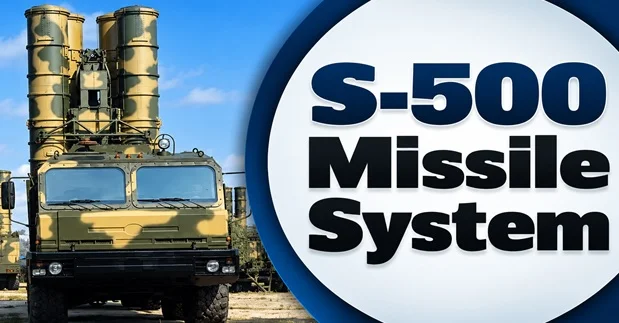
  • The S-500 Prometheus, also known as the 55R6M Prometey or Triumfator-M, is an advanced Russian mobile surface-to-air and anti-ballistic missile defence system.
  • It has been developed by Russia's Almaz-Antey defence company.
  • Unlike an ordinary air-defence weapon intended mainly to shoot down aircraft, the S-500 has been developed as a strategic system capable of dealing with extremely fast and high-altitude aerial and missile threats.
  • Its intended targets include ballistic missiles, advanced aircraft, cruise missiles and certain hypersonic threats.
  • Russia also associates the system with a potential capability against suitable targets operating in near-space and low-Earth-orbit environments.

Missiles Used by the S-500

  • The S-500 system can employ different interceptor missiles depending on the type of target.
  • The 77N6 series of interceptors is associated primarily with high-speed and ballistic missile defence missions.
  • The system has also been associated with the 40N6 family for long-range engagements against aerodynamic targets.
  • The ability to use different interceptors gives the S-500 a broader mission profile rather than limiting it to a single type of aerial threat.

How Does the S-500 Work?

  • The process begins with long-range surveillance radars searching for incoming aerial or missile threats.
  • Once a threat is detected, the system determines its speed, altitude, trajectory and probable target.
  • The command system then identifies the most suitable interceptor.
  • Fire-control radars track the incoming target as well as the interceptor missile.
  • The interceptor is subsequently guided towards the target for destruction before the incoming weapon reaches its intended destination.
  • The entire process needs to occur within seconds when dealing with ballistic or hypersonic threats.

What is Ballistic Missile Defence?

  • Ballistic Missile Defence (BMD) refers to technologies designed to detect, track and intercept ballistic missiles before they reach their targets.
  • A ballistic missile initially accelerates under rocket power and then follows a high-speed trajectory towards the target.
  • Depending on the system, interception can take place during different stages of the missile's flight.

What is the MTCR?

  • The Missile Technology Control Regime (MTCR) is an informal international export-control arrangement created in 1987.
  • Its objective is to limit the proliferation of missiles and unmanned delivery systems capable of delivering weapons of mass destruction.
  • India became the 35th member of the MTCR on June 27, 2016.

Strategic Significance for India

  • Stronger Protection against Missile Threats: The rapid development of ballistic and hypersonic weapons has increased the importance of strategic missile defence.
  • Protection of Critical Infrastructure: Advanced missile defence can provide an additional protective layer for strategically important national and military assets.
  • Strengthening Deterrence: A credible ability to intercept incoming missiles can complicate an adversary's strike planning and strengthen deterrence.
  • India-Russia Strategic Partnership: The offer demonstrates Russia's continuing interest in retaining a major role in India's defence modernisation.
  • Access to Advanced Technology: India could use future negotiations to seek technology transfer, localisation, maintenance capability and greater participation of Indian industry.

Way Forward

  • India should evaluate the S-500 primarily on the basis of operational requirements rather than headline range figures.
  • Any possible procurement must examine real-world performance, delivery schedules, technology transfer, localisation, lifecycle cost and compatibility with India's wider air-defence architecture.
  • India should also ensure that foreign acquisition supports rather than weakens the development of indigenous defence technologies.

Prelims MCQs

Q. India became a member of the MTCR in:

A. 2008
B. 2012
C. 2016
D. 2021

Mains Question

Russia's S-500 offer highlights the growing importance of integrated air and missile defence in India's security architecture. Examine the strategic opportunities and challenges associated with such advanced defence cooperation.

FAQs

Why is S-500 in news?

Russia is pushing India to consider the S-500 Prometheus during President Vladimir Putin's September 2026 visit to New Delhi as part of a broader package of defence proposals.

Has India decided to buy the S-500?

No. As of September 12, 2026, India has not announced a final contract to purchase the S-500.

What is the range of S-500?

Open-source and Russian assessments place the maximum engagement range of some S-500 interceptors at around 500–600 km, depending on the target and missile used.

Who manufactures the S-500?

The S-500 Prometheus has been developed by Russian defence manufacturer Almaz-Antey.

What type of threats can S-500 target?

It has been designed for ballistic missiles, aircraft and other advanced aerial threats, with Russia also claiming capabilities against certain hypersonic and near-space targets.

Yudh Abhyas 2026: India-US Joint Military Exercise

Prelims: Yudh Abhyas, India-US Defence Cooperation, 11th Airborne Division, 3MDTF, MLIDS, Counter-Drone Technology, High-Altitude Warfare.
Mains:GS Paper II – International Relations, GS Paper III – Internal Security
Keywords: Defence Cooperation, Interoperability, High-Altitude Warfare, Counter-Drone Technology, Multi-Domain Operations, Indo-Pacific.

Why in News?

The 22nd edition of Exercise Yudh Abhyas 2026 between the Indian Army and the US Army has commenced to strengthen bilateral defence cooperation, enhance interoperability and promote the exchange of military expertise. The exercise is scheduled to continue until 28 September 2026

Important Points

  • The exercise is being held in Bikaner, Rajasthan, and Auli, Uttarakhand. 
  • The 11th Airborne Division and the 3rd Multi-Domain Task Force (3MDTF) of the US Army are participating. 
  • The Bikaner phase focuses on precision fires and long-range fires. 
  • The Auli phase focuses on high-altitude military operations. 
  • The exercise began in 2004 and is held annually between the Indian and US armies. 
  • It focuses on modern warfare technologies and joint military operations. 
  • The exercise aims to strengthen defence cooperation, military coordination, and interoperability between India and the US. 
  • It also strengthens the India-US strategic partnership and contributes to security in the Indo-Pacific region.

Exercise Yudh Abhyas?

  • Yudh Abhyas is an annual bilateral military exercise between the Indian Army and the United States Army. It provides an opportunity for both forces to train together, improve interoperability and share operational experience.
  • The exercise has evolved to cover areas such as high-altitude warfare, field operations, precision fires, command-and-control systems and counter-drone capabilities.

Key Features 

The 22nd edition focuses on modern warfare capabilities and joint operational readiness.

1. Participation of Arctic-Trained US Soldiers

  • Soldiers from the US Army’s 11th Airborne Division, based at Fort Wainwright, Alaska, are participating in the exercise. 
  • Their Arctic and cold-weather training is particularly relevant for high-altitude operations in India. 

2. Role of 3rd Multi-Domain Task Force

  • The 3rd Multi-Domain Task Force (3MDTF) is participating with capabilities related to long-range precision fires and integrated command-and-control systems

3. First Deployment of MLIDS in India

  • The exercise marks the first-of-its-kind deployment of the Mobile Low, Slow, Small Unmanned Aircraft Integrated Defeat System (MLIDS) to India.
  • MLIDS is designed to counter threats posed by low, slow and small unmanned aircraft systems, making counter-drone operations an important component of the exercise. 

4. Command Post and Field Training

  • The exercise includes a Command Post Exercise (CPX) and a Field Training Exercise (FTX). These activities will culminate in a combined live-fire demonstration involving long-range and precision-fire systems.

5. Two-Theatre Format

  • Earlier editions of Yudh Abhyas generally focused on a specific type of terrain. However, the 2026 edition is being conducted across desert and high-altitude areas, providing troops with training in different operational environments.
  • The first phase is being held at the Mahajan Field Firing Ranges near Bikaner, Rajasthan, where troops are practicing precision and long-range firing.
  • The second phase is being conducted at Auli, Uttarakhand, near the Line of Actual Control (LAC), focusing on operations in high-altitude terrain.

Major Components of the Exercise

The 22nd edition of Yudh Abhyas includes:

  • Command Post Exercise (CPX)
  • Field Training Exercise (FTX)
  • Combined live-fire demonstration
  • Training with long-range and precision-fire systems
  • Integration of advanced command-and-control technologies

The exercise will demonstrate how Indian and US forces can operate together using modern military technologies and integrated systems.

Focus on Counter-Drone Technology

  • A major highlight of Yudh Abhyas 2026 is the first-of-its-kind deployment of advanced counter-drone systems to India under the strategic framework of Operation Pathways.
  • The exercise will include the Mobile Low, Slow, Small Unmanned Aircraft Integrated Defeat System (MLIDS). This system is designed to counter emerging threats from small unmanned aircraft and drones.
  • Its inclusion will help both countries improve their ability to respond to modern battlefield challenges.

Strengthening India-US Defence Cooperation

  • US Ambassador to India Sergio Gor highlighted that Yudh Abhyas reflects the growing strength of the India-US defence partnership.
  • The exercise provides an opportunity for soldiers from both countries to train together, exchange expertise, build trust, and improve operational capabilities.
  • Lieutenant General Joel “JB” Vowell, Deputy Commanding General of US Army Pacific, also emphasised the importance of the exercise in strengthening operational readiness and supporting a free and open Indo-Pacific.

Significance for India

Yudh Abhyas 2026 is important from the perspective of India's defence preparedness because it:

  • Enhances interoperability between Indian and US forces. 
  • Promotes the exchange of military expertise and operational experience. 
  • Improves preparedness for high-altitude and complex terrain operations. 
  • Strengthens capabilities against emerging drone and unmanned-system threats. 
  • Provides exposure to advanced long-range precision-fire and command-and-control technologies. 
  • Strengthens the broader India-US strategic and defence partnership. 

Significance for the Indo-Pacific

  • The exercise also has a wider strategic dimension. It supports cooperation between India and the US for maintaining a free, open and secure Indo-Pacific
  • The increasing focus on multi-domain operations, precision fires and unmanned systems reflects the changing nature of modern warfare. 

Challenges

  • Technological Gaps: Differences in military equipment and technologies can make full interoperability challenging. 
  • Integration of Advanced Systems: Integrating drones, counter-drone systems, precision fires and advanced command-and-control technologies requires effective coordination. 
  • High-Altitude Operations: Harsh terrain, extreme cold and low-oxygen conditions make joint operations in high-altitude areas difficult. 
  • Cyber and Information Security: Protecting sensitive military information and digital systems during joint operations is essential. 
  • Defence Technology Dependence: India needs to reduce excessive dependence on foreign defence technologies while strengthening indigenous capabilities. 
  • Emerging Warfare Threats: The growing use of drones, artificial intelligence, cyber warfare and electronic warfare requires continuous adaptation and capability development. 

Way Forward

  • Enhance Interoperability: Conduct more frequent joint exercises and standardise operational procedures to improve coordination between the two armies. 
  • Strengthen Defence Technology Cooperation: Promote joint development and co-development of advanced systems, particularly in precision fires, counter-drone technology and electronic warfare. 
  • Boost Indigenous Capabilities: Use bilateral exercises to gain expertise while strengthening India’s domestic defence manufacturing under Atmanirbhar Bharat. 
  • Focus on Emerging Technologies: Expand cooperation in artificial intelligence, autonomous systems, cyber warfare, space and multi-domain operations. 
  • Improve High-Altitude Preparedness: Share expertise in Arctic and high-altitude operations, logistics, survival techniques and specialised equipment. 
  • Strengthen Indo-Pacific Cooperation: Continue defence engagements that contribute to a free, open, secure and rules-based Indo-Pacific
  • Enhance Information Sharing: Develop secure mechanisms for sharing operational knowledge and intelligence while protecting sensitive information.

India-US Relations

  • India and the United States established diplomatic relations in 1947. During the Cold War, relations remained limited because India followed the policy of Non-Alignment, while the US developed close ties with Pakistan.
  • After the end of the Cold War, India-US relations gradually improved. The 1998 nuclear tests initially created tensions, but the relationship began to change significantly in the following years.
  • A major turning point came with the India-US Civil Nuclear Agreement of 2008, which strengthened strategic and civil nuclear cooperation.
  • Since then, cooperation has expanded into defence, trade, technology, space, energy, education and counter-terrorism. The two countries have also strengthened cooperation through platforms such as the Quad and the Indo-Pacific framework.
  • Today, India and the US share a Comprehensive Global Strategic Partnership, with growing cooperation on defence, emerging technologies, supply-chain resilience and Indo-Pacific security.

Conclusion

The 22nd edition of Exercise Yudh Abhyas reflects the growing depth of India-US defence cooperation. By combining high-altitude training, long-range precision fires, advanced command systems and counter-drone technologies, the exercise will help both armies improve interoperability and prepare for emerging security challenges.

Prelims Practice Question 

With reference to Exercise Yudh Abhyas 2026, consider the following statements:

  1. It is a joint military exercise between India and the United States. 
  2. It involves the Indian Army and US Army. 
  3. MLIDS is a counter-drone system associated with the exercise. 

Which of the statements given above is/are correct?

A. Only 1
B. 1 and 2 only
C. 2 and 3 only
D. 1, 2 and 3

Mains Practice Question

Q. Exercise Yudh Abhyas reflects the growing India-US defence partnership and the changing nature of modern warfare. Discuss its significance for India's defence preparedness and Indo-Pacific security.

FAQs

What is Exercise Yudh Abhyas?

Yudh Abhyas is an annual bilateral military exercise between the Indian Army and US Army.

Which edition of Yudh Abhyas is being conducted in 2026?

The 22nd edition of Exercise Yudh Abhyas is being conducted in 2026.

What is the main objective of Yudh Abhyas?

Its key objectives are to improve interoperability, operational readiness, mutual trust and military expertise between India and the US.

What is MLIDS?

MLIDS stands for Mobile Low, Slow, Small Unmanned Aircraft Integrated Defeat System. It is a counter-drone system designed to address threats from small unmanned aircraft.

Why is Yudh Abhyas important for India?

The exercise strengthens India's high-altitude operational preparedness, counter-drone capabilities, military interoperability and defence cooperation with the United States.

upsc english
« »
  • SUN
  • MON
  • TUE
  • WED
  • THU
  • FRI
  • SAT
Have any Query?

Our support team will be happy to assist you!

OR