New
GS Foundation (P+M) - Delhi : 19th Jan. 2026, 11:30 AM New Year offer UPTO 75% + 10% Off | Valid till 03 Jan 26 GS Foundation (P+M) - Prayagraj : 09th Jan. 2026, 11:00 AM New Year offer UPTO 75% + 10% Off | Valid till 03 Jan 26 GS Foundation (P+M) - Delhi : 19th Jan. 2026, 11:30 AM GS Foundation (P+M) - Prayagraj : 09th Jan. 2026, 11:00 AM

Current Affairs for 15 December 2025

A New Base of Savings in India as Domestic Capital

(Prelims: Current Events of National Importance)
(Mains, General Studies Paper 3: Indian Economy and Planning)

Context

  • A profound structural shift is taking place in India's capital markets. Domestic savings are now replacing foreign institutional investors (FIIs), reducing Indian markets' dependence on volatile global capital.
  • While this shift strengthens market stability and provides policy flexibility to the Reserve Bank of India (RBI), the growing number of inexperienced retail investors, uneven participation, and volatile valuation rates could hinder inclusive and sustainable economic growth for the country's goal of a 'Developed India 2047'.

Savings-in-India

Domestic Investors: The New Pillar of the Market

  • The market share of foreign portfolio investors (FPIs) has reached a 15-month low, while domestic mutual funds (MFs) and individual investors are showing record levels of participation.
  • Increase in Individual Shares: Individual investors now hold approximately 19% of the equity market, the highest in more than 20 years.
  • Importance of SIPs: Investments through SIPs (Systematic Investment Plans) are steadily increasing, a testament to the growing confidence of retail investors.
  • Market Stability: This increase in the domestic market base is stabilizing markets and reducing volatility, as reflected in the strong performance of the Nifty 50 in October.

Policy Independence for the RBI

  • The replacement of volatile foreign capital with domestic currency has given the Reserve Bank of India greater policy independence. Record-low inflation and strong household incomes mean there is less pressure to defend the rupee. This gives the RBI more room to stimulate credit growth and balance growth-inflation objectives.
  • However, this policy stability conceals a danger: if domestic sentiment weakens or the market turns bearish, sensitive investors may resort to panic selling, which could turn the very change that currently stabilizes markets into volatility in the future.

Surge and Risks in Primary Markets

  • Strengthening domestic capital has led to a strong surge in the primary markets. More than ₹1 lakh crore has been raised through 71 mainboard IPOs this fiscal year.
  • Capital Formation: The country is experiencing record capital formation, with companies announcing investments of over ₹32 lakh crore, a 39% increase over the previous year.
  • Private Sector Leadership: The private sector accounts for nearly 70% of these commitments, indicating strong economic momentum.

Concerns: Valuations and Risks

  • Rising valuation rates are a concern despite strong growth. Recent IPOs like Lenskart, Mamaearth, and Nykaa have very high price-to-earnings ratios (P/E), raising concerns that market euphoria is overshadowing business fundamentals. Driven by enthusiasm, retail investors take excessive risks without fully understanding the long-term consequences.

Heterogeneity and Risk: The Performance Problem

Celebrating the growing participation of retail investors often overlooks the uneven quality of financial advice and uneven wealth outcomes.

  • Performance Problem: Financial research consistently shows that most active fund managers fail to consistently outperform the markets after adjusting for risk and fees. This suggests that increased participation does not automatically translate into better returns, especially for less informed investors.
  • Uneven Distribution of Wealth: Structural inefficiencies in India's equity markets are deepening wealth inequality as equity gains disproportionately accrue to those in higher income groups with better financial access.
  • Threats to New Investors: Retail investor participation is seen as financial democratization, but inadequate safeguards and poor financial literacy expose inexperienced investors to increased risks. The recent decline of ₹2.6 lakh crore in domestic equity assets is worrying, especially if first-time investors suffer losses, which could impact long-term market confidence.

The Way Forward: Institutional Inclusiveness and Inclusion

India's growing investor base not only needs more savings but also needs a solution to the persistent problem of access inequality.

  1. Structural Safeguards: Protection of ordinary investors should go beyond mere disclosure and include lower fees and the widespread adoption of passive/low-cost index funds.
  2. Reducing Costs: Active funds account for 9% of the market, while passive funds account for only 1%. Reducing expense ratios and raising investor awareness about indexing is essential.
  3. Governance and Transparency: The decline in promoter holdings in the Nifty 50 (at a 23-year low of 40%) highlights the need for enhanced corporate governance and transparency to ensure the distinction between healthy capital raising and opportunistic exits.
  4. Target-Based Inclusion: The need for detailed, gender-specific, and location-specific data to include more women and underrepresented groups in the financial mainstream.
  • India's new market foundation, increasingly based on domestic savings, offers promise, but the next phase requires moving beyond simply attracting capital to strengthening institutional integrity, deepening financial literacy, and addressing underlying inequalities to ensure that growth is inclusive and sustainable.

Mexico's Tariff Expansion: Pressure on India's Auto Exports

(Prelims: Current Events of National and International Importance)
(Mains, General Studies Papers 2 and 3: Agreements related to and/or affecting India's interests; Impact of policies of developed and developing countries on India's interests; Indian Economy and Planning)

Context

  • Recently, the Mexican Senate approved tariffs of up to 50% on imports from Asian countries, including India, with which Mexico does not have a free trade agreement (FTA).
  • This move is an extension of the tariffs imposed in April 2024, and the new tariffs are expected to come into effect on April 1, 2026. While an analysis of trade data suggests that these tariffs will not pose a serious threat to India's overall exports, they will continue to impact specific sectors, such as automobiles.

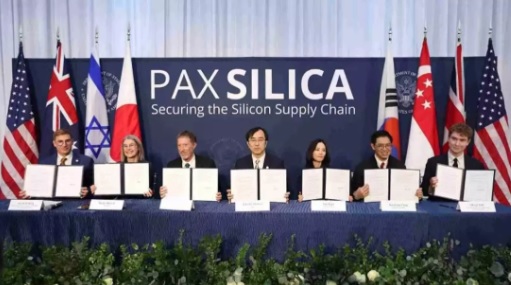
Pax-Silica

Countering US Pressure

  • Documents available on the Mexican government website indicate that these tariffs are not new, but rather extend the 5-50% tariffs imposed in April 2024 for a two-year period on various goods imported from non-FTA partners, approved by the Senate in December 2025.
  • The primary purpose of these tariffs imposed by Mexico on Asian imports is to counter US trade pressures and promote domestic manufacturing in North America.

Limited Impact on Overall Exports

  • In the 2024-25 fiscal year, India exported goods worth $5.7 billion to Mexico, representing 1.3% of total exports that year.
  • This figure confirms that overall, higher tariffs will not pose a significant threat to India's broader export landscape.

Sector-Specific Concerns: Automobiles

  • Total exports are dominated by a few sectors, and Mexico is also a major recipient of these sectors' exports. This is why tariffs could pose risks to these specific sectors:
  • Motor cars and parts: This accounts for $1.4 billion, or 25%, of India's total exports to Mexico.
  • Motorcycle exports: This accounts for an additional 7% of total exports.
  • These sectors are at greater risk because Mexico contributes approximately 10% of India's total auto and auto parts exports and approximately 12% of motorcycle exports.

Industry Appeal: Initiate FTA Negotiations

  • Given the impact of tariffs, the Engineering Export Promotion Council (EEPC) has requested the initiation of negotiations on a potential free trade agreement (FTA) with Mexico.
  • The EEPC has expressed concern that Mexico is a major destination for Indian engineering products and that these tariffs could reduce the competitiveness of Indian products in the Mexican market. Additionally, at the very least, a preferential trade agreement (PTA) is needed.
  • According to EEPC data, India's total engineering exports to Mexico declined by 12% during April-October 2025. Declines were observed across various sectors during this period, including:
  • Steel: 7% decline
  • Iron and steel products: 26% decline
  • Aluminum and its products: 56% decline
  • Auto components: 20% decline
  • Two- and three-wheelers: 32% decline
  • This data clearly shows that high tariffs have begun to negatively impact specific engineering sectors, making it essential for India to initiate early negotiations on an FTA to strengthen trade ties with Mexico and remove tariff barriers.

SHANTI Bill 2025: Reforming India’s Nuclear Sector

Prelims: (Polity + CA)
For Mains: (GS 2 – Government Policies & Interventions; GS 3 – Energy Security, Climate Change, Infrastructure)

Why in News?

The Union Government has cleared the Atomic Energy Bill, 2025, rebadged as the Sustainable Harnessing and Advancement of Nuclear Energy for Transforming India (SHANTI) Bill. The Bill proposes sweeping amendments to the Atomic Energy Act, 1962, aiming to open India’s tightly controlled nuclear power sector to private and foreign participation in civil nuclear energy.

SHANTI-Bill-2025

Background & Context

India’s nuclear power programme has historically followed a state-monopoly model, with the Department of Atomic Energy (DAE) and NPCIL exercising exclusive control. While this ensured strategic autonomy and safety, it also resulted in slow capacity addition due to high capital costs, long gestation periods, and limited public funding.

As India targets net-zero emissions by 2070, rapid renewable expansion has created grid stability challenges, while coal-based capacity faces environmental and political constraints. Against this backdrop, nuclear energy is being repositioned as a clean, reliable baseload source, essential for long-term energy security.

Reforming India’s Nuclear Sector

1. Energy Transition & Baseload Needs

  • Renewables are intermittent and storage solutions remain expensive.
  • Coal expansion is slowing due to climate commitments.
  • Nuclear power offers low-carbon, round-the-clock electricity.

2. Capital Constraint, Not Technology Deficit

  • India has strong indigenous nuclear capabilities (PHWRs).
  • The primary bottleneck is financing, not know-how.
  • Interest from foreign sovereign wealth funds, especially from West Asia, has been expressed.

3. Reviving the Indo–US Civil Nuclear Deal

  • Nearly two decades after signing, its commercial potential remains underutilised.
  • Nuclear reforms are being aligned with broader India–US trade and investment negotiations.

Key Provisions of the Atomic Energy Bill, 2025 (SHANTI Bill)

Opening the Sector

  • Allows private companies up to 49% minority equity in nuclear power projects.
  • Enables foreign participation through partnerships and sovereign investment funds.

Expanded Scope for Private Participation

Private entities may now participate in:

  • Exploration of atomic minerals
  • Fuel fabrication
  • Equipment manufacturing
  • Select aspects of plant operations
  • Civil nuclear R&D, especially Small Modular Reactors (SMRs)

Scaling Up Nuclear Capacity: India’s Ambition

  • Current capacity: ~8 GWe
  • Target: 100 GWe by 2047

Global Comparison

  • USA: ~100 GWe
  • France: ~65 GWe
  • China: ~58 GWe

Nuclear Energy Mission

  • Outlay: ₹20,000 crore
  • Focus: R&D and deployment of Small Modular Reactors
  • Goal: At least 5 indigenous SMRs operational by 2033

SMRs: New Pillar of India’s Nuclear Strategy

Why SMRs?

  • Smaller size, factory-built, modular deployment
  • Faster construction and lower upfront costs
  • Ideal for industrial decarbonisation, captive power for steel, cement, data centres
  • Provide carbon-neutral baseload to complement renewables

Indian SMR Designs (BARC)

  • Bharat Small Reactor (BSR – 220 MWe): PHWR-based
  • Bharat Small Modular Reactor (BSMR – 200 MWe): LWR-based
  • SMR-55 (55 MWe): LWR-based

Note: Designs are at an advanced stage; no initial foreign collaboration planned.

Private Sector Interest in SMRs

Interested Companies

  • Reliance Industries
  • Tata Power
  • Adani Power
  • Hindalco
  • JSW Energy
  • Jindal Steel & Power

Operational Model

  • NPCIL retains ownership and operational control.
  • Private players:
    • Finance entire project lifecycle (including decommissioning)
    • Receive assured long-term captive power supply

Potential Sites

  • 16 locations across Gujarat, MP, Odisha, Andhra Pradesh, Jharkhand, Chhattisgarh

Nuclear Liability Law: The Key Bottleneck

Civil Liability for Nuclear Damage Act, 2010

  • Includes a “right of recourse”, allowing operators to seek damages from suppliers.
  • Foreign vendors (Westinghouse, EDF/Areva) see this as a major deterrent.

Proposed Solutions

  • Cap supplier liability beyond a threshold
  • Create a state-backed insurance pool
  • Align with global nuclear liability conventions
  • Ensure victim compensation without discouraging investment

Challenges and Way Forward

Key Challenges

  • Public and political concerns over nuclear safety
  • Private sector concerns on risk-sharing and cost recovery
  • Scalability limits of PHWR-dominated reactor fleet
  • Balancing sovereignty, safety, and openness

Way Forward

  • Strengthen independent nuclear safety oversight
  • Gradual transition toward globally dominant LWR technologies
  • Clear, predictable liability and regulatory frameworks
  • Integrate nuclear energy into India’s climate and energy-transition strategy

FAQs

Q1. What is the SHANTI Bill, 2025?

It is the proposed Atomic Energy Bill that seeks to amend the Atomic Energy Act, 1962 to allow private and foreign participation in civil nuclear power.

Q2. Why is India opening its nuclear sector now?

To address capital constraints, meet climate commitments, ensure baseload power, and scale nuclear capacity rapidly.

Q3. What are Small Modular Reactors (SMRs)?

Factory-built nuclear reactors under 300 MW that are quicker to deploy, safer, and suitable for industrial and captive power use.

Q4. Will private companies own nuclear plants?

No. NPCIL will retain ownership and operational control; private players will finance and receive power.

Q5. Why is nuclear liability controversial in India?

India’s liability law allows recourse against suppliers, unlike global norms, deterring foreign investment.

Ponduru Khadi Gets GI Status

Prelims: (GI Tag, Ponduru Khadi, Traditional Textiles + CA)
Mains: (GS 3 – Indian Economy, Cultural Heritage)

Why in News?

Ponduru Khadi, a traditional handspun and handwoven cotton fabric from Andhra Pradesh, has been granted the Geographical Indication (GI) tag by the Geographical Indications Registry under the Union Ministry of Commerce and Industry.

Khadi-Gets-GI-Status

Background & Context

India’s handloom and khadi traditions represent not only cultural heritage but also a critical source of rural livelihoods and sustainable production. The GI tag mechanism, under the Geographical Indications of Goods (Registration and Protection) Act, 1999, aims to protect products that have a distinct regional identity, reputation, and traditional know-how.

Khadi, closely associated with India’s freedom movement and Mahatma Gandhi’s philosophy of self-reliance (Swadeshi), holds immense historical significance. Ponduru Khadi stands out among khadi traditions for preserving ancient artisanal practices that have survived industrialisation and mechanisation.

About Ponduru Khadi

  • Type: Handspun and handwoven cotton fabric
  • Local Name: Patnulu
  • Region: Ponduru village, Srikakulam district, Andhra Pradesh
  • Scheme Linkage: Nominated under the One District One Product (ODOP) scheme for Srikakulam

Historical Significance

  • During the pre-Independence period, Mahatma Gandhi praised Ponduru Khadi in Young India, the national weekly he edited.
  • It symbolised ethical production, rural self-sufficiency, and dignity of labour.

Key Characteristics of Ponduru Khadi

1. Cotton Variety

Ponduru Khadi is made using indigenous cotton varieties:

  • Hill cotton
  • Punasa cotton
  • Red cotton

All cotton is locally grown in and around Ponduru, strengthening local agrarian–artisan linkages.

2. Entirely Manual Production

  • From cotton cleaning to spinning and weaving, no mechanisation is involved.
  • The process preserves traditional skills passed down through generations.

Unique Features of Ponduru Khadi

1. Fish Jawbone Cotton Cleaning

  • Cotton is cleaned using the jawbone of the Valuga fish.
  • This technique improves fibre softness and durability.
  • Uniqueness: This practice is exclusive to Ponduru and is not found anywhere else in the world.

2. Single-Spindle Charkha

  • Ponduru is the only place in India where spinners still use single-spindle charkhas.
  • This ensures finer yarn quality and traditional authenticity.

Significance of GI Tag for Ponduru Khadi

  • Legal Protection: Prevents misuse and imitation of the product name
  • Economic Empowerment: Enhances income security for local weavers and spinners
  • Cultural Preservation: Safeguards traditional techniques and indigenous knowledge
  • Market Access: Improves branding, exports, and premium market positioning
  • Alignment with Atmanirbhar Bharat: Promotes local production and sustainable livelihoods

Geographical Indication (GI): Quick Facts

  • Definition: A GI is a sign used on products that originate from a specific geographical area and possess qualities or reputation due to that origin.
  • Legal Framework: GI Act, 1999
  • Administering Authority: Controller General of Patents, Designs & Trade Marks (CGPDTM)
  • Validity: 10 years (renewable)

FAQs

Q1. What is Ponduru Khadi famous for?

It is renowned for its handspun yarn, manual production process, and unique cotton cleaning method using fish jawbones.

Q2. Why is the GI tag important for traditional products?

It protects traditional knowledge, prevents misuse, and enhances economic returns for local communities.

Q3. How is Ponduru Khadi different from other khadi fabrics?

Its single-spindle charkha, indigenous cotton, and fish jawbone cleaning process make it unique.

Q4. Who administers GI registration in India?

The Geographical Indications Registry under the Ministry of Commerce & Industry.

Q5. How does ODOP help products like Ponduru Khadi?

ODOP promotes district-specific products through branding, marketing, and capacity building.

India Adds Two New Ramsar Wetlands

Prelims: (Ramsar Convention, Ramsar Site + CA) 
Mains: (GS 3 – Environment & Ecology)

Why in News?

India has added Siliserh Lake (Rajasthan) and Kopra Jalashay (Chhattisgarh) to the list of Ramsar Siteswetlands recognised as being of global ecological importance under the Ramsar Convention.
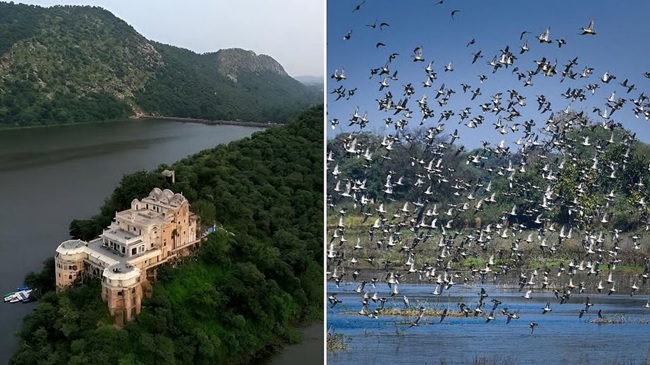
Ramsar-Wetlands

Background 

Wetlands are among the most productive ecosystems on earth, serving crucial ecological and socio-economic functions such as water purification, groundwater recharge, flood moderation, carbon storage, and habitat support for biodiversity. Globally, wetlands are under threat from urbanisation, pollution, climate change, and unsustainable land use.

The Ramsar Convention (1971) — formally the Convention on Wetlands of International Importance especially as Waterfowl Habitat — was adopted in Ramsar, Iran, to promote the conservation and wise use of wetlands. India, recognizing the ecological and cultural importance of its wetlands, became a signatory to the convention in 1982.

What are Ramsar Sites?

Ramsar Sites are wetlands identified under the Ramsar Convention as being of international importance owing to their ecological, biodiversity, hydrological, or cultural values. Both natural and human-made wetlands can qualify, provided they meet criteria such as:

  • Supporting vulnerable, endangered, or critically endangered species
  • Being representative or unique wetland types
  • Supporting significant numbers of waterbirds
  • Providing vital ecosystem services

Designation as a Ramsar Site encourages signatory countries to adopt “wise use”sustainable utilisation that maintains the wetland’s ecological character.

Ramsar Sites in India

As of 2025, India has 75 Ramsar Sites spread across diverse ecosystems — from high-altitude lakes in the Himalayas to mangroves in the Sundarbans and coastal lagoons in the south.
With the inclusion of Siliserh Lake and Kopra Jalashay, the total count of Indian Ramsar Sites stands at 75, reflecting the country’s commitment to wetland conservation.

About the Newly Designated Ramsar Sites

1. Siliserh Lake

  • Location: Alwar district, Rajasthan
  • Type: Human-made freshwater lake
  • Ecological Setting:
    • Within the buffer zone of Sariska Tiger Reserve
    • Situated in a semi-arid landscape, where natural water sources are limited

Historical Background:

  • Constructed in 1845 by Maharaja Vinay Singh
  • Originally built to supply drinking water to Alwar city

Ecological Importance:

  • Serves as a critical source of water in a water-scarce region
  • Supports groundwater recharge, local livelihoods, and biodiversity

Fauna:

  • Vulnerable: River Tern
  • Endangered / Threatened: Tiger, Black Stork (Ciconia nigra)

2. Kopra Jalashay

  • Location: Near Bilaspur, Chhattisgarh
  • Type: Reservoir (man-made wetland)
  • Hydrological Setting: Upper catchments of the Mahanadi River

Ecological Importance:

  • Enhances river basin connectivity and supports wetland-dependent species
  • Provides feeding and nesting habitat for migratory and resident birds

Fauna:

  • Vulnerable: Greater Spotted Eagle (Aquila clanga)
  • Endangered: Egyptian Vulture (Neophron percnopterus)

Significance of Ramsar Designation

  • International Recognition: Acknowledges the global ecological value of these wetlands
  • Conservation Commitment: Reinforces India’s obligations under the Ramsar Convention
  • Funding & Technical Access: Opens doors for conservation support and capacity building
  • Sustainable Use: Encourages practices that balance ecological needs with human use
  • Biodiversity Protection: Safeguards habitats for threatened and migratory species

India and the Ramsar Convention

  • Adoption: 1971 at Ramsar, Iran
  • India’s Accession: 1 February 1982
  • Core Objective: Promote the wise use — sustainable management — of wetlands
  • With 75 designated sites, India ranks among countries with a large portfolio of protected wetlands, showcasing ecological diversity from Himalayan lakes to coastal marshes.

FAQs

Q1. What qualifies a wetland to be a Ramsar Site?

A wetland must have international ecological significance, such as supporting endangered species, hosting waterfowl populations, or providing essential hydrological services.

Q2. Do Ramsar Sites receive legal protection?

Ramsar designation encourages conservation and wise use, but national and state laws primarily govern legal protection and management actions.

Q3. Are only natural wetlands eligible?

No. Both natural and human-made wetlands (such as reservoirs or tanks) are eligible if they meet the Ramsar criteria.

Q4. How many Ramsar Sites does India have?

As of 2025, India has 75 Ramsar Sites.

Q5. Does Ramsar status restrict local activities?

Ramsar status promotes sustainable use and management; restrictions may arise under national wetland laws or management plans designed to preserve ecological character.

« »
  • SUN
  • MON
  • TUE
  • WED
  • THU
  • FRI
  • SAT
Have any Query?

Our support team will be happy to assist you!

OR