New
Final Result - UPSC CSE Result, 2025 GS Foundation (P+M) - Delhi : 23rd March 2026, 11:30 AM Navratri offer UPTO 75% + 10% Off | Valid till 26th March GS Foundation (P+M) - Prayagraj : 17th March 2026 Final Result - UPSC CSE Result, 2025 GS Foundation (P+M) - Delhi : 23rd March 2026, 11:30 AM Navratri offer UPTO 75% + 10% Off | Valid till 26th March GS Foundation (P+M) - Prayagraj : 17th March 2026

Current Affairs for 18 March 2026

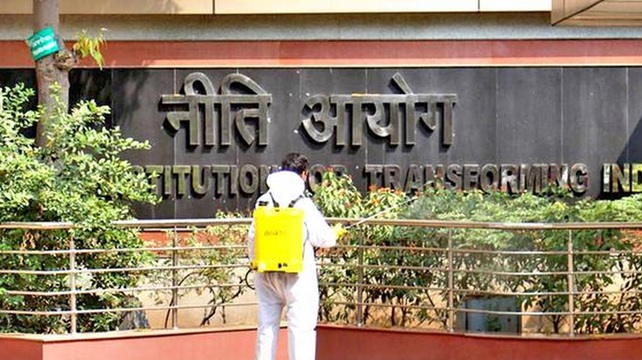
Parliamentary Panel Flags Poor Financial Planning by NITI Aayog

Prelims: (Polity & Governance + CA)
Mains: (GS 2 – Governance, Accountability, Public Policy; GS 3 – Economy, Fiscal Management)

Why in News ?

A Parliamentary Standing Committee has flagged poor financial planning and underutilisation of funds by the NITI Aayog and the Ministry of Planning.

The Committee criticised the persistent gap between budgetary allocations and actual expenditure, raising concerns over fiscal discipline, efficiency, and governance outcomes.
Background and Context

Evolution of Planning in India

India’s planning framework underwent a major shift with the replacement of the Planning Commission by the NITI Aayog in 2015.

This transition marked a move from:

  • Centralised planning → Cooperative federalism
  • Resource allocation → Policy advisory role

Role of NITI Aayog

The NITI Aayog functions as the government’s premier policy think tank, with key roles:

  • Designing long-term development strategies
  • Promoting cooperative and competitive federalism
  • Monitoring and evaluating government schemes
  • Facilitating innovation and sustainable development

Unlike the Planning Commission, it does not allocate funds, but plays a crucial role in shaping policy priorities and resource utilisation.

Parliamentary Committee’s Key Observations

1. Persistent Underutilisation of Funds

The Committee observed a consistent pattern of low expenditure despite high allocations:

  • 2023–24:
    • Budget Estimate: ~₹824 crore
    • Actual Expenditure: ~₹290 crore (~35%)
  • 2024–25:
    • Budget Estimate: ~₹837 crore
    • Actual Expenditure: ~₹282 crore (~34%)

Implication:

  • Indicates structural inefficiencies in planning and execution
  • Funds remain idle instead of being productively utilised

2. Rising Allocations Despite Low Spending

  • Ministry sought ~₹1,203 crore for 2026–27
  • ~22% increase despite poor utilisation

Concern:

  • Reflects inflated budgeting and weak financial discipline

3. Weak Implementation and Planning Gaps

  • Significant gap between planned and actual expenditure
  • Delays in scheme execution and approvals

Outcome:

  • Poor translation of policy into ground-level results

4. Skewed Expenditure Pattern

  • Excessive spending concentrated in the last quarter (Q4)

Issues:

  • “March rush” to exhaust funds
  • Compromises quality and efficiency of spending

5. Violation of Fiscal Norms

  • Government guidelines require even distribution of expenditure
  • Last-quarter spending may lead to:
    • Inefficient resource use
    • Reduced accountability
    • Suboptimal outcomes

Recommendations by the Committee

1. Realistic Budgeting

  • Align allocations with actual needs and capacity
  • Avoid inflated demands

2. Strengthening Monitoring Mechanisms

  • Regular internal reviews and audits
  • Ensure timely administrative approvals

3. Improving Fund Utilisation

  • Avoid idle funds and delays
  • Enhance coordination between planning and execution

4. Better Expenditure Management

  • Ensure balanced spending across quarters
  • Prevent last-minute rush of expenditure

Significance of the Issue

1. Impact on Development Outcomes

  • Underutilisation delays:
    • Infrastructure projects
    • Social welfare schemes
  • Leads to inefficient service delivery

2. Fiscal Responsibility and Accountability

  • Persistent gaps undermine:
    • Transparency in public finance
    • Credibility of budgeting process

3. Governance Challenges

  • Reflects deeper issues in:
    • Administrative capacity
    • Policy implementation

4. Relevance for Cooperative Federalism

  • Inefficiencies at central level affect:
    • State-level planning and coordination
    • Overall development outcomes

Way Forward

  • Strengthen public financial management systems
  • Use data-driven planning and real-time monitoring
  • Improve institutional coordination
  • Promote outcome-based budgeting
  • Enhance accountability mechanisms

FAQs

1. What is NITI Aayog ?

It is India’s policy think tank, responsible for strategic planning and promoting cooperative federalism.

2. Why did the Parliamentary Committee criticise NITI Aayog ?

Due to persistent underutilisation of funds and poor financial planning.

3. What is the issue with last-quarter spending ?

It leads to inefficient expenditure and reduced accountability, often called the “March rush”.

4. Does NITI Aayog allocate funds like the Planning Commission ?

No, it does not allocate funds but provides policy guidance and evaluation.

5. Why is efficient fund utilisation important ?

It ensures timely implementation of schemes, better governance, and optimal use of public resources.

Transgender Rights Bill: Key Reforms to the 2019 Law

Prelims: (Polity & Governance + CA)
Mains: (GS 2 – Vulnerable Sections, Constitutional Rights, Governance)

Why in News ?

The Transgender Persons (Protection of Rights) Amendment Bill, 2026 has been introduced in Parliament, proposing major changes to the 2019 transgender law.

A key provision—removal of the right to self-identify one’s gender—has triggered widespread criticism, as it potentially contradicts the landmark NALSA v. Union of India (2014) ruling of the Supreme Court.

Background and Context

Evolution of Transgender Rights in India

Historically, transgender communities in India (such as hijras, kinnars, aravanis) have faced social exclusion, discrimination, and lack of legal recognition.

A major turning point came with the NALSA v. Union of India (2014) judgment, which:

  • Recognised transgender persons as a “third gender”
  • Affirmed their fundamental rights under Articles 14, 15, 19, and 21
  • Established the right to self-identification of gender

This led to the enactment of the Transgender Persons (Protection of Rights) Act, 2019, which aimed to institutionalise legal recognition and welfare measures.

Key Concepts: Sex, Gender and Transgender Identity

Distinction Between Sex and Gender

  • Sex: Biological attributes (chromosomes, hormones, anatomy)
  • Gender: Social and cultural construct, varying across societies

Gender Identity

  • Refers to an individual’s internal sense of self
  • May or may not align with assigned sex at birth
  • Forms the core of transgender identity

Definition under 2019 Act

The Transgender Persons (Protection of Rights) Act, 2019 defines transgender persons broadly, including:

  • Trans men and trans women
  • Intersex persons
  • Genderqueer and non-binary individuals
  • Socio-cultural identities (hijra, kinner, jogta, aravani)

Key Provisions of the Amendment Bill, 2026

1. Shift from Self-Identification to Medical Certification

  • Removes the right to self-identify gender
  • Introduces mandatory medical certification for legal recognition
  • Marks a shift towards a biological/clinical framework

2. Narrower Definition of Transgender

  • Limits recognition to:
    • Certain socio-cultural identities
    • Persons with specific biological variations
  • Excludes:
    • Gender-fluid
    • Non-binary
    • Self-perceived identities

3. Medical Board for Gender Recognition

  • Establishes a Medical Board (headed by CMO/DCMO)
  • Board evaluates applicants and advises the District Magistrate
  • Introduces institutional gatekeeping

4. New Category Introduced

  • Includes individuals forced into transgender identity through coercion or manipulation

5. Stricter Penal Provisions

Enhanced punishments for offences:

  • Forced transgender identity:
    • Adult: 10 years to life imprisonment + fine
    • Child: Life imprisonment + higher fine
  • Forced begging/servitude:
    • Adult: 5–10 years imprisonment
    • Child: 10–14 years imprisonment

Significance of the Bill

1. Legal and Constitutional Implications

  • Raises questions on compatibility with NALSA v. Union of India
  • Potential conflict with Right to Dignity and Personal Liberty (Article 21)

2. Shift in Policy Approach

  • Moves from a rights-based framework (2019 Act)
  • To a medicalised and regulatory framework

3. Strengthening Penal Framework

  • Provides stronger deterrence against exploitation
  • Addresses issues like forced begging and abuse

4. Governance and Identification Challenges

  • Attempts to ensure targeted welfare delivery
  • However, may increase bureaucratic complexity

Criticism of the Amendment Bill

1. Violation of Self-Determination

  • Removal of self-identification seen as a rollback of fundamental rights
  • Undermines dignity and autonomy

2. Medicalisation of Identity

  • Treats gender identity as a clinical condition
  • Contradicts global human rights standards

3. Burden of Proof on Individuals

  • Requires individuals to prove identity via medical certification
  • May lead to exclusion and harassment

4. Exclusionary Definition

  • Leaves out:
    • Non-binary persons
    • Gender-fluid individuals
  • Ignores diversity within transgender communities

5. Practical Challenges

  • Healthcare systems may lack:
    • Sensitivity
    • Accessibility
  • Risk of institutional discrimination

Way Forward

  • Align legislation with constitutional morality and judicial precedents
  • Ensure self-identification remains central
  • Promote inclusive and non-discriminatory frameworks
  • Strengthen awareness and sensitisation in institutions
  • Balance regulation with rights protection

FAQs

1. What was the significance of the NALSA judgment (2014) ?

It recognised transgender persons as a third gender and upheld their right to self-identify gender.

2. What is the major change proposed in the 2026 Amendment Bill ?

The Bill removes self-identification and introduces mandatory medical certification.

3. Why is the Bill controversial ?

It is seen as undermining autonomy, dignity, and constitutional rights of transgender persons.

4. What are the concerns regarding medical certification ?

It may lead to bureaucratic hurdles, discrimination, and exclusion.

5. Does the Bill provide any positive changes ?

Yes, it strengthens penal provisions against exploitation and abuse.

Global Energy Shock Threatens India’s Goldilocks Era

Prelims: (Economy + CA)
Mains: (GS 3 – Indian Economy, Inflation, External Sector, Energy Security)

Why in News ?

Rising global energy shocks—triggered by geopolitical conflicts and potential disruptions such as the closure of the Strait of Hormuz—are exerting pressure on India’s inflation, rupee stability, and economic growth.

This threatens India’s recent “Goldilocks phase”—a period of high growth with low inflation, highlighting vulnerabilities in India’s external sector and energy dependence.

Background and Context

What is the “Goldilocks Economy” ?

A Goldilocks economy refers to a situation where:

  • Economic growth is strong but not overheating
  • Inflation remains low and stable

India recently experienced such a phase, with:

  • GDP growth rising above 7–8%
  • Inflation falling below the Reserve Bank of India (RBI) target of 4%

However, external shocks—especially energy price volatility—are now threatening this balance.

India’s Structural Energy Vulnerability

Heavy Dependence on Energy Imports

India imports a significant share of its crude oil requirements, making it highly vulnerable to global disruptions.

Recent geopolitical events such as:

  • Russia-Ukraine War
  • Conflicts in West Asia

have exposed India’s structural dependence on imported energy.

Pressure on the Rupee

  • Declining Foreign Direct Investment (FDI) inflows
  • Rising portfolio outflows

This has led to:

  • Depreciation of the rupee beyond ₹90–92 per dollar
  • Possibility of further weakening if crude prices rise

Implications:

  • Higher import bills
  • Rising Current Account Deficit (CAD)
  • Inflationary pressures

Rising Oil Prices: Impact on Economy

1. Inflationary Pressures

  • Rising crude oil prices increase:
    • Transportation costs
    • Manufacturing costs
    • Household fuel expenses
  • Estimates suggest inflation may:
    • Rise above 5% if oil crosses $100/barrel

2. Growth Slowdown

  • Higher energy costs reduce:
    • Consumer demand
    • Industrial output
  • GDP growth projections may fall below earlier estimates of ~7%

3. External Sector Stress

At elevated oil prices:

  • Oil import bill could surge significantly
  • CAD may exceed sustainable levels (~3% of GDP)
  • Risk of currency depreciation and capital outflows

Domestic Impact: Fuel and Supply Constraints

  • Gas shortages have led to:
    • Prioritisation of essential sectors
    • Increase in LPG prices
    • Delays in refill cycles
  • Though petrol/diesel prices remain stable, hidden inflation pressures are building.

Who Bears the Cost of Rising Fuel Prices ?

1. Government

  • May cut excise duties to protect consumers
  • Leads to revenue losses

2. Oil Marketing Companies (OMCs)

  • Absorb short-term losses when prices are not passed on
  • Financial stress may increase

3. Consumers (Indirectly)

  • Face:
    • Higher LPG and gas prices
    • Rising cost of goods and services

Fiscal Implications

Pressure on Fiscal Targets

  • Fiscal deficit target: ~4.3% of GDP
  • Rising oil prices may:
    • Increase subsidy burden
    • Reduce tax revenues

Additional Stress Factors

  • Fertiliser subsidies increase
  • Economic growth moderation affects tax collections

Significance of the Issue

1. Threat to Macroeconomic Stability

Energy shocks can simultaneously affect:

  • Inflation
  • Growth
  • Exchange rate

2. Exposure to External Shocks

Highlights India’s vulnerability to:

  • Global supply disruptions
  • Geopolitical instability

3. Policy Trade-offs

Government faces difficult choices between:

  • Controlling inflation
  • Maintaining fiscal discipline
  • Supporting growth

4. Importance of Energy Security

Reinforces the need for:

  • Diversification of energy sources
  • Renewable energy transition

Way Forward

  • Accelerate renewable energy adoption
  • Diversify crude import sources
  • Strengthen strategic petroleum reserves
  • Enhance domestic energy production
  • Build macroeconomic buffers (forex reserves, fiscal prudence)

FAQs

1. What is India’s Goldilocks phase ?

It refers to a period of high economic growth with low inflation, indicating macroeconomic stability.

2. Why do global energy shocks affect India significantly ?

Because India is heavily dependent on imported crude oil, making it vulnerable to global price fluctuations.

3. How do rising oil prices impact inflation ?

They increase transport, production, and fuel costs, leading to overall price rise in the economy.

4. What is the role of the Strait of Hormuz ?

The Strait of Hormuz is a critical oil transit route; disruptions here can significantly raise global oil prices.

5. What steps can India take to reduce energy vulnerability ?

Diversifying energy sources, boosting renewables, and strengthening reserves can improve resilience.

SC Expands Maternity Benefits to Adoptive Mothers

Prelims: (Social Issues + CA)
Mains: (GS 2 – Welfare Schemes, Gender Justice, Judiciary)

Why in News ? 

The Supreme Court of India has read down provisions of the Code on Social Security, 2020 to extend 12 weeks of maternity leave to all adoptive mothers, irrespective of the child’s age.

The Court also urged the government to recognise paternity leave as a social security entitlement, marking a progressive shift in understanding parental rights.

Background and Context

Evolution of Maternity Rights in India

The Maternity Benefit Act, 1961 was enacted to:

  • Regulate employment of women before and after childbirth
  • Provide paid maternity leave and job protection

2017 Amendment

  • Increased maternity leave to 26 weeks (for biological mothers)
  • Introduced:
    • 12 weeks leave for adoptive mothers (only if child < 3 months)
    • Crèche facilities
    • Work-from-home provisions

Code on Social Security, 2020

The Code on Social Security, 2020 consolidated labour laws but retained the restrictive provision limiting adoptive mothers’ benefits based on the child’s age.

Key Highlights of the Supreme Court Judgment

1. Removal of Age Restriction

  • The Court read down Section 60(4) of the Code
  • Held that all adoptive mothers are entitled to 12 weeks leave, irrespective of the child’s age

Constitutional Basis:

  • Violates Article 14 (Equality)
  • Violates Article 21 (Right to Life and Dignity)

2. Redefining Motherhood

  • Maternity benefits linked to caregiving, not just childbirth
  • Recognised adoptive motherhood as equal to biological motherhood
  • Adoption included within:
    • Reproductive autonomy
    • Decisional privacy under Article 21

3. Maternity Leave as a Human Right

  • Declared maternity protection a basic human right
  • Ensures:
    • Economic security
    • Workplace inclusion
    • Freedom from employment penalties

4. Emphasis on Paternity Leave

  • Recognised importance of shared parenting
  • Highlighted absence of statutory paternity leave in India

Observations:

  • Lack of paternity leave:
    • Reinforces gender stereotypes
    • Limits father’s role in caregiving
  • Urged government to introduce paternity leave as a social security benefit

Pending Constitutional Challenge

A PIL challenges Section 5(4) of the Maternity Benefit Act, 1961 on grounds of:

  • Discrimination against adoptive mothers of older children
  • Violation of Fundamental Rights (Part III)
  • Conflict with Juvenile Justice Act, 2015

Key Issues and Challenges

1. Discriminatory Framework

  • Unequal treatment between:
    • Biological vs adoptive mothers
    • Adoptive mothers based on child’s age

2. Structural Barriers in Adoption

  • Lengthy procedures under the Juvenile Justice Act, 2015
  • Delay in declaring children legally free for adoption

3. Absence of Paternity Leave

  • No comprehensive law on paternity leave
  • Reinforces traditional gender roles

4. Impact on Women’s Workforce Participation

  • Employers may avoid hiring women due to:
    • Increased cost burden
    • Compliance requirements

5. Implementation Gaps

  • Weak enforcement in unorganised sector
  • Limited access to:
    • Crèche facilities
    • Flexible work options

Significance of the Judgment

1. Advancement of Substantive Equality

  • Moves beyond formal equality to real equality in outcomes

2. Shift from Biology to Care-Based Framework

  • Recognises parenthood as caregiving responsibility, not just biological function

3. Strengthening Fundamental Rights

  • Expands interpretation of:
    • Article 14 (Equality)
    • Article 21 (Dignity and autonomy)

4. Gender Justice and Inclusivity

  • Promotes:
    • Inclusive workplace policies
    • Recognition of diverse family structures

5. Policy Push for Reform

  • Encourages government to:
    • Introduce gender-neutral parental leave
    • Reform outdated legal provisions

Way Forward

1. Gender-Neutral Parental Leave

  • Introduce:
    • Statutory paternity leave
    • Shared parental leave systems

2. Harmonisation of Laws

  • Align:
    • Maternity Benefit Act
    • Code on Social Security
    • Juvenile Justice Act

3. Strengthening Adoption Ecosystem

  • Simplify procedures
  • Reduce delays in legal clearance

4. Incentivising Employers

  • Provide:
    • Tax incentives
    • Government support for maternity costs

5. Focus on Unorganised Sector

  • Expand social security coverage
  • Ensure accessibility and portability of benefits

FAQs

1. What did the Supreme Court rule regarding adoptive mothers ?

It granted 12 weeks of maternity leave to all adoptive mothers, irrespective of the child’s age.

2. Which law was read down by the Court ?

The Code on Social Security, 2020.

3. Why is the judgment significant ?

It recognises adoptive motherhood as equal to biological motherhood and promotes gender justice.

4. What is the issue with the Maternity Benefit Act, 1961 ?

It restricts benefits for adoptive mothers based on the age of the child, which is under challenge.

5. What did the Court say about paternity leave ?

It urged the government to introduce paternity leave as a social security right.

Sahitya Akademi Award

Prelims: (Art & Culture + CA)
Mains: (GS 1 – Indian Culture, Literature and Diversity)

Why in News ?

The Sahitya Akademi has announced its annual Sahitya Akademi Awards for outstanding literary works across 24 recognised Indian languages, highlighting the richness and diversity of India’s literary traditions.


Background and Context

India has a deep and diverse literary heritage, spanning multiple languages, scripts, and cultural traditions.

To promote and preserve this diversity, the Government of India established the Sahitya Akademi in 1954 as the national institution for literary promotion and dialogue.

The Akademi plays a vital role in:

  • Encouraging literary creativity
  • Preserving regional literature
  • Promoting cultural unity through language diversity

About Sahitya Akademi Award

The Sahitya Akademi Award is one of India’s most prestigious literary honours.

Key Features

  • Awarded annually for most outstanding books of literary merit
  • Covers works in 24 recognised languages
  • Recognises contributions in:
    • Poetry
    • Novels
    • Short stories
    • Essays and criticism

Languages Recognised

  • Includes 22 languages listed in the Constitution (Eighth Schedule)
  • Additionally recognises:
    • English
    • Rajasthani

Award Components

Winners receive:

  • A plaque
  • A shawl
  • A cash prize of ₹1 lakh

About Sahitya Akademi

Establishment

  • Inaugurated on 12 March 1954
  • Registered under the Societies Registration Act, 1860

Nature and Role

The Sahitya Akademi is:

  • India’s central institution for literary activities
  • The only organisation promoting literature in 24 Indian languages

Key Functions

  • Organising:
    • Literary festivals and seminars
    • Writer meets and workshops
  • Publishing:
    • Books and translations
    • Journals and literary works
  • Promoting:
    • Inter-language literary exchange
    • National integration through literature

Administrative Details

  • Nodal Ministry: Ministry of Culture
  • Headquarters: New Delhi

Significance of the Award

1. Promotion of Linguistic Diversity

  • Encourages writing in regional and lesser-known languages
  • Preserves India’s multilingual identity

2. Recognition of Literary Excellence

  • Provides national recognition to authors and poets
  • Enhances visibility of regional literature

3. Cultural Integration

  • Promotes unity in diversity through literary exchange
  • Bridges cultural gaps across regions

4. Encouragement to Writers

  • Motivates writers to contribute to quality literature
  • Strengthens India’s intellectual and creative ecosystem

5. Preservation of Heritage

  • Safeguards oral and written traditions
  • Supports documentation of cultural narratives

Challenges and Criticism

1. Language Representation Issues

Concerns over unequal representation of certain languages

2. Allegations of Bias

Occasional criticism regarding selection transparency

3. Limited Public Outreach

Literary works often remain confined to academic circles

Way Forward

  • Enhance transparency in selection process
  • Promote translations and digital access
  • Increase outreach among youth and regional audiences
  • Strengthen support for emerging writers

FAQs

1. What is the Sahitya Akademi Award ?

It is a prestigious literary award given for outstanding books in 24 Indian languages.

2. How many languages are recognised by Sahitya Akademi ?

A total of 24 languages, including English and Rajasthani.

3. When was Sahitya Akademi established ?

It was established in 1954.

4. What does the award include ?

plaque, shawl, and ₹1 lakh cash prize.

5. Which ministry oversees Sahitya Akademi ?

The Ministry of Culture.

« »
  • SUN
  • MON
  • TUE
  • WED
  • THU
  • FRI
  • SAT
Have any Query?

Our support team will be happy to assist you!

OR
X