New
GS Foundation (P+M) - Delhi : 19th Jan. 2026, 11:30 AM Republic Day offer UPTO 75% + 10% Off, Valid Till : 28th Jan., 2026 GS Foundation (P+M) - Prayagraj : 09th Jan. 2026, 11:00 AM Republic Day offer UPTO 75% + 10% Off, Valid Till : 28th Jan., 2026 GS Foundation (P+M) - Delhi : 19th Jan. 2026, 11:30 AM GS Foundation (P+M) - Prayagraj : 09th Jan. 2026, 11:00 AM

Current Affairs for 19 January 2026

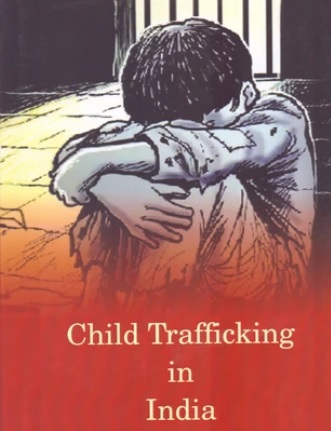
Child Trafficking in India: Problem, Legal Framework and Solutions

  • Child trafficking remains a grave and persistent problem in India, affecting millions of children.
  • Between April 2024 and March 2025, more than 53,000 children were rescued nationwide from trafficking, child labour and kidnapping.
  • This crime violates children’s fundamental rights, including the right to life, dignity and freedom from exploitation.
  • The Supreme Court, in K.P. Kiran Kumar v. State (2025), described child trafficking as a “deeply disturbing reality” and issued strict guidelines to address it.

child-trafficking

How Should India Tackle Child Trafficking?

A multi-dimensional strategy is required, covering prevention, rescue, rehabilitation and legal enforcement.

1 Strong Legal Framework and Enforcement

Strict implementation of existing laws:

  • Immoral Traffic (Prevention) Act, 1956 (ITPA)
  • Juvenile Justice (Care and Protection of Children) Act, 2015
  • Protection of Children from Sexual Offences (POCSO) Act, 2012
  • Trafficking of Persons (Prevention, Care and Rehabilitation) Act, 2021

Additional measures:

  • Establish fast-track courts and appoint special prosecutors to improve conviction rates.

2 Preventive Measures

  • Address socio-economic vulnerabilities through education, poverty alleviation and awareness campaigns.
  • Community-based monitoring, such as programs run by Childline/Child Protection organizations, with local vigilance committees.
  • Increased surveillance in border areas and implementation of Standard Operating Procedures (SOPs) at transit points like railways and bus terminals.

3 Rescue and Rehabilitation

  • Strengthen Anti-Human Trafficking Units (AHTUs).
  • Implement SOPs for victim identification and connect survivors with rehabilitation schemes.
  • Promote financial empowerment and skill development programs for rescued children.

4 Coordination and International Cooperation

  • Enhance inter-state coordination, as trafficking networks operate across state borders.
  • Partner with UNICEF and other international organizations to strengthen child protection systems.

5 Role of Community and Government

  • Conduct awareness campaigns through radio, schools, street plays and local fairs.
  • Regular training of police and judicial officers.
  • A comprehensive approach, with prevention as the priority, can significantly reduce child trafficking.

What is the Palermo Protocol?

  • Official name: “Protocol to Prevent, Suppress and Punish Trafficking in Persons, Especially Women and Children.”
  • It is a supplement to the United Nations Convention against Transnational Organized Crime.
  • Adopted in November 2000 and came into force on 25 December 2003.
  • Objective: Prevent, suppress and punish human trafficking, especially of women and children.
  • It provides the first internationally accepted definition of trafficking, based on three elements:
    • Act recruitment, transportation, transfer, harbouring, receipt of persons
    • Means threat, force, coercion, fraud, abuse of power
    • Purpose exploitation
  • Requires member states to criminalize trafficking, protect victims and strengthen international cooperation.
  • Based on the “3P Framework”: Prevention, Protection and Prosecution.
  • India ratified the Protocol in 2011, strengthening its anti-trafficking legal regime.

Definition of Human Trafficking under Bharatiya Nyaya Sanhita (BNS), 2023

The BNS, 2023 replaces the Indian Penal Code (IPC).

Section 143 – Human Trafficking

  • Definition: Recruitment, transportation, harbouring, transfer or receipt of a person for the purpose of exploitation.
  • Exploitation includes: Physical or sexual exploitation, slavery, bonded labour, begging and organ removal.
  • Means: Threat, force, abduction, fraud or abuse of power.
  • Consent of the victim is irrelevant.
  • Punishment:
    • For adults: 7–10 years imprisonment + fine
    • For children: 10 years to life imprisonment
    • Harsher punishment for trafficking of multiple persons, repeat offenders or public servants.

Section 144

  • Treats exploitation of a trafficked person as a separate offence.
  • Trafficking is classified as an organized crime. 

How Does the Indian Constitution Protect Children from Exploitation ?

  • Article 23: Prohibits human trafficking, bonded labour and forced labour.
  • Article 24: Prohibits employment of children below 14 years in factories, mines or hazardous work.
  • Article 39(e) & (f): Protects children from exploitation and ensures healthy development.
  • Article 21: Right to life and personal liberty, interpreted to include dignity, education and freedom from exploitation.
  • Article 46: Protects weaker sections from social injustice and exploitation.

These provisions ensure a dignified and secure life for children. 

Key Supreme Court Judgments on Child Trafficking

  • K.P. Kiran Kumar v. State (2025): Trafficking violates the fundamental right to life; trafficked children are treated as “injured witnesses.”
  • Vishal Jeet v. Union of India (1990): Recognized trafficking and child prostitution as socio-economic problems; emphasized prevention.
  • Bachpan Bachao Andolan v. Union of India (2011): Issued guidelines on child protection and trafficking.
  • M.C. Mehta v. State of Tamil Nadu: Guidelines on child labour linked with trafficking.

Courts have directed states on data collection, timely filing of charge-sheets and witness protection. 

Why Strong Centre–State Coordination is Essential

  • Concurrent responsibility: Law and order is a state subject, but policies and funding come from the Centre.
  • Inter-state investigations: Trafficking networks cross borders; information sharing and joint operations are necessary.
  • Resource allocation: Central support helps backward and vulnerable regions.
  • National coordination: Inter-ministerial committees guide and monitor state efforts.

Strong Centre–State cooperation ensures a uniform and effective national response against child trafficking.

Chief Guest for Republic Day Celebrations

Context

  • According to the Defense Secretary, European Union leaders António Costa (President of the European Council) and Ursula von der Leyen (President of the European Commission) have been invited as special guests to India's 77th Republic Day celebrations this year (2026).
  • The 90-minute Republic Day parade will commemorate the 150th anniversary of "Vande Mataram." The Beating the Retreat ceremony will also feature the same theme.

Republic-Day-Celebrations

New Initiatives and Symbolic Changes in the Parade

  • The Defense Secretary also stated that, in order to eliminate VIP culture, the parade halls will be named after major rivers of India, while the Beating the Retreat halls will be named after various musical instruments.
  • For the first time, a European naval contingent will also participate in the parade. This year's parade will feature several new military displays for the first time, including the Bhairav ​​Battalion, Shaktibaan Regiment, Drone Power, and the Universal Rocket Launcher.

Cultural Performances and Marching Contingents

  • The ceremony will begin with a performance by 100 cultural artists accompanied by Indian war instruments.
  • Among the marching contingents, the Bhairav ​​Contingent and Ladakh Scouts will participate in the 'Uncha Kadam Taal'.
  • The Zanskar Pony, Bactrian Camel, and Dog Squad will represent India's diverse operational capabilities.
  • 18 parade contingents and 13 bands will participate in this year's parade. Aircraft and helicopters such as the Rafale, Su-30, P-8I, C-130, C-295, MiG-29, Apache, LCH, ALH, and Mi-17 will be displayed in various formations during the flypast.

Tableaux centered on the theme of 'Vande Mataram'

  • The theme of Republic Day 2026 will be 'Vande Mataram'.
  • Tableaux from six states and departments will bring this theme to life. Paintings by artist Tejendra Kumar Mitra will display lines from 'Vande Mataram' on the parade track, and the band will play the tune during the Beating the Retreat ceremony.
  • In total, 30 tableaux will be featured in the parade, representing 17 states and union territories and 13 ministries and services.
  • In addition, 11 states and union territories will also participate in Bharat Parv. This event will be a spectacular celebration of India's cultural heritage and military might.

Malayalam Language Bill, 2025

(Preliminary Examination: Current Events of National Importance, Rights-Related Issues)
(Main Examination, General Studies Paper 2: Functions and Responsibilities of the Union and States, Issues and Challenges Related to the Federal Structure, Parliament and State Legislatures—Structure, Functions, Functions, Powers and Privileges, and Issues Arising Thereof)

Context

Recently, in a significant initiative regarding language policy in Kerala, the Left Democratic Front (LDF) government introduced the Malayalam Language Bill, 2025 in the Legislative Assembly. After review by the Subject Committee, it was passed within just three days. The bill is currently awaiting the Governor's assent.

Malayalam-Language-Bill

Objective and Scope of the Bill

  • The main objective of the Malayalam Language Bill, 2025 is to establish Malayalam as the sole official language of Kerala.
  • It mandates the widespread use of Malayalam in governance, education, the judiciary, public communication, business activities, and digital media, while remaining within constitutional limits.
  • In fact, both English and Malayalam currently have official language status in the state.

Key Provisions

According to the bill

  • Malayalam will be taught as a compulsory first language up to Grade 10 in all government and aided schools in the state.
  • Court judgments and court proceedings will be gradually translated into Malayalam.
  • All bills and ordinances introduced in the Assembly will be presented in Malayalam.
  • Malayalam versions of major central and state laws available in English will also be prepared.

Other Provisions

  • The Department of Information Technology will be entrusted with the responsibility of developing open-source software and technical resources to promote the effective use of Malayalam in the IT sector.
  • As part of the administrative structure, it is proposed to rename the Department of Personnel and Administrative Reforms (Official Language) of the Secretariat as the Malayalam Language Development Department.
  • A separate Directorate of Malayalam Language Development will also be established under this department.

Background of the Bill

  • This is not the first time the Kerala government has attempted to establish Malayalam as an official language. The Malayalam Language (Propagation and Enrichment) Bill, introduced in 2015, was also introduced with the same objective. However, despite passing the Assembly, the President did not give assent to that bill.
  • At that time, the bill was reserved for the President's consideration because some of its provisions were inconsistent with the Official Languages ​​Act, 1963.
  • Furthermore, the Central Government had expressed objections to provisions related to the rights of linguistic minorities, the three-language formula under the National Education Policy, and the Right to Education Act, 2009.

Opposition by the Karnataka Government

  • The Karnataka government has opposed this bill. It has termed it unconstitutional, stating that it could affect the interests of the Kannada-speaking minority living in Kerala, especially in the border district of Kasaragod.
  • The Karnataka government's main objection is to the provision making Malayalam a compulsory first language in all schools in Kerala.
  • The petitioners argue that linguistic minority students in Kasaragod and other Kannada-majority areas currently study Kannada as their first language.

Kerala Government's Stand

  • The Kerala government has dismissed these concerns, stating that the bill is not intended to infringe the rights of any language or community. The bill includes special provisions to protect the rights of all linguistic minorities, including Tamil, Kannada, Tulu, and Konkani.
  • Under these provisions, linguistic minorities will be allowed to communicate in their mother tongue with the state government secretariat, department heads, and local government offices in the respective areas.
  • Additionally, students whose mother tongue is not Malayalam will be able to receive education in the language of their choice available in state schools in accordance with the National Education Curriculum. Students from other states or abroad whose mother tongue is not Malayalam will be exempted from taking examinations in Malayalam at the grades 9, 10, and higher secondary levels.

New FIU-IND Guidelines for Virtual Digital Asset (VDA) Services

The Financial Intelligence Unit – India (FIU-IND) has issued revised guidelines for reporting entities providing services related to Virtual Digital Assets (VDAs).

  • The objective is to prevent misuse of crypto assets for:
    • Money Laundering (ML)
    • Terrorist Financing (TF)
    • Proliferation Financing (PF)
  • Notably, in 2023, VDA service providers were brought under the Prevention of Money Laundering Act (PMLA), 2002.

FIU-IND-Guidelines

What is FIU-IND?

  • FIU-IND is the national nodal agency of the Government of India.
  • It monitors and analyses suspicious financial transactions.
  • It is responsible for implementing the AML/CFT framework in India.

Key Provisions of the New Guidelines

1. Appointment of Principal Officer (PO)

  • Every VDA service provider must appoint a Principal Officer.
  • The PO will:
    • Ensure regulatory compliance,
    • File Suspicious Transaction Reports (STRs),
    • Act as the nodal point of coordination with FIU-IND.

2. Cyber Security and Data Protection

  • Service providers must:
    • Obtain a cyber security audit certificate from an auditor empanelled with CERT-In.
  • Objective:
    • Protection against data breaches, hacking and cybercrime,
    • Safeguarding investor interests.

3. Monitoring of Unhosted (Self-Custody) Wallet Transactions

  • Unhosted wallets are wallets controlled directly by users.
  • For transactions involving such wallets, service providers must collect:
    • Customer identification details,
    • Purpose of the transaction,
    • Risk assessment information.
    • This will help in tracing illicit activities.

4. AML / CFT / CPF Compliance

  • VDA service providers must now follow the same obligations as other reporting entities (banks, NBFCs, etc.), including:
    • KYC compliance,
    • Suspicious transaction reporting,
    • Record maintenance,
    • Risk-based monitoring.

What is a Virtual Digital Asset (VDA)?

As per the Income Tax Act, 1961, a VDA means:

  • Any digitally generated information, code, number or token (excluding Indian or foreign currency) created using cryptographic or similar technology that:
    • Represents digital value,
    • Is transferable electronically,
    • Is storable, or
    • Is tradable.

VDAs include:

  • Cryptocurrencies
  • NFTs (Non-Fungible Tokens)
  • Other digital tokens

What is an NFT?

  • An NFT is a unique digital token.
  • It can represent:
    • Digital art,
    • Music,
    • Game assets,
    • Or real-world assets.

Taxation of VDAs

  • Income from the transfer of VDAs is taxed at:
    • 30% tax,
    • Plus surcharge and cess.
  • No deduction, exemption, or set-off is allowed.

Significance

Positive Impacts

  • Enhanced financial transparency
  • Better control over illicit money flows
  • Improved investor protection
  • Strengthening India’s global AML commitments

Challenges

  • Increased compliance costs for small startups
  • Technical complexity in monitoring transactions
  • Difficulty in tracking transactions in decentralised crypto systems

National One Health Mission – NOHM

Why in the news?

  • The Government of India is launching the National One Health Mission (NOHM).
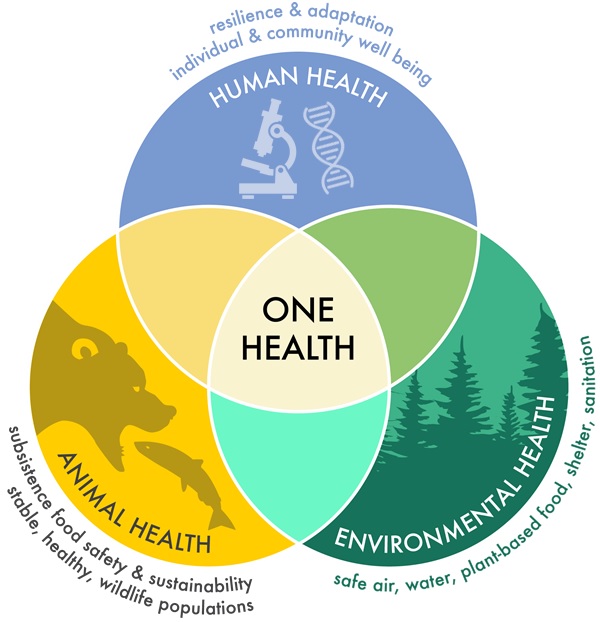
  • This mission is an important step towards adopting an integrated and coordinated approach between human, livestock, wildlife, and environmental health.

One-Health

About the National One Health Mission

  • This is a multi-sectoral initiative adopting an integrated approach to human, livestock, wildlife, and environmental health. It aims to strengthen coordinated surveillance, diagnosis, and disease outbreak responses across sectors.
  • Vision: To build an 'integrated disease control and pandemic preparedness system' in India by uniting human, animal, and environmental sectors for improved health outcomes, enhanced productivity, and biodiversity conservation.
  • Approval: Approved in 2022 during the 21st meeting of the Prime Minister's Science, Technology, and Innovation Advisory Council (PM-STIAC).
  • Nodal Agency: Operated by the Indian Council of Medical Research (ICMR) under the Office of the Principal Scientific Adviser (PSA) to the Government of India.
  • Key Institute: National Institute of One Health, Nagpur, which serves as the anchor for coordinating mission activities. The Union Cabinet approved the Director position for this institute in February 2024.

Main Pillars of the One Health Mission:

  • Research and Development (R&D): Promoting targeted R&D for essential tools like vaccines, diagnostics, and therapeutics to address priority diseases.
  • Diagnostic Preparedness: Enhancing diagnostic care infrastructure, response capacities, and readiness for clinical care.
  • Data Integration: Streamlining the integration of data and information from human, animal, and environmental sectors for better access, analysis, and federated systems.
  • Community Participation: Ensuring ongoing community engagement to sustain response preparedness and foster participation.

About the 'One Health' Approach:

  • This is an integrated, unifying approach aimed at sustainably balancing and optimizing the health of people, animals, and ecosystems.
  • It is particularly crucial for preventing, predicting, detecting, and responding to global health threats like the COVID-19 pandemic, recognizing the interconnectedness of these sectors.

Why is this Mission Needed?

  • Zoonotic Risk Mitigation: Based on the global fact that about 60% of emerging infectious diseases are zoonotic (transmitted from animals to humans). This enhances India's ability to identify and prevent potential 'spillover' events in time.
  • Pandemic Prevention Preparedness: Establishes a proactive and preventive health-security framework, shifting India from a 'reactive model' to an 'anticipatory, systems-based public health framework.'
  • Rising Antimicrobial Resistance (AMR): Due to inappropriate use of antibiotics in humans, livestock, and aquaculture, resistance is rapidly increasing. The new NAP-AMR (2025-2029) integrates One Health surveillance to combat this.
  • Climate Change Impacts: Changing climate patterns are expanding the range of disease vectors like mosquitoes, increasing the spread of diseases such as dengue and malaria.
  • Livelihood Security: Improves livestock health, productivity, and disease resistance, boosting farmers' incomes and rural economic stability.
  • Ecosystem Health: Strengthens wildlife disease surveillance and biodiversity monitoring, enhancing ecological security and addressing environment-related disease dynamics.
  • Global Coordination: Aligns India's health policies with the "One Health" approach adopted by WHO, FAO, WOAH, and UNEP, positioning India as a regional leader in integrated health governance.

Initiatives Related to the One Health Approach:

  • Center of One Health (CoH) at NCDC: Coordinates between departments and agencies, running programs on rabies, zoonoses, leptospirosis, and snakebites. It promotes and institutionalizes the One Health approach in India.
  • One Health Support Unit in the Department of Animal Husbandry and Dairying: A dedicated team of experts in veterinary, human health, wildlife, and data, aimed at effectively implementing the National One Health Framework in India.
  • BSL-3/4 Laboratory Network: A national network of high-security labs (currently 22) for rapid testing and analysis of infectious disease outbreaks across human, animal, and environmental sectors. A new BSL-4 facility was foundation-laid in Gujarat in January 2026.
  • One Health Joint Plan of Action (OH JPA): A collaborative framework for 2022–2026 by the Quadripartite alliance (FAO, UNEP, WHO, WOAH) to promote the One Health approach globally.
  • National One Health Programme for Prevention and Control of Zoonoses (NOHP-PCZ): Approved for FY 2021-26 under the NCDC umbrella scheme, institutionalizing structural mechanisms for One Health.

The Way Forward

  • Statutory Mandate: Establish a statutory and formally notified inter-sectoral coordination authority to institutionalize coordination between human, animal, and environmental health sectors.
  • Capacity Building: Prioritize systematic training in veterinary epidemiology, wildlife disease surveillance, genomics, and field diagnostics to strengthen technical and operational capacities.
  • State-Level Strengthening: Set up 'State One Health Cells' with dedicated financial resources, trained manpower, and technical support for decentralized implementation. A governance model framework was released in December 2025.
  • Improved Diagnostics and Technological Innovation: Develop an integrated 'National One Health Digital Platform' for real-time data integration, risk assessment, and coordinated decision-making across ministries.
  • Climate Change Adaptation: Conduct research on climate impacts on disease spread and develop climate-resilient disease control strategies.
  • Global Partnerships: Expand strategic collaborations with WHO, FAO, WOAH, UNEP, and regional One Health networks to align with global standards and enhance preparedness for cross-border diseases.

Supreme Court Emphasizes ‘Romeo–Juliet’ Exception in the POCSO Act

  • The Supreme Court of India has recently urged the Union Law Secretary to consider measures to prevent the misuse of the Protection of Children from Sexual Offences (POCSO) Act, 2012, especially in cases involving consensual relationships between adolescents.
  • This observation came while setting aside an order of the Allahabad High Court related to age determination in a bail matter.
  • The Court recommended exploring the introduction of a “Romeo–Juliet Clause,” which would provide exemption from criminal prosecution for consensual sexual acts between adolescents of a similar age.
  • This approach is in line with practices adopted in several countries, including the United States, and reflects growing judicial concern over the excessive criminalization of consensual acts involving minors under the existing POCSO framework.

Romeo-and-Juliet

POCSO Act and Its Challenges
POCSO Act, 2012 (Protection of Children from Sexual Offences Act, 2012)

  • The POCSO Act, 2012 aims to protect children (below 18 years of age) from sexual offences.
  • It provides a comprehensive legal framework in India to address child sexual abuse, sexual exploitation, and other sexual crimes against children.

Key Features:

  1. Applicability:-The Act applies to the entire territory of India.
  2. Protected Persons:-All children below 18 years of age, both boys and girls, are protected under this law.
  3. Definition of Offences:-The Act covers offences such as sexual assault, sexual harassment, child abuse, and the use of children in pornography.
  4. Special Judicial Provisions:
    • Establishment of Special Courts for speedy trials in the best interest of the child.
    • Protection of the child’s dignity and confidentiality during court proceedings.
  5. Mandatory Reporting:
    • Any person who has knowledge of a sexual offence against a child is legally bound to report it to the police.
  6. Punishment:
    • Imprisonment and fines depending on the severity of the offence.
    • Some offences may attract punishment up to life imprisonment.
  7. Digital and Pornography Offences:
    • Creation, sharing, or storage of obscene images or videos involving children is punishable.
  8. Rights of the Victim:
    • Hearings in a safe and child-friendly environment.
    •  Attention to the psychological well-being of the child.

Significance:

  • The Act ensures prompt and strict action in cases of child sexual abuse.
  • It helps reduce crimes against children and enhances their safety in society.

Misuse and Unintended Consequences:

  • Families often invoke POCSO in cases of inter-caste, inter-religious relationships or elopement, leading to excessive criminalization.
  • A study by Enfold Proactive Health Trust and UNICEF (2016–2020, Maharashtra, Assam, West Bengal) found that around 25% of POCSO cases involved consensual “romantic” relationships between adolescents.
  • Public Health Impact: Fear of prosecution discourages minors from accessing essential sexual and reproductive health services, increasing risks such as unsafe abortions.
  • Judicial Observation: The Supreme Court has described POCSO as a “serious expression of justice” for child protection, but has also termed its misuse a “serious social fault line” that undermines adolescents’ autonomy.

Constitutional Framework and the “Mature Minor” Doctrine

  • This debate essentially highlights the tension between the State’s role as parens patriae (guardian of citizens) and the personal liberty and autonomy of adolescents.
  • The existing law denies the decision-making capacity of adolescents aged 16–18 and creates a form of “legal fiction,” which does not align with scientific evidence and social realities.
  • Senior Advocate Indira Jaising has raised the following major constitutional objections:

Violation of Fundamental Rights

  • The present framework potentially violates:

Article 14 (Right to Equality)
Article 15 (Prohibition of Discrimination)
Article 19 (Freedom and Personal Liberty)
Article 21 (Right to Life, Dignity, and Autonomy)

  • This is because the law treats adolescent consent as completely invalid, irrespective of maturity and circumstances.

“Evolving Capacity” Principle

  • Adolescents aged 16–18 possess a gradually developing capacity to make informed decisions.
  • Ignoring biological realities of puberty contradicts modern medical and psychological understanding.

“Mature Minor” Doctrine

  • • In common law, this doctrine recognizes that sufficiently mature minors can make certain important decisions independently.
  • • The current POCSO framework sacrifices individual dignity in the name of legal certainty.
  • • These constitutional arguments point toward the need for alternative legislative solutions.

Key Developments and Arguments for Reform

Recent Observations of the Supreme Court

  • In a pending PIL on the age of consent, the Court emphasized the need for a structural legislative solution, rather than relying on case-by-case judicial discretion.
  • The Court recommended a “close-in-age” or “Romeo–Juliet” exception, under which consensual acts between adolescents of similar age (e.g., 16–17 years) and with a minimal age gap (generally 2–4 years) would be exempt from criminal liability.
  • Such a reform would help prevent violations of fundamental rights under Articles 14, 15, 19, and 21.

Arguments in Favour of Reform

  • Evolving Capacity Principle: Adolescents aged 16–18 have the cognitive and emotional capacity to make informed decisions about sexual autonomy, supported by scientific evidence on puberty and maturity.
  • Mature Minor Doctrine: Common law recognizes that not all persons below 18 are incapable of giving meaningful consent; a blanket prohibition ignores biological and social realities.
  • Reducing Misuse: Reform would prevent POCSO from being misused by families as a tool of retaliation or social control.
  • International Practices:

United States: Romeo–Juliet laws in many states
United Kingdom: Age of consent at 16 with safeguards
Canada: Close-in-age exemptions

Momentum for Reform

  • Amendments have been sought through PILs, including protective safeguards for women during prosecution.
  • Law Commission of India (2023 Report): Advised against lowering the age of consent to 16, but recommended guided judicial discretion in sentencing for consensual cases involving 16–18-year-olds.

Union Government’s Position: Arguments for Retaining the Current Law

Maintaining Status Quo

  • Retaining the age of consent at 18 is a deliberate policy choice to provide a “complete protective shield” for children.
  • Minors lack sufficient legal and developmental capacity to give meaningful consent and are vulnerable to manipulation by adults or persons in positions of authority.

Concerns Regarding Exceptions

  • Exceptions may create loopholes that allow exploitation, trafficking, or coercion to be disguised as consensual relationships.
  • Lowering or diluting the threshold could revive the same problems the law was enacted to prevent.
  • Preference for Judicial Discretion: Relief in hard cases should come through case-by-case judicial decisions rather than weakening statutory safeguards.
  • Law Commission’s Caution: Broad exceptions may dilute the strict liability framework of the POCSO Act.

Analysis: Balancing Child Protection and Adolescent Autonomy

Advantages of the Romeo–Juliet Exception

  • Reducing Over-Criminalization: It would reduce excessive criminalization and align with juvenile justice principles, such as recognition of maturity under the Juvenile Justice Act.
  • Promoting Equality:It would prevent the disproportionate impact on marginalized youth, especially in inter-community relationships.
  • Public Health Benefits:It would improve access to counseling and healthcare services without fear of prosecution.
  • Constitutional Compatibility:It would uphold the rights to privacy and dignity (as recognized in Justice K.S. Puttaswamy v. Union of India, 2017).

Drawbacks and Risks

  • Possibility of Misuse:Predators may exploit age gaps or falsely claim “consent” to escape liability.
  • Enforcement Challenges:Determining genuine consent could place additional pressure on judicial and investigative resources.
  • Social Context Concerns:Given India’s high incidence of child marriage and gender inequality, reducing protections may increase vulnerability.
  • Data Gaps:Nationwide empirical studies are required beyond limited state-level data.

Broader Implications

  • Linkage with Other Laws:Section 375 of the Indian Penal Code (IPC) also sets the age of consent at 18; reforms must ensure legal consistency.
  • Global Comparison:India’s strict approach differs from many European countries (where the age of consent ranges from 14–16), but reflects its unique socio-cultural context.

 Way Forward:-A hybrid model may be adopted — statutory exceptions with safeguards (such as mandatory counseling) combined with stronger sexual education in schools.

The Chatham Islands and Phytoplankton Bloom : Geographical and Ecological Significance

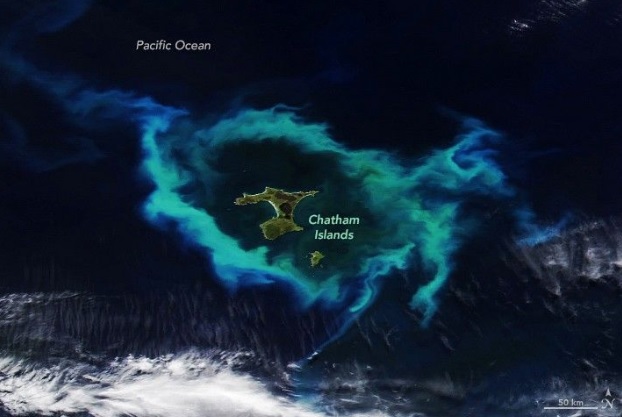
Recently, during the Southern Hemisphere summer (January 2026), an unusual phytoplankton bloom was observed in the ocean around the Chatham Islands. The bloom was so extensive that it was clearly visible from space through the VIIRS sensor of the NOAA-20 satellite. Swirling green and blue patterns appeared on the sea surface, indicating intense biological activity.

Phytoplankton are microscopic, photosynthetic organisms and form the foundation of the marine food chain. A sudden increase in their population affects marine ecosystems, fishery resources, and even the global carbon cycle.
Phytoplankton-blooms

Chatham Islands: Geographical Overview

The Chatham Islands are an archipelago located in the South Pacific Ocean. They represent the easternmost territory of New Zealand and lie about 800 km east of the South Island. The group consists of around 10 islands, but only two have permanent settlements:

  • Chatham Island (the largest)
  • Pitt Island

Physical Characteristics

  • The islands are primarily of volcanic origin.
  • The presence of limestone in some areas suggests that these islands were once connected to the New Zealand landmass.
  • The southern part of Chatham Island has high plateaus and steep cliffs, while the northern part features extensive wetlands, waterways, and long sandy beaches.

Key Facts

  • It is considered the world’s first human-created time zone, where the sunrise is seen earliest each day.
  • Main settlement: Waitangi
  • Other settlements: Te One, Port Hutt, Kaingaroa, and Owenga

Historical and Cultural Background

  • The earliest inhabitants were the Moriori people, who called the islands “Rekohu,” meaning misty sky or cloudy sun.
  • Later, European sealers and whalers arrived.
  • Subsequently, Māori migrants from New Zealand settled here and named the islands “Wharekauri.”
  • Descendants of the Moriori community still live on the islands today.

Scientific Causes of the Phytoplankton Bloom

The Chatham Islands are located on a submerged oceanic plateau known as the Chatham Rise.

Role of the Chatham Rise

  • It is a relatively shallow underwater plateau extending eastward from New Zealand’s South Island.
  • Deep ocean basins lie to its north and south.
  • Two major ocean currents converge here:
    • Cold, nutrient-rich currents from the Antarctic region, and
    • Warm, nutrient-poor currents from subtropical regions.

The mixing of these currents increases the availability of nutrients in seawater. During summer, longer daylight hours and stronger sunlight enhance the rate of photosynthesis, leading to rapid phytoplankton growth.

Ecological and Economic Importance

1. Base of the Marine Food Chain

Phytoplankton are primary producers, supporting the entire marine ecosystem.

2. Rich Fishery Resources

The region is a highly productive fishing ground with major species such as:

  • Pāua (abalone)
  • Rock lobster
  • Blue cod

These contribute significantly to the local economy.

3. High Biodiversity

  • About 5 species of seals
  • More than 25 species of whales and dolphins

The area is an important habitat for marine mammals.

4. Risk of Whale Stranding

  • The region is also sensitive to mass strandings of whales and dolphins.
  • Possible causes include seafloor topography, complex ocean currents, and the influence of sound waves (acoustic disturbances).
« »
  • SUN
  • MON
  • TUE
  • WED
  • THU
  • FRI
  • SAT
Have any Query?

Our support team will be happy to assist you!

OR